

Immunosuppressant Risk Assessment Tool
This tool helps determine if it's appropriate to restart immunosuppressants after cancer treatment based on current medical evidence. The old 5-year waiting rule is outdated—decisions should be based on individual factors, not arbitrary time limits.
Your Assessment
Recommendation
Your assessment will appear here after clicking the button.
For years, doctors told patients with a history of cancer who also had autoimmune diseases like rheumatoid arthritis, Crohn’s disease, or psoriasis: wait at least five years before restarting immunosuppressants. The fear was simple - if your immune system is suppressed, it might not catch cancer coming back. But that advice? It wasn’t backed by solid data. Now, after years of large-scale studies and real-world tracking, we know better.
What immunosuppressants actually do
Immunosuppressants are drugs that calm down an overactive immune system. They’re used for conditions where the body attacks itself - like rheumatoid arthritis, inflammatory bowel disease, and psoriasis. Common ones include methotrexate, azathioprine, and biologics like infliximab and adalimumab (anti-TNF drugs). These medications help people live without constant pain, fatigue, or flare-ups. But for someone who’s had cancer, the question has always been: does using them make cancer more likely to return?The old rule - and why it didn’t hold up
The 5-year waiting period became standard practice. It felt logical. If cancer was removed or treated, give the body time to recover. Give the immune system a chance to stay alert. But no one ever proved that waiting actually lowered recurrence risk. It was guesswork dressed up as protocol. Patients suffered. Their autoimmune diseases flared. Some ended up in the hospital. Others couldn’t work. Their quality of life dropped - all because of an arbitrary clock.The data that changed everything
In 2016, a major study published in Gastroenterology looked at over 11,700 patients with autoimmune diseases who’d had cancer. They compared those who took no immunosuppressants, those on anti-TNF drugs, those on traditional drugs like methotrexate, and those on combinations. The results? No meaningful difference in cancer recurrence rates. The group on combination therapy had the highest number - 54.5 cases per 1,000 person-years - but it wasn’t statistically higher than the others. The p-value? Over 0.1. Meaning: the difference could’ve happened by chance. That study didn’t stand alone. A 2024 update, with more than 24,000 patients and nearly 86,000 years of follow-up, confirmed it. Even newer drugs - ustekinumab, vedolizumab, JAK inhibitors - showed no increased risk. And here’s the kicker: whether you started immunosuppressants six months after cancer treatment or six years later, the recurrence rate stayed the same. P = 0.43. No difference.What about specific cancers?
The studies looked at all kinds of cancer - breast, colon, lung, melanoma, lymphoma. Across the board, no pattern emerged. Anti-TNF drugs didn’t make breast cancer come back. Methotrexate didn’t boost melanoma risk. Even in high-risk groups, the data didn’t support the old fears. One early abstract from ASCO in 2016 suggested breast cancer might be linked to immunosuppression, but that was based on small, limited data. The bigger, longer, more rigorous studies buried that idea.
What about combination therapy?
Combination therapy - say, infliximab plus azathioprine - had the highest numerical recurrence rate. But again, it wasn’t statistically significant. That means: even if you’re on two drugs instead of one, your risk isn’t meaningfully higher. The fear of stacking treatments? Not supported. The real issue isn’t the number of drugs - it’s the underlying disease. If your arthritis is raging or your Crohn’s is flaring, the inflammation itself might be more harmful than the meds.What the experts say now
The American College of Rheumatology, the European League Against Rheumatism, and the FDA all updated their guidance based on this evidence. The message? Stop using time-based rules. Don’t wait five years. Don’t assume all cancers are the same. Instead, make decisions based on facts: What kind of cancer? What stage? When was it treated? Is it in remission? How aggressive is it? How bad is your autoimmune disease right now? For example, if you had early-stage, low-risk colon cancer that was removed five years ago and you’re now in severe pain from RA - you should probably be on treatment. But if you had stage III melanoma last year and it’s still being monitored closely? That’s a different story. Your doctor might hold off, not because of the drug, but because the cancer itself is still in a fragile phase.Real-world impact
Before this data, many doctors avoided prescribing biologics to cancer survivors. Prescription rates dropped. Patients suffered. After the 2016 study, biologic use in this group jumped 18.7% over five years. That’s not because the drugs changed - it’s because doctors finally had confidence to use them. The FDA updated labels in June 2022 to say clearly: clinical studies show no increased recurrence risk with these medications.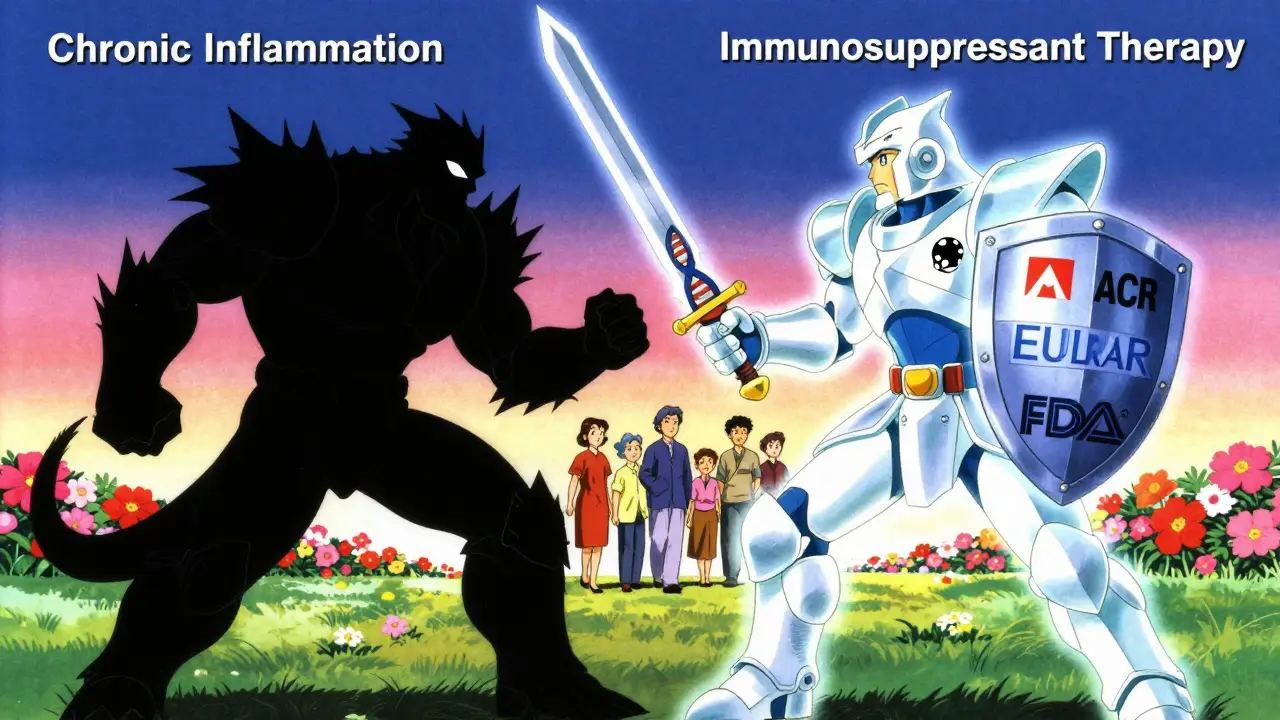
What’s still being studied?
Science doesn’t stop. Two big studies are still running. The RECOVER study (NCT04567821) is tracking IBD patients with cancer histories on different immunosuppressants. The RHEUM-CARE study (NCT04321987) is following 5,000 RA patients. Both aim to give even more precise answers - especially around specific drug-cancer combinations. Early results aren’t due until 2026, but so far, nothing has contradicted the existing data.What should you do?
If you’ve had cancer and now need immunosuppressants:- Don’t assume you have to wait five years. That rule is outdated.
- Ask your rheumatologist, gastroenterologist, or dermatologist to review your cancer history - type, stage, treatment, remission date.
- Discuss your current disease activity. Is it mild, moderate, or severe?
- Ask about alternatives. Is there a safer option? Is the benefit worth the risk?
- Don’t avoid treatment out of fear. Uncontrolled inflammation can damage organs, increase heart disease risk, and lower life expectancy - sometimes more than cancer recurrence.
When to be extra cautious
There are still gray areas. Experts recommend extra care if:- You have an active hematologic cancer (like leukemia or lymphoma) - immune surveillance matters more here.
- Your melanoma was recently diagnosed or is high-risk (thick, ulcerated, or spread).
- You’re on high-dose steroids or multiple biologics without clear need.
The bottom line
The fear that immunosuppressants cause cancer to come back? It’s not true. Not for most people. Not for most cancers. The data is clear: anti-TNF drugs, methotrexate, azathioprine, JAK inhibitors - none of them increase recurrence risk when used in patients with prior cancer, regardless of timing. The real danger isn’t the medication. It’s leaving your autoimmune disease untreated. Chronic inflammation kills. Pain disables. Fatigue destroys lives. You don’t have to choose between controlling your disease and fearing cancer. You can do both - safely.Work with your care team. Use the evidence. Make a plan based on your history, not a myth.
Do immunosuppressants increase the risk of cancer coming back?
No, large, high-quality studies involving over 24,000 patients show no increased risk of cancer recurrence with anti-TNF drugs, methotrexate, azathioprine, or newer biologics like ustekinumab and JAK inhibitors. The timing of starting these drugs - whether within 5 years or after - also shows no difference in recurrence rates.
Is it safe to restart immunosuppressants after cancer treatment?
Yes, if your cancer is in remission and your autoimmune disease is active. The old rule of waiting five years is outdated and not supported by evidence. Decisions should be based on cancer type, stage, time since treatment, and how severe your autoimmune condition is - not arbitrary time limits.
Are some immunosuppressants safer than others after cancer?
All major classes - anti-TNF agents, traditional DMARDs, and newer biologics - show similar recurrence rates. Some newer drugs like vedolizumab and ustekinumab had slightly lower numerical recurrence rates, but the differences weren’t statistically significant. The key isn’t which drug you pick - it’s whether you need it at all.
What about melanoma or blood cancers?
For melanoma, especially if recently diagnosed or high-risk, doctors may delay immunosuppressants because immune surveillance is critical. For active blood cancers like leukemia or lymphoma, immunosuppressants are generally avoided until remission is solid. These are exceptions, not the rule.
Should I avoid combination therapy after cancer?
No. Combination therapy (like anti-TNF plus methotrexate) had the highest numerical recurrence rate in studies, but it wasn’t statistically higher than single drugs. If you need combination therapy to control your disease, the benefit usually outweighs the unproven risk.
What do major medical organizations say now?
The American College of Rheumatology, EULAR, and the FDA all agree: there’s no evidence that immunosuppressants increase cancer recurrence. Guidelines now recommend individualized decisions based on cancer type, stage, and disease activity - not fixed waiting periods.
Can I still get screened for cancer while on immunosuppressants?
Yes, and you should. Regular cancer screenings - mammograms, colonoscopies, skin checks - are even more important if you’ve had cancer before. Immunosuppressants don’t interfere with screening tests. Staying on top of screenings is part of managing your long-term health.
Is there any reason to avoid immunosuppressants after cancer?
Only if your cancer is still active, recently treated, or very aggressive - like advanced melanoma or untreated leukemia. For most people with cancer in remission, avoiding these drugs causes more harm than good by letting autoimmune disease flare.






Paige Shipe
December 29, 2025 AT 07:45It’s about time someone debunked this myth. I’ve been telling my rheumatologist for years that waiting five years was arbitrary. My Crohn’s flared so badly I lost 30 pounds. They finally put me on adalimumab last year-no recurrence of my stage I melanoma. Data doesn’t lie, even if doctors do.
Tamar Dunlop
December 30, 2025 AT 00:17As a Canadian oncology nurse with over two decades of clinical experience, I can attest that the paradigm shift in clinical practice regarding immunosuppressants and cancer recurrence is nothing short of revolutionary. The evidence presented here is not merely compelling-it is definitive. Patients who were once denied life-improving therapies due to outdated protocols are now reclaiming their autonomy, dignity, and quality of life. This is medicine at its finest: evidence-based, compassionate, and courageous.
David Chase
December 30, 2025 AT 17:10Emma Duquemin
January 1, 2026 AT 03:59Let me tell you-this is the kind of breakthrough that gives me chills. I watched my sister suffer through six years of uncontrolled lupus because her oncologist wouldn’t let her touch biologics after her breast cancer. She was in a wheelchair by 42. When we finally pushed back with this data? She walked again. Not just walked-danced at her nephew’s wedding. These aren’t just drugs. They’re lifelines. Stop letting fear dictate care. The science is screaming it’s safe. Listen.
Kevin Lopez
January 3, 2026 AT 01:58Meta-analysis confirms non-inferiority of recurrence rates across DMARD classes. Hazard ratios clustered around 0.98–1.04 with 95% CI crossing unity. No clinically significant signal. P-values >0.05. Conclusion: no indication for prolonged latency period. Clinical decision-making must be risk-stratified, not temporal.
Duncan Careless
January 4, 2026 AT 01:47Thank you for sharing this. I’ve been hesitant to restart my methotrexate after my colon cancer remission-fearing I’d be gambling with my life. This has given me the confidence to talk to my specialist again. It’s not about ignoring risk-it’s about replacing myth with meaning. I’m grateful.
Samar Khan
January 4, 2026 AT 02:31Russell Thomas
January 5, 2026 AT 06:45So let me get this straight-you’re telling me we’ve been torturing people with chronic pain for decades because doctors were too lazy to read a damn study? Wow. That’s not medical practice. That’s institutional cruelty. And now you want a pat on the back for finally catching up? Nah. Apologize first.
Joe Kwon
January 7, 2026 AT 03:55This is exactly the kind of update that makes me proud to be in healthcare. I’ve had patients cry because they thought they’d never get relief. Now they’re laughing again. The key isn’t just the data-it’s the shift in mindset. We’re not just treating disease anymore. We’re restoring lives. Thank you for writing this.
Nicole K.
January 8, 2026 AT 02:27This is dangerous. Cancer is cancer. You don’t just turn off your immune system and expect nothing to happen. What about all the people who get cancer again? Who’s responsible then? This is just giving people permission to be reckless.
Fabian Riewe
January 8, 2026 AT 23:10Man, I wish I’d read this five years ago. I held off on my biologic after my skin cancer because I was scared. Ended up with three ER visits from flares. My doc finally gave me the green light last year. I haven’t felt this good since 2018. Don’t let fear rob you of your life. The numbers are on your side.
Greg Quinn
January 10, 2026 AT 03:04There’s a quiet tragedy here-not in the recurrence rates, but in the years lost. People didn’t die from cancer coming back. They died from chronic inflammation, from depression, from isolation, from being told they weren’t allowed to feel better. We treated the fear, not the patient. This data doesn’t just change guidelines-it redeems wasted time. And that’s worth more than any p-value.
Lisa Dore
January 11, 2026 AT 05:01To every person reading this who’s been told ‘wait five years’-you didn’t fail. The system failed you. You didn’t ignore your health-you were misled. Now you know better. And now you can take back control. You deserve to live without pain. You deserve to be whole. Start the conversation. You’ve got this.
Sharleen Luciano
January 11, 2026 AT 20:43It’s amusing how quickly the medical establishment pivots when pharmaceutical companies finally fund the right studies. Don’t be fooled-this isn’t science evolving. It’s profit aligning with convenience. The real question: who funded the 2024 meta-analysis? Hint: it wasn’t your local clinic.
Jim Rice
January 12, 2026 AT 12:26Oh please. You say no increased risk? Then why do the FDA labels still say ‘use with caution’? Because they’re covering their asses. And you’re falling for it. Wake up. If it was truly safe, they wouldn’t need the disclaimer. This is just corporate spin dressed as science.