
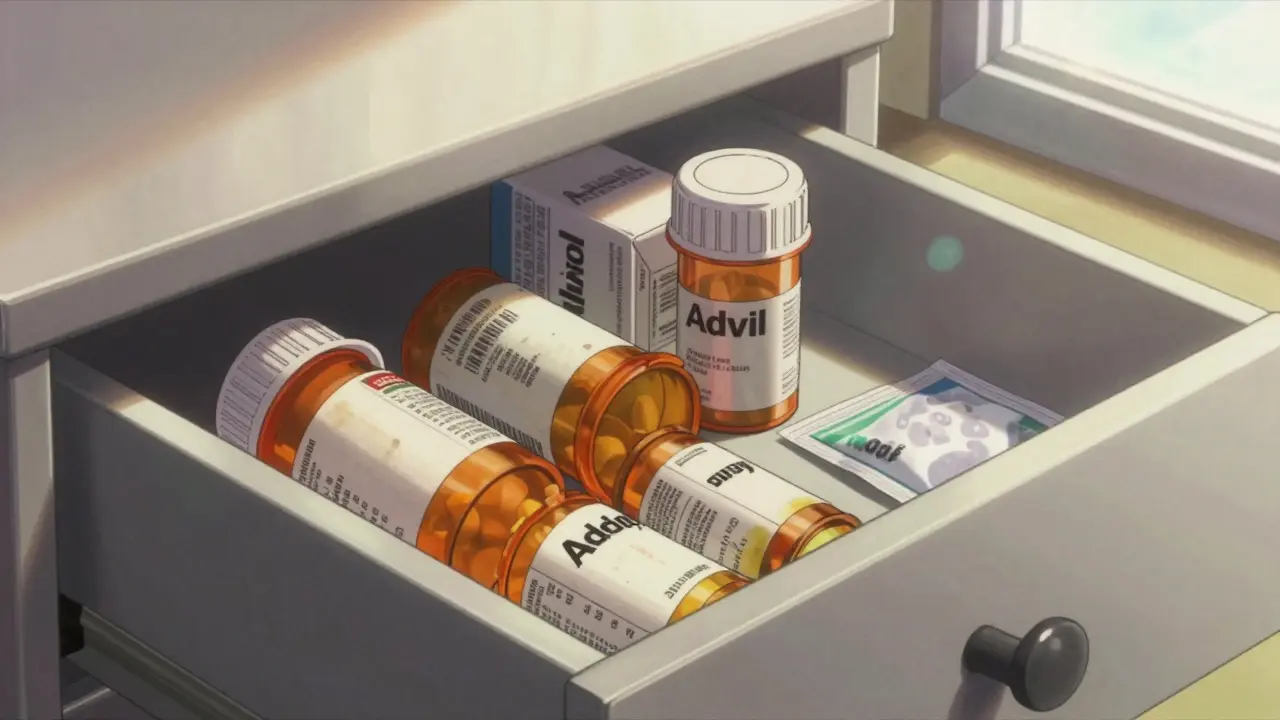
You open your medicine cabinet and find a bottle of ibuprofen from 2021. The expiration date is past. Do you toss it? Or do you pop a pill when your headache hits? Most people don’t know the truth about what expiration dates actually mean-and that’s dangerous. The label isn’t a death sentence. It’s not a guarantee, either. It’s just a manufacturer’s cutoff point for guaranteed potency, not a scientific cliff edge.
What Expiration Dates Really Mean
Expiration dates on OTC meds aren’t like milk cartons. They don’t mean the drug turns toxic or useless on that day. The FDA requires manufacturers to test how long a medication stays stable under normal storage conditions. That’s it. The date is the last day they can promise the pill still has 100% of the labeled strength. After that? No one’s legally required to test it further.
Here’s what the data shows: the FDA’s own Shelf Life Extension Program tested over 100 drugs-including OTC painkillers, antihistamines, and cold meds-and found that 90% were still safe and effective 5 to 15 years past their expiration date. Some lasted even longer. Acetaminophen? Studies show it keeps 85%+ potency for 7 to 12 years if stored right. Diphenhydramine (Benadryl)? Still works after 8 years. These aren’t outliers. They’re the norm.
What Makes Medication Go Bad
It’s not time that kills your meds-it’s heat, moisture, and light. That’s why storing pills in your bathroom is one of the worst things you can do. Humidity from showers, heat from the dryer, and sunlight through the window all break down chemicals faster than time ever could.
Three things matter most:
- Storage conditions: Keep meds in a cool, dry place-like a bedroom drawer or kitchen cabinet away from the stove. Ideal temperature: 59°F to 77°F (15°C to 25°C).
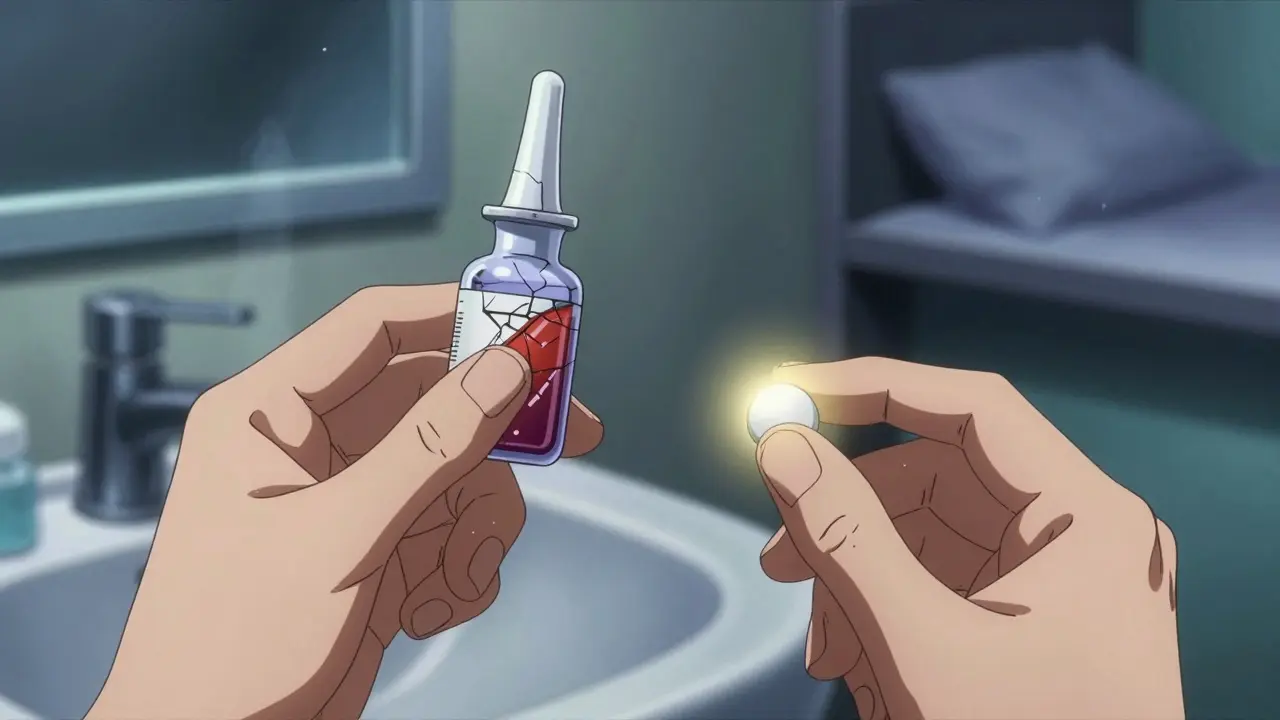
- Form: Solid pills and capsules last way longer than liquids. Syrups, eye drops, and nasal sprays can grow bacteria or break down chemically within months after expiration.
- Packaging: Original blister packs and sealed bottles protect better than loose pills in a jar. If the seal is broken or the container is cracked, toss it.
Look at your meds. If tablets are crumbly, discolored, or smell funny-like vinegar or chemicals-they’re degraded. Don’t risk it. That’s a real warning sign. But if they look and feel normal? They’re probably fine.
The Real Danger Zones
Not all expired meds are created equal. Some can be risky. A few can be deadly.
Nitroglycerin-used for heart attacks-loses potency fast. Studies show it can drop 40-50% within six months of expiration. If you’re relying on it during chest pain, you could be gambling with your life.
Insulin degrades after opening, even before expiration. After it’s expired, it becomes unpredictable. One study found expired insulin contributed to 18% of diabetic ketoacidosis ER visits. That’s not a minor risk.
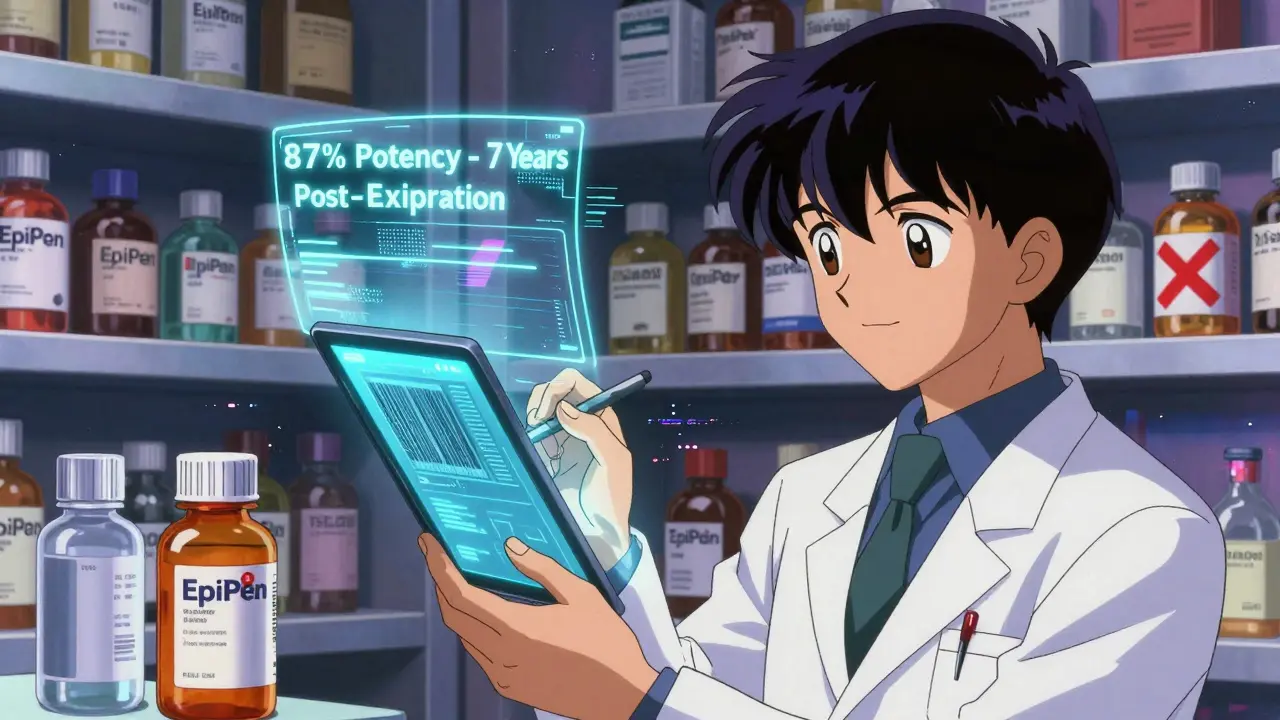
EpiPens are another high-stakes case. Research shows they can lose 25-50% of their effectiveness 1 to 90 months after expiration. In a severe allergic reaction, that drop could mean the difference between life and death.
Baby formula and birth control pills also need strict adherence. Even a 5-10% drop in hormone strength in birth control can lead to unintended pregnancy. And liquid antibiotics? They can become breeding grounds for bacteria after expiration. The CDC says they’re 100% unsafe past their date.
If you’re using any of these, don’t mess around. Replace them on time.
What’s Probably Safe to Use
For most common OTC meds, you’re fine-even past the date.
- Acetaminophen (Tylenol): 7-12 years past expiration, if stored properly.
- Ibuprofen (Advil): At least 5 years beyond expiration, often longer.
- Diphenhydramine (Benadryl): Retains potency for 8-10 years.
- Antacid tablets (Tums): Chemically stable for over a decade.
- Topical creams (hydrocortisone, antifungal): Often fine for 2-3 years past, as long as they haven’t separated or changed smell.
A 2023 survey of pharmacists found that 63% now tell patients it’s generally safe to use solid OTC meds 1-2 years past expiration if stored correctly. That’s a big shift from the old “throw it out” rule.
What People Actually Do
Real people aren’t waiting for the FDA to catch up. On Reddit’s r/Pharmacy, 78% of 1,243 respondents admitted using expired OTC meds. Most used acetaminophen, antihistamines, or pain creams. 89% said they felt no negative effects. Only 11% noticed reduced effectiveness-and those were mostly liquid forms.
Amazon reviews tell the same story. Of 1,842 comments about expired meds, 68% of complaints came from people who tried liquid products. Only 29% had issues with pills. One user wrote: “Used 10-year-old Tylenol during a power outage. Worked fine. Didn’t want to risk going to the pharmacy in a storm.”
But there’s a flip side. On Drugs.com, multiple users reported EpiPens failing during allergic reactions. That’s not coincidence. It’s science. When the stakes are high, don’t take chances.
How to Store Meds Right
Most people store meds in the bathroom. Bad idea. The CDC says 68% of households do it. That’s why so many pills degrade early.
Do this instead:
- Keep meds in a dry, cool place-like a locked drawer in your bedroom.
- Avoid windows and heat sources (ovens, radiators, laptops).
- Don’t transfer pills to pill organizers for long-term storage-they expose them to air and moisture.
- If your bottle has a desiccant packet (that little silica pack), leave it in. It helps absorb moisture.
- Keep liquids in their original bottles. Don’t freeze them.
Pro tip: Use a small plastic bin with a lid to group all your meds in one spot. Label it clearly. Check it once a year.
How to Dispose of Expired Meds
Don’t flush them. Don’t throw them in the trash. Don’t pour them down the sink. Those are old habits that hurt the environment.
Here’s what to do:
- Use a drug take-back kiosk. Walgreens, CVS, and many police stations have them. They’re free and safe.
- If no kiosk is nearby, mix pills with coffee grounds or cat litter in a sealed bag. Throw it in the trash. This makes them unappealing to kids or pets.
- For liquids, pour them into a sealable container with kitty litter or sawdust before trashing.
- Never flush unless the label says to-only a few specific drugs (like fentanyl patches) require it.
Only 28% of people use proper disposal methods. That’s a problem. The FDA estimates $765 million in OTC meds get wasted every year because people toss them too early.
What’s Changing in 2026
The FDA is finally starting to listen to the science. In early 2023, they released draft guidance proposing risk-based expiration dating. That means:
- Stable pills (like acetaminophen) might get 5- or 10-year dates.
- Liquids and injectables keep short dates.
- QR codes on packaging could tell you exactly how long your bottle is good for-based on its type, not a one-size-fits-all label.
Pharmacies are already testing this. The American Pharmacists Association launched “Smart Expiry” in January 2023. Scan the barcode on your bottle, and you get a tailored expiration timeline. It’s not everywhere yet-but it’s coming.
Meanwhile, Congress is considering the Safe Medication Extension Act. If passed, it would let the FDA legally extend expiration dates based on real-world data-not just manufacturer guesswork.
Final Rule: Use Your Head, Not Just the Date
Here’s your simple guide:
- Replace immediately: Insulin, EpiPens, nitroglycerin, liquid antibiotics, birth control.
- Use with caution: Eye drops, nasal sprays, liquid pain relievers. If it looks cloudy or smells off, toss it.
- Probably fine: Tablets and capsules-acetaminophen, ibuprofen, antihistamines, antacids-if stored well and look normal.
Expiration dates are a safety net, not a rulebook. The science says most pills don’t suddenly turn harmful. But your body doesn’t care about regulations. It cares about whether the drug works.
If you’re unsure, ask your pharmacist. They’ve seen it all. And if you’re treating something serious-like a heart condition, severe allergy, or infection-don’t gamble. Get a new one.
For the rest? Check the appearance. Smell it. Feel it. If it looks good, it probably is. And if you’ve got a 5-year-old bottle of Tylenol in the back of your drawer? You’re not wasting money. You’re just using what’s already there.
Is it dangerous to take expired OTC painkillers like ibuprofen or Tylenol?
For most people, taking expired ibuprofen or acetaminophen isn’t dangerous-if the pills look and smell normal. The FDA’s own testing shows these solid medications often retain 85% or more of their potency for 5 to 12 years past expiration when stored in a cool, dry place. The risk isn’t toxicity-it’s reduced effectiveness. If your headache doesn’t go away after taking an expired pill, it’s likely not strong enough, not harmful.
Why do expiration dates exist if most meds last longer?
Expiration dates were created in 1979 to ensure manufacturers guarantee potency and safety. Testing every pill beyond 2-3 years is expensive, and companies don’t have to prove they last longer. So they set conservative dates to avoid liability. It’s not about science-it’s about legal protection. The FDA’s Shelf Life Extension Program proved most drugs last much longer, but changing industry standards takes time.
Can expired allergy meds like Benadryl still work?
Yes. Diphenhydramine (Benadryl) is one of the most stable OTC drugs. FDA testing found it retains over 85% potency for 8-10 years after expiration when stored properly. Many users report it works fine even 10+ years past the date. But if the tablets are crumbling or smell strange, don’t use them. The chemical breakdown can create unpredictable effects.
What should I do with expired eye drops or nasal sprays?
Toss them. Liquid formulations are high-risk after expiration. Even if they look clear, they can grow bacteria or lose potency quickly. A 2019 study found 67% of expired eye drops were contaminated with microbes. Using them can cause eye infections or reduce effectiveness. Never use liquid meds past their date unless directed by a doctor.
How can I tell if my medicine has gone bad?
Look for changes: pills that are cracked, discolored, or crumbly; liquids that are cloudy, separated, or have particles; creams that smell rancid or changed texture. If it looks, smells, or feels different than when you bought it, throw it out. These are signs of chemical breakdown. Even if it’s before the expiration date, if it’s degraded, it’s not safe to use.
Should I keep expired EpiPens as backups?
No. EpiPens lose 25-50% of their effectiveness within months after expiration. In a severe allergic reaction, that drop could be life-threatening. Even if it looks fine, the epinephrine degrades. Always carry a current, unexpired EpiPen. If yours is expired, replace it immediately. Don’t rely on an old one as a backup.

Oladeji Omobolaji
January 24, 2026 AT 10:39Sallie Jane Barnes
January 26, 2026 AT 06:03Vanessa Barber
January 27, 2026 AT 07:47Laura Rice
January 28, 2026 AT 05:18Stacy Thomes
January 28, 2026 AT 15:30Janet King
January 30, 2026 AT 10:32charley lopez
January 31, 2026 AT 01:20Kerry Moore
February 1, 2026 AT 09:30Andrew Smirnykh
February 1, 2026 AT 16:01dana torgersen
February 3, 2026 AT 08:51Sue Stone
February 5, 2026 AT 06:46Kerry Evans
February 5, 2026 AT 18:48Susannah Green
February 6, 2026 AT 00:14Dawson Taylor
February 7, 2026 AT 18:34