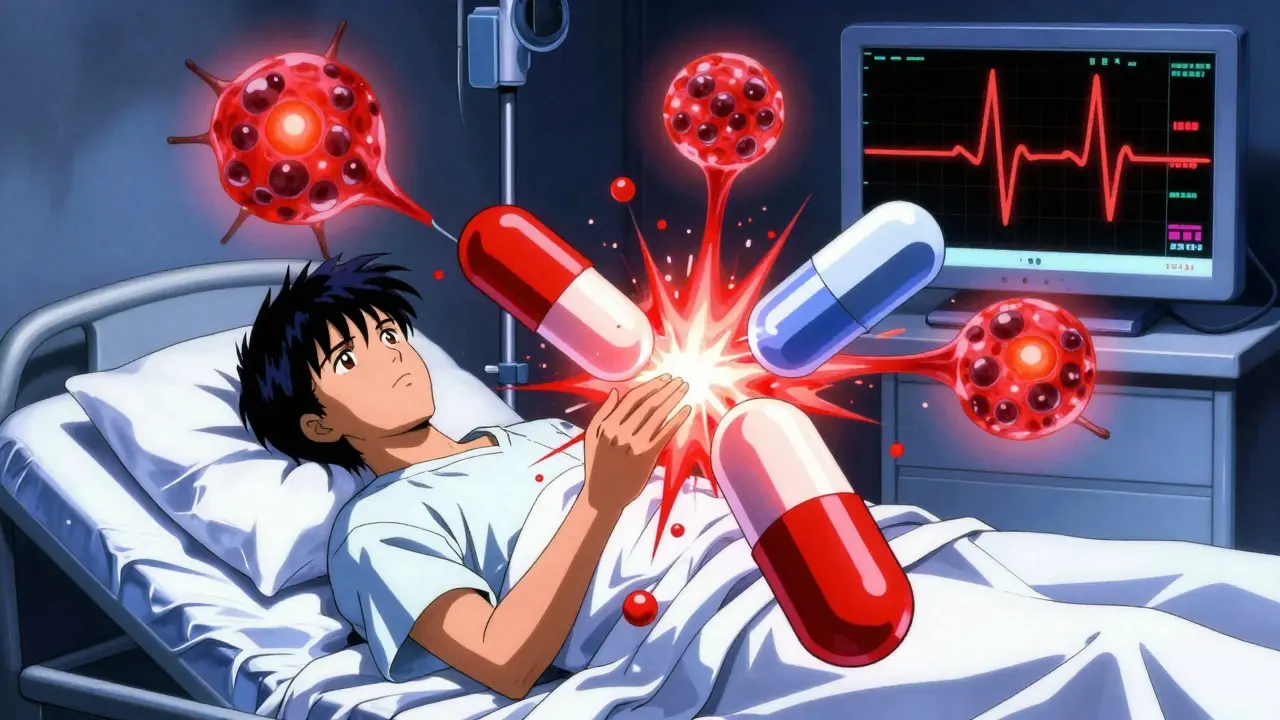
Imagine taking two medications that are perfectly safe on their own. You swallow them at different times, you follow the dosage instructions to the letter, yet you end up in the hospital with a dangerous drop in blood pressure or a racing heart. This isn't magic, and it’s not usually because your body failed to process the drugs correctly. It is likely a pharmacodynamic drug interaction, which is a situation where one drug changes the effect of another drug at the site of action without altering its concentration in the blood.
Unlike pharmacokinetic interactions-which mess with how your body absorbs, distributes, metabolizes, or excretes a drug-pharmacodynamic interactions happen right at the cellular level. One drug modifies the response to another, often by fighting for the same biological target or triggering opposing physiological effects. According to data from European teaching hospitals, these interactions account for roughly 40% of all clinically significant drug-drug interactions. Understanding them is critical, especially as we age and take more medications simultaneously.
How Pharmacodynamic Interactions Work
To grasp why these interactions happen, you have to look at what drugs actually do inside your body. Most drugs work by binding to specific receptors on cells, much like a key fitting into a lock. When two drugs compete for the same "lock," or when they trigger opposite responses in the same system, an interaction occurs.
The primary classification system identifies three major types of outcomes:
- Synergistic: The combined effect is greater than the sum of the individual effects. For example, combining two sedatives might cause unconsciousness even if each dose alone would only make you drowsy.
- Additive: The combined effect equals the sum of the individual effects. If Drug A lowers blood pressure by 10 points and Drug B lowers it by 10 points, together they lower it by 20 points.
- Antagonistic: One drug reduces or blocks the effect of another. This is common when a patient takes a medication to open airways while simultaneously taking a medication that constricts them.
At the receptor level, these interactions depend on characteristics like affinity (how tightly the drug binds) and efficacy (how well it triggers a response). As noted in clinical pharmacology frameworks, the drug with higher receptor affinity will typically dominate the outcome. If you take a beta-blocker like propranolol alongside a beta-agonist like albuterol, the propranolol can completely negate the albuterol's ability to open your lungs because it occupies the beta-receptors first.
Major Mechanisms of Interaction
Experts categorize these interactions into four primary mechanisms. Knowing these helps clinicians predict risks before they happen.
- Receptor Competition: Two drugs bind to the same receptor site. One acts as an agonist (activator) and the other as an antagonist (blocker). A classic example is morphine and naloxone. Naloxone is used to reverse opioid overdoses because it kicks morphine off the receptor sites, precipitating immediate withdrawal symptoms in dependent patients.
- Physiological Antagonism: Drugs act on different receptors but produce opposite physiological effects. For instance, histamine causes bronchoconstriction, while epinephrine causes bronchodilation. They don't touch the same receptor, but they pull the body in opposite directions.
- Chemical Antagonism: The drugs react chemically in the body fluids to form an inactive complex. This is less common in modern systemic therapy but relevant in local treatments.
- Alteration of Disease State: One drug changes the underlying condition so that the second drug becomes less effective or more toxic. For example, diuretics can cause low potassium levels (hypokalemia), which makes the heart more sensitive to the toxic effects of digoxin.
A particularly insidious mechanism involves non-steroidal anti-inflammatory drugs (NSAIDs) like ibuprofen interfering with antihypertensive drugs. NSAIDs inhibit renal prostaglandin synthesis, which reduces renal blood flow by approximately 25%. This directly undermines the blood-pressure-lowering effects of ACE inhibitors, rendering the hypertension treatment ineffective.
| Drug Combination | Mechanism | Clinical Consequence |
|---|---|---|
| SSRI + MAOI | Synergistic Serotonin Increase | High risk of Serotonin Syndrome (life-threatening) |
| Albuterol + Propranolol | Receptor Antagonism | Reduced asthma relief; potential bronchospasm |
| Ibuprofen + Lisinopril | Physiological Interference | Increased blood pressure; reduced kidney function |
| Warfarin + Aspirin | Additive Anticoagulation | Significantly increased bleeding risk |
| Trimethoprim + Sulfamethoxazole | Synergistic Antibacterial | Enhanced infection clearance; lower individual doses needed |
The Dangers of Polypharmacy
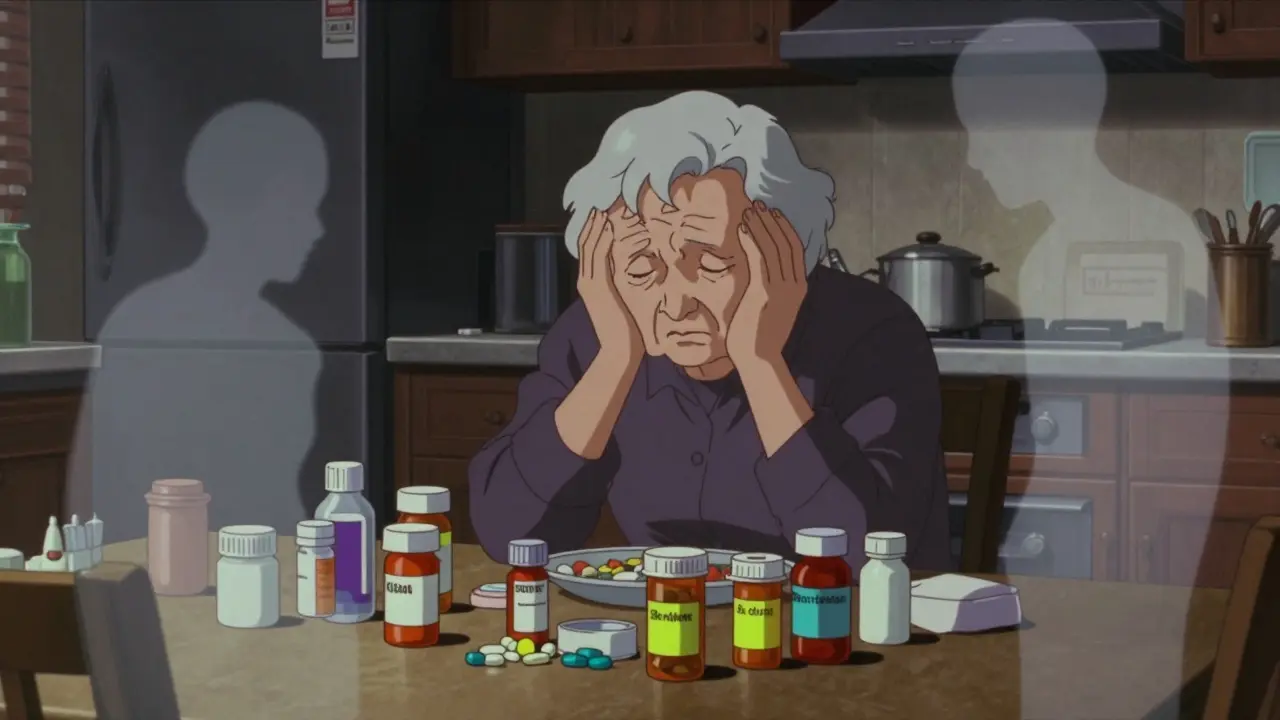
The risk of pharmacodynamic interactions skyrockets with polypharmacy-the concurrent use of multiple medications. This is especially prevalent in elderly populations. Data shows that adults aged 65 and older typically take 4.8 prescription medications simultaneously. With this demographic expected to reach 1.5 billion globally by 2050, the burden of managing these interactions is growing rapidly.
Not all combinations are created equal. The most dangerous interactions involve drugs with narrow therapeutic indices. These are drugs where the difference between a helpful dose and a toxic dose is very small. An NIH analysis found that 83% of life-threatening pharmacodynamic interactions involved at least one drug with a therapeutic index below 3.0. Examples include warfarin, lithium, and certain anti-seizure medications.
Consider the combination of selective serotonin reuptake inhibitors (SSRIs) and monoamine oxidase inhibitors (MAOIs). Both classes increase serotonin levels in the brain. When combined, they can cause serotonin syndrome, a potentially fatal condition characterized by agitation, high temperature, rapid heart rate, and muscle rigidity. A 2021 meta-analysis indicated that this combination increases the risk of serotonin syndrome by 24-fold. In real-world scenarios, such errors can lead to intensive care admissions, as documented in case reports involving linezolid (an antibiotic with MAOI properties) and sertraline.
Another frequent culprit is the combination of anticoagulants (like warfarin) with antiplatelet agents (like aspirin or clopidogrel). While sometimes necessary after stent placement, this additive effect on blood thinning significantly raises the risk of gastrointestinal bleeding and intracranial hemorrhage. Surveys indicate that 38% of dangerous pharmacodynamic interactions encountered monthly by physicians involve this specific class combination.
When Interactions Are Beneficial
It’s important to note that not all pharmacodynamic interactions are bad. Clinicians often intentionally combine drugs to achieve synergistic effects, allowing for lower doses of each individual drug and reducing side effects.
A prime example is the combination of trimethoprim and sulfamethoxazole (often sold as Bactrim or Septra). These two antibiotics inhibit sequential steps in bacterial folic acid synthesis. By blocking two different stages of the same pathway, they create a synergistic antibacterial effect that is far more potent than either drug alone. Studies show this combination can reduce the required individual doses by 75% compared to monotherapy.
Similarly, in oncology, chemotherapy regimens almost always rely on pharmacodynamic synergy to attack cancer cells through multiple pathways simultaneously, preventing resistance and improving survival rates. Even in mental health, recent trials have shown that low-dose naltrexone combined with antidepressants can improve treatment-resistant depression in nearly 70% of patients, leveraging intentional pharmacodynamic modulation.

Managing Risks in Clinical Practice
So, how do we stay safe? Relying solely on memory is impossible given the thousands of possible combinations. Modern healthcare relies on a multi-layered approach.
Clinical Decision Support Systems (CDSS): Electronic health records now include software that flags potential interactions. A 2020 study found these systems reduced pharmacodynamic interaction errors by 37%. However, they are not perfect. They still miss about 22% of significant interactions due to oversimplified algorithms and often generate "alert fatigue," where doctors ignore warnings because many are irrelevant.
Pharmacist-Led Reviews: Human expertise remains irreplaceable. Research published in the BMJ Quality & Safety showed that pharmacist-led medication reviews reduced adverse events from pharmacodynamic interactions by 58% in elderly patients. Pharmacists are trained to understand the nuance of receptor subtypes and disease states that software might miss.
Patient Education: Patients must be aware of their full medication list, including over-the-counter drugs and supplements. Many people don’t realize that NSAIDs like ibuprofen or herbal supplements like St. John’s Wort can interact dangerously with prescription meds. Keeping an updated list and sharing it with every healthcare provider is the single most effective step a patient can take.
Future Directions in Prediction
The field is moving toward proactive prevention rather than reactive identification. Regulatory bodies like the FDA now require specific pharmacodynamic interaction studies for new central nervous system drugs. Academic research is focusing on quantitative modeling and machine learning.
For instance, researchers at UCSF developed a machine learning algorithm that achieved 89% accuracy in predicting serotonin syndrome risk from polypharmacy regimens. Integrating this kind of predictive power into electronic health records could revolutionize safety. The UK’s National Health Service has already begun piloting such systems in several hospitals. As our population ages and medication complexity grows, mastering pharmacodynamics is no longer just academic-it’s a matter of life and death.
What is the difference between pharmacokinetic and pharmacodynamic interactions?
Pharmacokinetic interactions affect how the body handles a drug (absorption, distribution, metabolism, excretion), changing the drug's concentration in the blood. Pharmacodynamic interactions occur at the site of action (receptors), where one drug alters the effect of another without necessarily changing its blood concentration.
Are all drug interactions harmful?
No. While many interactions are dangerous, some are therapeutically beneficial. Synergistic interactions, such as combining trimethoprim and sulfamethoxazole for infections, allow for lower doses and better efficacy. Clinicians often design treatment plans around these positive interactions.
Which drugs are most likely to cause serious pharmacodynamic interactions?
Drugs with narrow therapeutic indices are highest risk. These include anticoagulants (warfarin), anti-seizure medications, lithium, and certain psychiatric drugs like SSRIs and MAOIs. Additionally, combinations affecting the central nervous system (sedatives, opioids) and cardiovascular system (beta-blockers, nitrates) are frequent sources of severe interactions.
Can over-the-counter medications cause pharmacodynamic interactions?
Yes. NSAIDs like ibuprofen and naproxen can interfere with blood pressure medications. Antacids can alter the absorption of other drugs. Herbal supplements like St. John’s Wort can induce enzyme changes or interact with serotonin levels. Always inform your doctor about all OTC products you use.
How can I prevent dangerous drug interactions?
Keep an updated list of all medications and supplements. Share this list with every healthcare provider and pharmacist. Use a single pharmacy for all prescriptions to enable centralized checking. Ask your pharmacist specifically about pharmacodynamic interactions, especially if you are starting a new medication or have multiple chronic conditions.