CYP3A4 Inhibition: How Drug Interactions Affect Your Medications
When you take a medication, your body doesn’t just absorb it and call it a day—it breaks it down, mostly using a group of liver enzymes called CYP3A4, a key enzyme in the cytochrome P450 family responsible for metabolizing over half of all prescription drugs. Also known as cytochrome P450 3A4, it’s the main gatekeeper that decides how fast or slow your body clears out drugs like statins, blood thinners, and even some painkillers. When something blocks or slows down CYP3A4, it’s called CYP3A4 inhibition. That means your meds stick around longer than they should, building up to levels that can cause serious side effects—or worse, toxicity.
This isn’t just about one drug. It’s about combinations. Grapefruit juice is the most famous culprit—it’s not just a healthy breakfast addition but a powerful CYP3A4 inhibitor. A single glass can mess with how your body handles medications for hours. But it’s not just fruit. Antibiotics like clarithromycin, antifungals like ketoconazole, even some antidepressants and heart meds can do the same thing. And when these mix with statins, sedatives, or immunosuppressants? That’s when things get risky. People end up in the ER not because they took too much, but because their body couldn’t break it down fast enough. Doctors don’t always catch it because the interaction isn’t obvious on the surface. It’s hidden in the chemistry.
It’s not just about what you take—it’s about what your body can handle. Older adults, people with liver issues, or those on multiple prescriptions are at higher risk. That’s why so many of the posts here focus on dosage adjustments, drug comparisons, and side effect profiles. Whether it’s statin liver enzyme spikes, how meclizine interacts with other motion-sickness drugs, or why febuxostat needs careful monitoring, they all tie back to the same invisible system: enzyme activity. CYP3A4 inhibition doesn’t make headlines, but it’s behind many of the unexpected reactions people have to their meds.
Below, you’ll find real-world examples of how this plays out—how one drug changes the fate of another, why certain combinations are avoided, and how to spot red flags before they become emergencies. No theory. No fluff. Just what you need to know to take your meds safely.
Grapefruit Juice and Medications: What You Need to Know Before You Drink
By Lindsey Smith On 14 Nov, 2025 Comments (12)
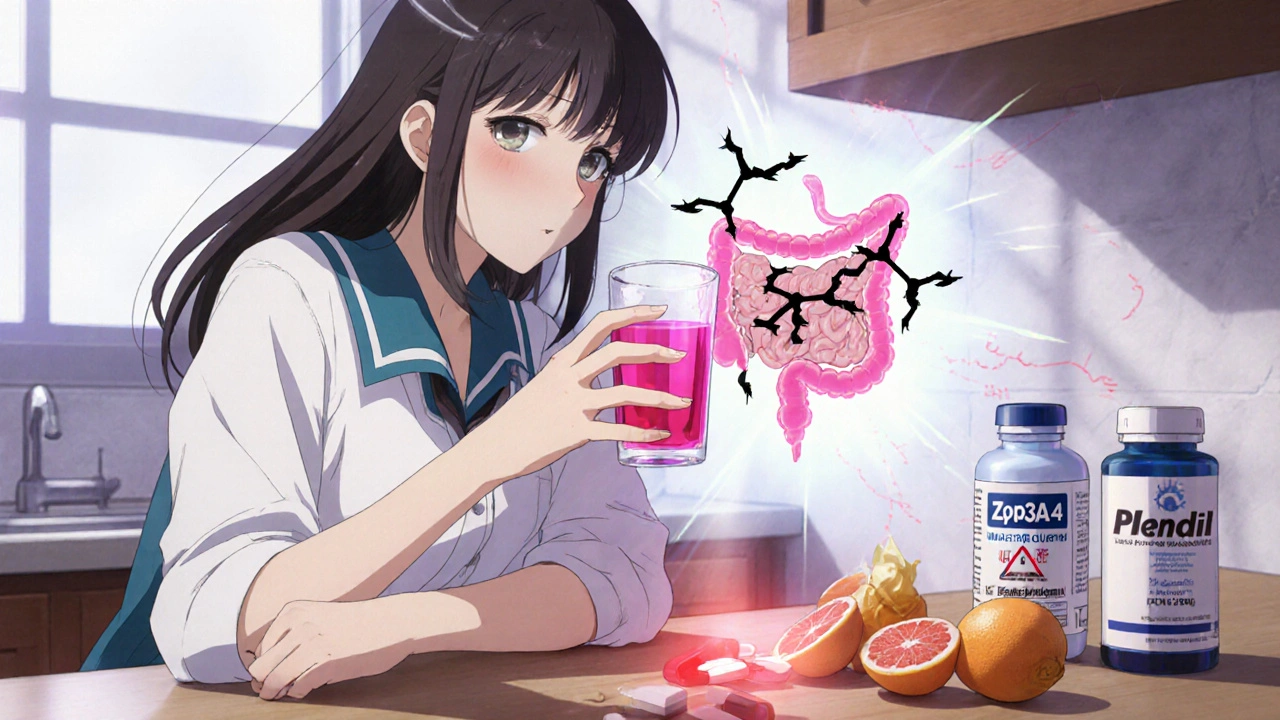
Grapefruit juice can dangerously increase levels of many medications, leading to serious side effects. Learn which drugs interact, why it happens, and how to stay safe.
View More