
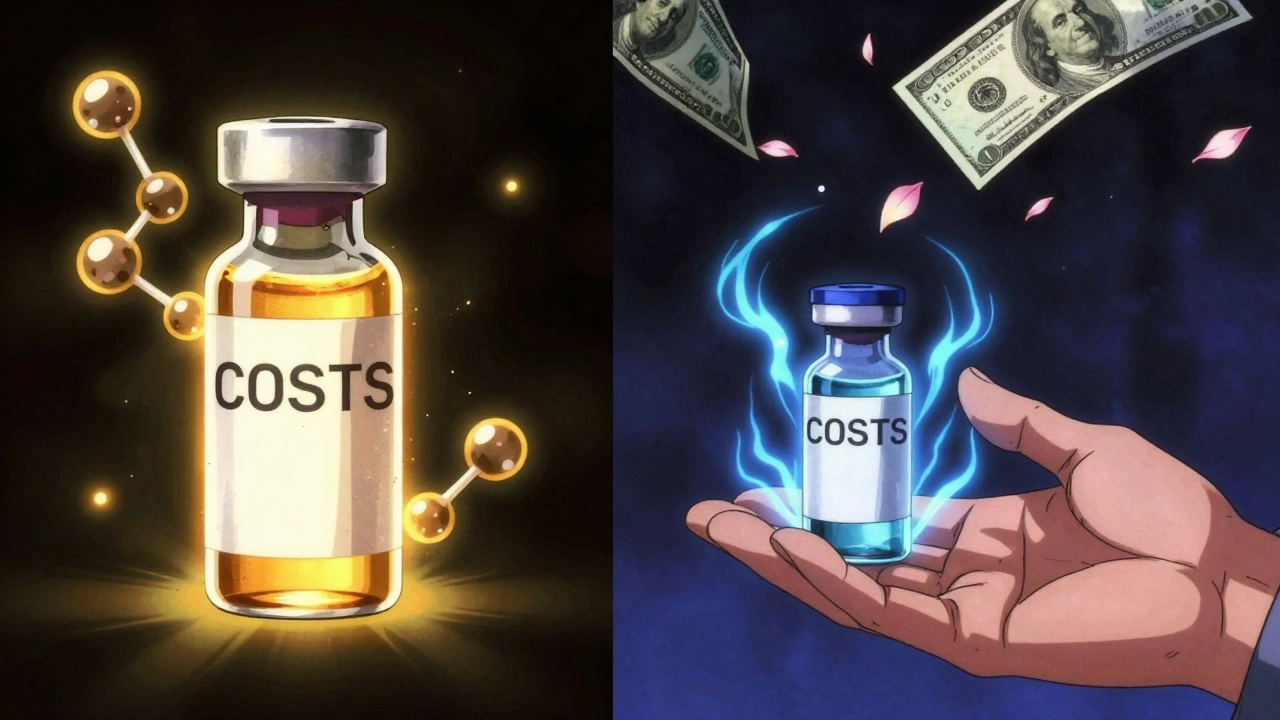
When you hear the word biosimilar, you might think it’s just another generic drug. But it’s not. Biosimilars aren’t copies like the pills you pick up for high blood pressure or cholesterol. They’re complex medicines made from living cells-like the biologics they’re based on-and getting them to market is a whole different ballgame. Yet, they’re saving patients and healthcare systems billions. The question isn’t whether they work-it’s why they’re still not used more, and how much you’re really saving when you switch.
Why Biosimilars Aren’t Like Generics
Generic drugs are simple. They’re chemically identical to brand-name pills. If you take a generic lisinopril, it’s the same molecule as the brand version. Biosimilars? Not even close. They’re made from living organisms-bacteria, yeast, or mammalian cells-grown in huge bioreactors. Even tiny changes in temperature, pH, or nutrient mix can alter the final product. That’s why the FDA doesn’t call them “identical.” They call them “highly similar.” This complexity drives up costs. Developing a biosimilar takes 8-10 years and can cost $100-$200 million. Generics? Often under $5 million. That’s why biosimilars don’t slash prices by 80-90% like generics do. But they still cut costs hard. In 2024, biosimilars saved the U.S. healthcare system $20.2 billion. Since 2015, that total hits $56.2 billion. That’s not pocket change. That’s enough to cover cancer treatments for hundreds of thousands of people who couldn’t afford them before.Real-World Savings: Humira and Stelara
The biggest success story? Humira (adalimumab). For years, it was the top-selling drug in the world, costing over $7,000 per month. When the first biosimilars hit the market in 2023, list prices dropped by up to 85%. That sounds amazing-until you dig into the rebate system. Pharmaceutical companies pay huge rebates to pharmacy benefit managers (PBMs), which can make the net price of the original drug almost match the biosimilar’s list price. So while the sticker price looks low, the real savings depend on how your plan negotiates. Still, patients feel it. In commercial insurance, out-of-pocket costs for biosimilars are 23% lower on average than for the originator. For Humira biosimilars, some patients saw their monthly copay drop from $150 to $30. That’s life-changing for someone managing rheumatoid arthritis or Crohn’s disease. Stelara (ustekinumab) followed a similar path. Nine biosimilars launched in 2025, with list prices as much as 90% below the original. Medicare Part B data shows prices kept falling after each new biosimilar entered the market. The more competitors, the harder the price pressure. One study found that if a second biosimilar enters within three years of the first, average sales prices drop nearly twice as fast.The Biosimilar Void: A $234 Billion Missed Opportunity
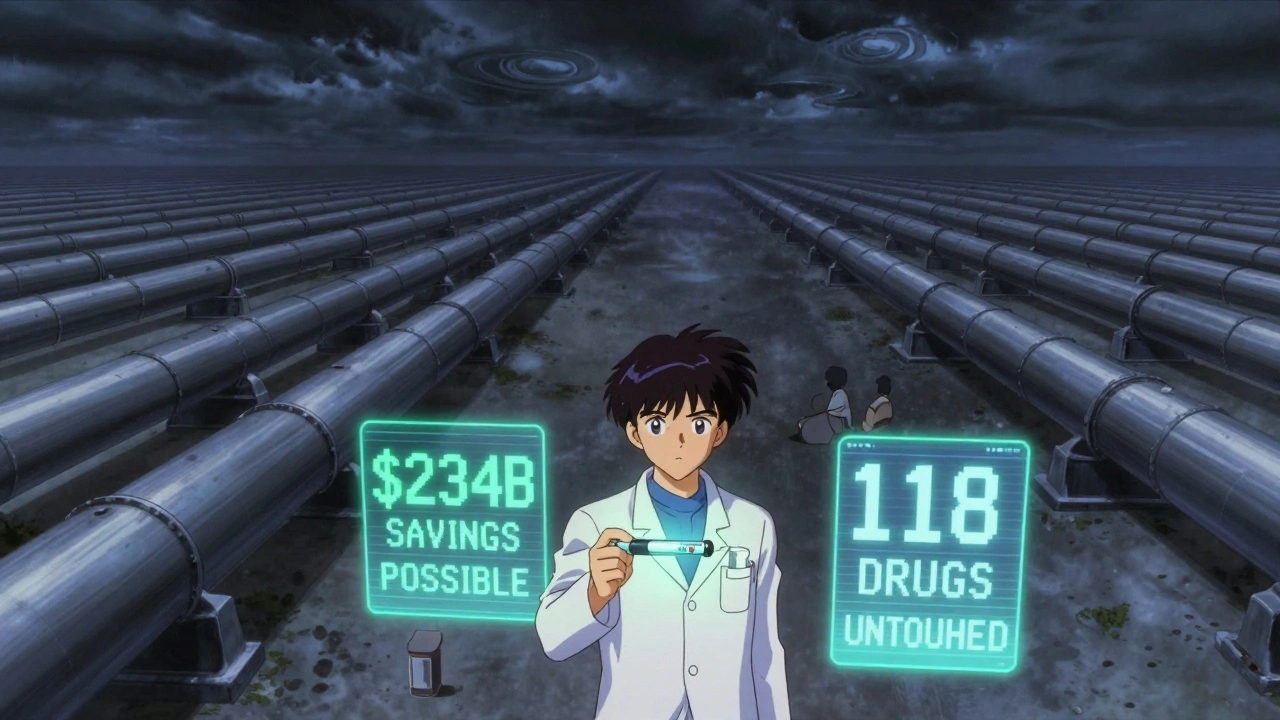
Here’s the scary part: 90% of biologics set to lose patent protection in the next decade don’t have a single biosimilar in development. That’s 118 drugs-many of them for cancer, autoimmune diseases, and rare conditions-facing no competition. In the EU, 73% of high-sales biologics have biosimilars in the pipeline. In the U.S.? Only 23%. Why? Because developing biosimilars is risky. The regulatory path is long. The market is dominated by originator companies with deep pockets and aggressive patent strategies. If the U.S. filled this gap, it could save $234 billion over the next ten years. That’s more than the entire annual budget of the CDC. But right now, the pipeline is empty. And without new biosimilars, prices for older biologics won’t budge. Patients will keep paying $10,000 a year for drugs that could cost $2,000-if only someone built the biosimilar.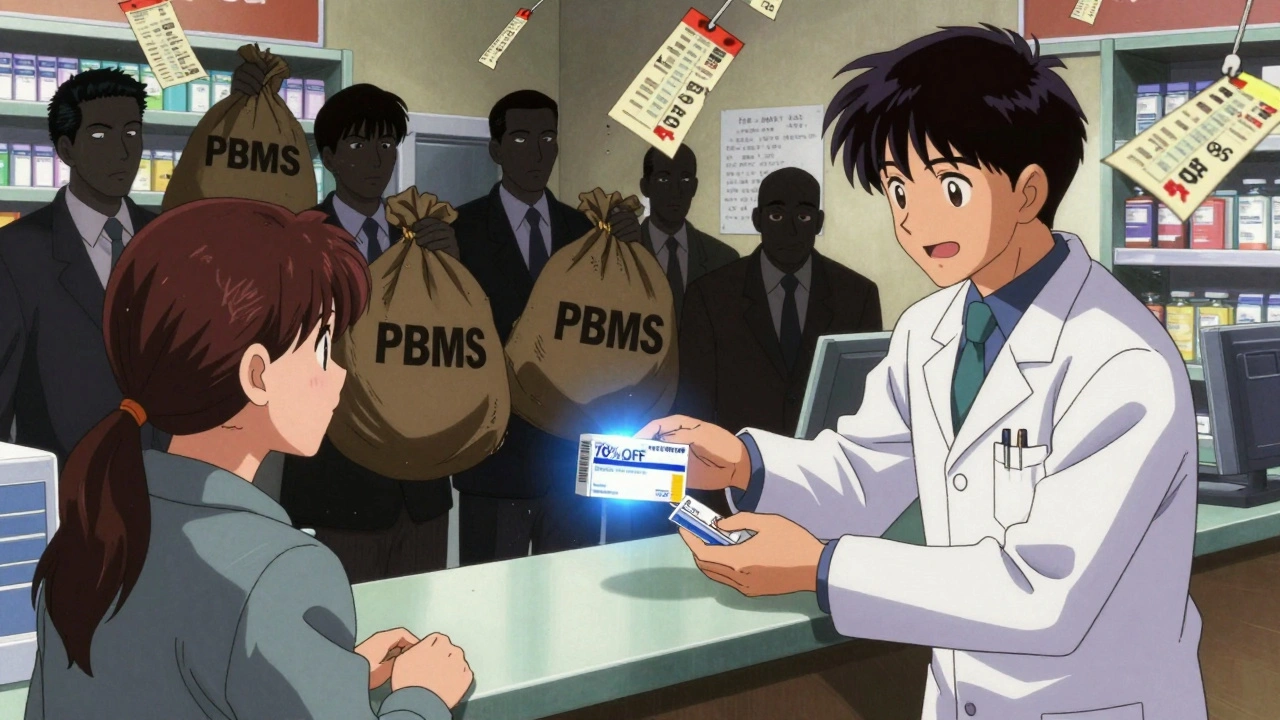
Who’s Saving Money-and Who’s Not
Employers are seeing real savings. One company reported $1.53 million saved per year when all employees switched from a biologic to its biosimilar. Across all self-insured U.S. employers, switching just two biologics to biosimilars could save $1.4 billion. That’s money that can go toward better benefits, lower premiums, or hiring more staff. But not everyone wins. PBMs sometimes push private-label biosimilars-ones they own or have exclusive deals with-over other options. That’s not bad in theory, but it limits choice. If your plan only covers one biosimilar, you’re not getting the full benefit of competition. Doctors and patients may also hesitate. Many still believe biosimilars are “less effective,” even though studies show no difference in safety or outcomes. A 2024 JAMA Network Open review confirmed: biosimilar prices were lower at every point after launch, and kept falling over time.How to Get the Most Savings
If you’re an employer, a plan sponsor, or even a patient trying to save money, here’s what works:- Push for formulary placement. Make biosimilars the first-line option, not the last resort.
- Use step therapy. Require patients to try the biosimilar before approving the original biologic.
- Look beyond list price. Demand transparency on net prices after rebates. A drug with a $5,000 list price might cost $3,500 after rebates-while a biosimilar with a $3,000 list price might cost $2,800 net. The biosimilar still wins.
- Educate providers and patients. Many doctors don’t know biosimilars are just as safe. Many patients fear switching. Clear, simple messaging helps.
What’s Next? Policy, Pressure, and Progress
The Biden administration’s 2024 executive order on drug pricing specifically called out biosimilars as a key tool to lower costs. The FDA has streamlined approval pathways. In April 2025, CSRxP praised recent federal commitments to boosting competition. But policy alone won’t fix the pipeline gap. We need incentives for manufacturers to invest in biosimilars for less profitable drugs-like those for rare diseases. We need clearer rules on rebate transparency. We need state-level policies that encourage substitution. Meanwhile, countries like Norway have already shown what’s possible. Within three years of a biosimilar launch, 86% of patients there switched to it. The U.S. is nowhere near that. But it doesn’t have to stay that way.The Bottom Line
Biosimilars aren’t magic. They won’t cut every biologic’s price in half overnight. But they’re the only real tool we have to bring down the cost of life-saving medicines that have been priced beyond reach for too long. The savings are real-$20 billion last year alone. The potential is enormous-$234 billion over ten years. The only thing missing is the will to act. If you’re paying for biologics now, ask your pharmacist: Is there a biosimilar? Is it covered? How much will it save you? The answer might surprise you.Are biosimilars as safe as the original biologics?
Yes. The FDA requires biosimilars to show no clinically meaningful differences in safety, purity, or potency compared to the original biologic. Since 2015, over 3.3 billion days of patient therapy have been provided using biosimilars with no unique safety concerns. Studies published in JAMA Network Open and other peer-reviewed journals confirm they perform the same in real-world use.
Why don’t biosimilars save more than 80-90% like generics?
Because they’re far more complex to make. Generics are simple chemical compounds. Biosimilars are made from living cells, requiring massive facilities, strict controls, and years of testing. Development costs are 20-40 times higher than for generics. That limits how low prices can go-though savings of 15-35% on average are still massive for drugs that cost $10,000+ per year.
Can I switch from a biologic to a biosimilar safely?
Yes-if your doctor approves it. Many biosimilars are designated as “interchangeable” by the FDA, meaning they can be substituted without the prescriber’s involvement, just like generics. Even non-interchangeable biosimilars have been used safely in millions of patients. Clinical guidelines from the American College of Rheumatology and other groups support switching when appropriate.
Why are originator biologics still so dominant in the U.S. market?
Because of rebate deals. Originator companies pay large rebates to pharmacy benefit managers (PBMs), which can offset the price advantage of biosimilars. This makes the net cost of the original drug look competitive-even when its list price is 80% higher. Without transparency in these deals, it’s hard for plans to choose the cheaper option. It’s a system designed to protect high prices, not lower them.
What’s the biggest barrier to more biosimilar adoption?
The lack of development. Over 100 biologics will lose patent protection in the next 10 years, but only 12 have biosimilars in the pipeline. That’s a 90% gap. Manufacturers aren’t investing because the market is too risky, the regulatory path is slow, and originator companies fight hard to protect their profits. Without policy changes to incentivize development, most of these drugs will stay expensive for decades.

Victor T. Johnson
December 4, 2025 AT 02:11They ain't generics but they're close enough and the savings are real
Why are we still letting big pharma hold the whole system hostage??
Nicholas Swiontek
December 4, 2025 AT 05:57My cousin switched from Humira to a biosimilar and her copay dropped from $180 to $25
She's been stable for over a year now
People need to stop acting like biosimilars are 'second rate' - they're not
They're science doing its job
Robert Asel
December 5, 2025 AT 06:20Shannon Wright
December 6, 2025 AT 11:15It’s not just about the money - it’s about access
People with autoimmune diseases shouldn’t have to choose between rent and their medication
And the fact that 90% of upcoming biologics have zero biosimilar competition? That’s not a market failure - that’s a moral failure
We need to incentivize development for rare disease drugs too - not just the blockbuster ones
Imagine if we treated health like a human right instead of a profit center
It’s not radical - it’s basic decency
vanessa parapar
December 7, 2025 AT 01:45It’s about control
Big pharma lets a biosimilar in just enough to look good while keeping the rebates locked in
And don’t even get me started on PBMs
They’re the real villains here - not the manufacturers
Everyone’s playing the game - patients just lose
Ben Wood
December 7, 2025 AT 05:15Sakthi s
December 8, 2025 AT 06:43Rachel Nimmons
December 8, 2025 AT 16:09There’s something they’re not telling us
Why are the same companies that make the originals also pushing the biosimilars?
And why do the rebate numbers never add up?
It’s all connected - the FDA, the PBMs, the insurers
They’re all part of the same machine
They want you to think you’re saving money... but you’re just being steered
They’re keeping the prices high... just with a different label
Abhi Yadav
December 9, 2025 AT 23:22It’s about the illusion of choice
We’ve been sold a myth - that competition lowers prices
But when the same oligopoly owns both the original and the 'competing' biosimilar...
It’s not capitalism
It’s theater
And we’re all just audience members paying for front-row seats to our own exploitation
Julia Jakob
December 10, 2025 AT 21:32Turns out my insurance didn’t even tell me there was a cheaper option
They just automatically switched me
Now I’m saving $120 a month
But why did I have to find out on my own?
Why isn’t this common knowledge?
It’s not like I’m some medical expert
Robert Altmannshofer
December 10, 2025 AT 23:48People act like healthcare is this broken, hopeless mess
But biosimilars? They’re proof that innovation + policy + patient advocacy can actually move the needle
Yeah, the system’s rigged - but it’s not unbeatable
And every time someone switches from a $7k/month drug to a $1k biosimilar? That’s a win
Small? Maybe.
But real?
Absolutely
Nancy M
December 11, 2025 AT 14:31gladys morante
December 12, 2025 AT 06:32