

Side Effect Detection Simulator
How Side Effect Detection Works
Digital pill sensors monitor vital signs via a wearable patch. When you take a medication, the system looks for abnormal changes in your physiological data that might indicate side effects. This simulator shows how the detection process works.
Side Effect Risk Assessment
Imagine swallowing a pill and knowing, for sure, whether it actually reached your stomach - and not just that, but also whether your body reacted to it in real time. This isn’t science fiction. It’s happening now, with digital pill sensors quietly transforming how we track whether people take their meds and how their bodies respond.
What Exactly Is a Digital Pill?
A digital pill isn’t just a regular tablet with a fancy label. It’s a drug-device combo. Inside the pill, there’s a tiny sensor - about the size of a grain of sand - made of copper and magnesium. When it hits stomach acid, it activates. No batteries. No charging. Just chemistry. The sensor generates a tiny electric signal, about 1-2 volts, and sends a unique code via Bluetooth to a patch stuck on your skin, usually on your abdomen. That patch picks up the signal and sends the data to your phone, then to a secure server. Your doctor or care team can see exactly when you took your medicine - down to the minute. The system doesn’t just log ingestion. Some versions, like the IntelliCap from Philips, can also measure stomach temperature and pH levels. Others are starting to detect early signs of side effects - like heart rate spikes, drops in activity, or unusual sleep patterns - that might signal a bad reaction before you even feel it. The first digital pill approved by the FDA was Abilify MyCite in 2017, for schizophrenia and bipolar disorder. Since then, the tech has expanded to HIV treatment, heart disease, diabetes, and even tuberculosis. In 2023, the FDA cleared the first digital pill for TB, a major milestone.Why Does Adherence Matter So Much?
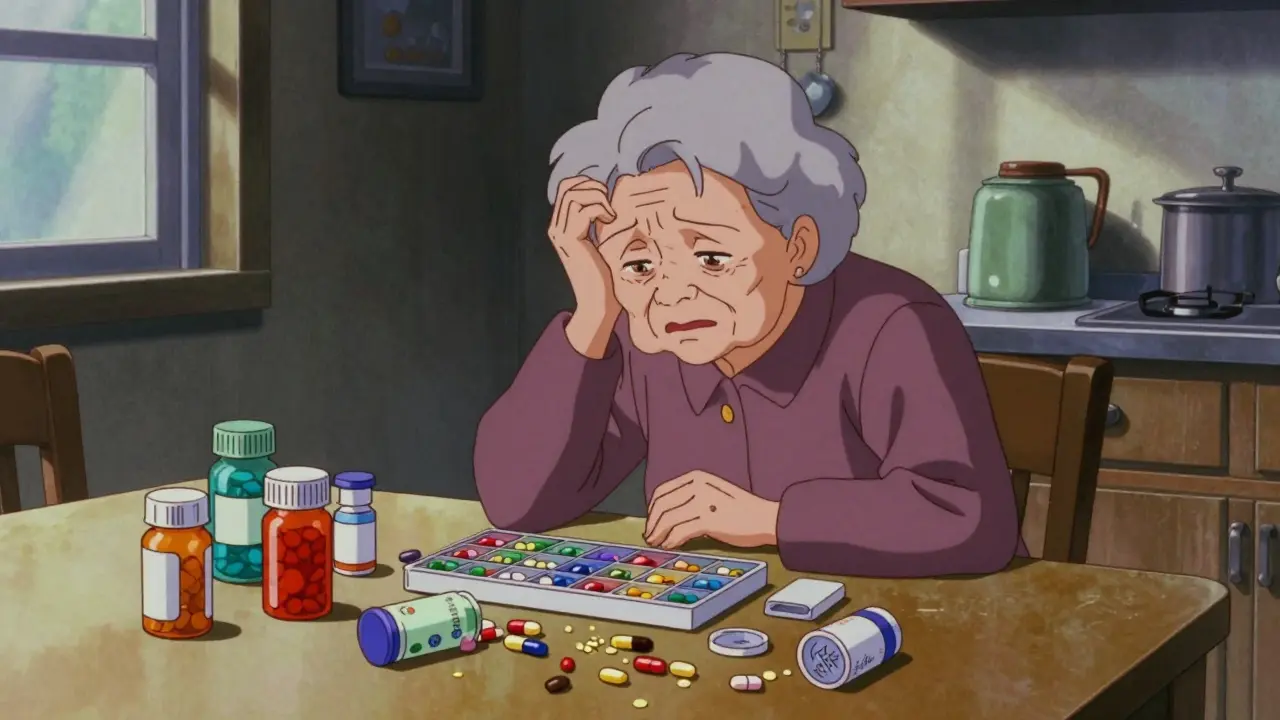
Half of all people with chronic illnesses don’t take their meds as prescribed. That’s not laziness. It’s forgetfulness. Confusion. Cost. Side effects. Fear. The World Health Organization says medication non-adherence costs the U.S. healthcare system $100-$290 billion every year. That’s billions in avoidable hospital visits, emergency care, and worsening conditions. Digital pills cut through the guesswork. Traditional methods - pill counts, self-reports, pharmacy refill records - are unreliable. People forget. They lie. They take pills the day before their appointment to look good. With digital sensors, there’s no room for error. You either swallowed it or you didn’t. The data is real-time, objective, and impossible to fake. In a 12-week study of 157 people on antipsychotic meds, adherence jumped from 62% to 84% when digital sensors were used. That’s not a small win. That’s life-changing for someone with schizophrenia who’s at risk of relapse if they miss even a few doses.How Do These Sensors Detect Side Effects?
Most people think digital pills only track whether a pill was swallowed. But the real breakthrough is what else they can monitor. The wearable patch doesn’t just receive signals. It also acts like a mini health monitor. It tracks heart rate (within ±2 beats per minute), daily steps, and even sleep patterns. Some systems now measure skin conductance - a subtle sign of stress or anxiety - and changes in body temperature. Here’s how it works in practice: A patient on a new blood pressure med takes their pill. The sensor confirms ingestion. But the patch notices their heart rate spikes 30 minutes later and stays elevated for two hours. That’s unusual. The system flags it. The doctor reviews the data and realizes the patient is having a rare but serious reaction to the drug. They switch the medication before the patient even feels dizzy or short of breath. This isn’t theoretical. etectRx, one of the leading companies, announced in late 2023 that their AI model, built with IBM Watson Health, can predict adherence lapses with 82% accuracy. The next step? Predicting side effects. By 2026, the Digital Medicine Society expects 60% of digital pill systems to include side effect detection as a core feature.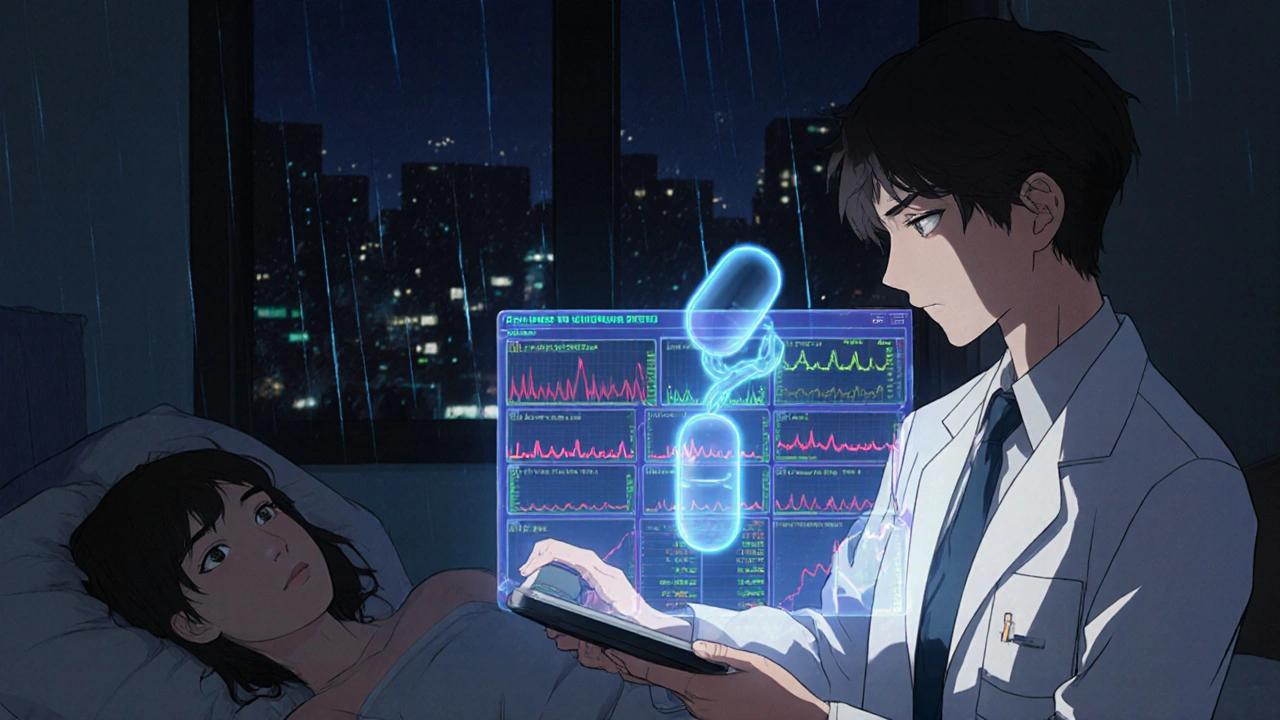
Who Uses These Pills - and Why?
Right now, the biggest users are in mental health. About 47% of digital pill deployments are for schizophrenia, bipolar disorder, and depression. Why? Because non-adherence here can lead to hospitalization, violence, or suicide. The stakes are high, and the data saves lives. HIV treatment comes next at 18%. Missing even one dose of antiretroviral therapy can lead to drug resistance. Digital pills give patients and providers peace of mind - and help avoid costly, dangerous resistance. Cardiovascular disease and diabetes follow, at 15% and 9% respectively. For someone with heart failure or type 2 diabetes, consistent dosing means fewer ER visits and longer life. But here’s the catch: most of these systems aren’t sold directly to patients. They’re used in clinical trials (78% of cases) or by doctors in specialized programs. Only 12% are used in direct-to-consumer settings. Why? Reimbursement. Insurance companies don’t yet cover them routinely. The cost per pill - including the sensor, patch, and platform - can run $50-$100 per dose. That’s not sustainable for everyday use.What Are the Real Problems?
This tech isn’t perfect. And it’s not for everyone. First, the signal isn’t always reliable. In real-world use, 8-12% of transmissions fail. For people with higher body mass index (BMI over 35), failure rates jump to 18%. The sensor might be in the wrong position in the stomach. A phone might be too far away. A microwave or Bluetooth speaker nearby can interfere. The patch battery lasts only 72 hours. You have to remember to replace it. Then there’s the human side. In a 2022 study of 412 patients, 73% worried about privacy. 61% said they felt like they were being watched. One Reddit user with schizophrenia said, “It felt like my psychiatrist was watching me swallow pills.” That’s not paranoia. It’s a real emotional burden. Elderly patients struggle too. About 38% of people over 65 needed help just connecting the patch to their phone. If you’re not tech-savvy, this system adds stress, not relief. And privacy? It’s a minefield. The Electronic Frontier Foundation warned that this data - when, how often, and how your body reacts to drugs - is among the most sensitive health info possible. If insurers or employers get access, it could affect your coverage or job. HIPAA protects data in clinical settings, but state laws vary. Fourteen states have extra digital health privacy rules, and many patients don’t know what’s protected and what isn’t.
Is This the Future of Medicine?
The market is growing fast. In 2022, it was worth $628 million. By 2029, it’s expected to hit $2.4 billion. That’s a 21.3% annual growth rate. But growth doesn’t mean widespread use. Experts like Dr. Joseph Kvedar from the American Telemedicine Association believe digital pills will become standard for high-risk regimens - like post-transplant meds or cancer treatments - but stay niche for everyday conditions like high cholesterol or mild hypertension. The real game-changer will be when AI starts predicting problems before they happen. Imagine getting a notification: “Your last three doses were taken on time, but your heart rate spiked after each. Your doctor has been alerted. Would you like to reschedule your appointment?” That’s not just monitoring. That’s prevention. Right now, the biggest barrier isn’t technology. It’s cost, trust, and access. Until insurers pay for it, until patients feel safe using it, and until it’s simple enough for older adults to handle, it won’t become routine.What’s Next?
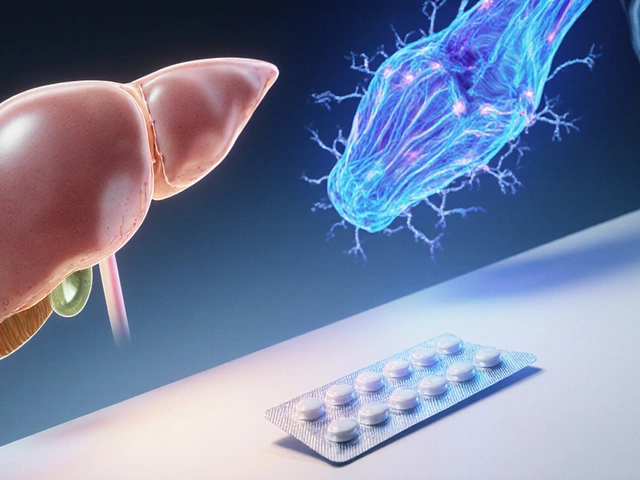
The next wave of digital pills won’t just detect ingestion. They’ll detect absorption. Future sensors may measure how much of the drug actually entered your bloodstream - not just whether you swallowed it. Some prototypes are already testing for specific biomarkers in the gut, like inflammation markers or early signs of liver stress. Regulators are catching up. The FDA now requires separate approval for the drug and the sensor - adding 22 months to the usual review process. That slows things down, but it also means better safety. The goal isn’t to spy on patients. It’s to help them. To catch problems early. To stop hospitalizations. To give people back control - not by forcing compliance, but by understanding their real behavior and responding with care. For now, digital pills are still mostly in clinics and trials. But the data they collect is changing how we think about medicine. It’s no longer enough to prescribe a pill. We need to know if it worked - and if it hurt.Do digital pills actually work to improve medication adherence?
Yes, in clinical settings. Studies show adherence rates jump from around 50-62% to 80-84% when digital pill systems are used, especially for serious conditions like schizophrenia or HIV. The data is real-time and objective, eliminating guesswork and self-reporting bias. But patient dropout rates are still around 20-25%, often due to discomfort with the patch or privacy concerns.
Can digital pills detect if a drug is causing side effects?
Not yet directly - but they’re getting close. Current systems track heart rate, activity levels, sleep, and skin conductance. If these metrics change after a pill is taken - like a sudden spike in heart rate or a drop in steps - the system flags it as a possible side effect. Newer models, like those being developed by etectRx and IBM Watson Health, use AI to predict adverse reactions with up to 82% accuracy based on patterns. By 2026, most advanced systems will include side effect detection as a standard feature.
Are digital pills safe to swallow?
The sensors are made of biocompatible materials - copper, magnesium, and silicon - all approved by the FDA for ingestion. They’re small (5mm wide, 0.3mm thick), pass through the digestive system naturally, and don’t cause harm. No long-term side effects have been reported in clinical trials. The sensor deactivates after 24-48 hours and exits the body in stool.
Can I buy a digital pill over the counter?
No. Digital pills are only available through healthcare providers and are tied to specific FDA-approved medications like Abilify MyCite. They’re not sold as standalone products. Insurance rarely covers them outside of clinical trials or specialized treatment programs. You can’t order them online or get them at your local pharmacy.
Is my data safe with digital pill systems?
Data is encrypted using AES or DES standards during transmission and stored on HIPAA-compliant servers. But privacy risks remain. The Electronic Frontier Foundation warns that this data - when you take your meds and how your body reacts - could be misused by insurers or employers if leaked. Only 14 U.S. states have extra protections. Always ask your provider how your data is stored, who has access, and whether it’s ever shared with third parties.
Do digital pills work for elderly patients?
They can, but they’re harder to use. In geriatric trials, 38% of patients over 65 needed help connecting the wearable patch to their smartphone. The app interface, Bluetooth pairing, and patch replacement can be confusing. Simpler interfaces and caregiver support are needed for this group. For now, digital pills are more effective for younger, tech-savvy patients or those with strong support systems.
What’s the cost of a digital pill system?
Each digital pill - including the sensor, patch, and platform access - can cost between $50 and $100 per dose. That’s far higher than a regular pill. Insurance rarely covers it unless it’s part of a clinical trial or a high-risk treatment program. The total system cost for a patient over a year could exceed $10,000. Until reimbursement models change, this tech will remain limited to specialized care.




Sachin Agnihotri
November 26, 2025 AT 22:05Wow, this is wild. I never thought I'd see the day when my pill could text my doctor. 😅 The tech is legit impressive, but I can't shake the feeling that it's a bit like wearing a surveillance badge on my chest. Still, if it stops someone from ending up in the ER, maybe it's worth it?
Diana Askew
November 28, 2025 AT 05:27They're not just tracking your meds-they're tracking your heartbeat, your sleep, your stress. This is how they build your digital profile for the insurance companies. You think this is about health? Nah. It's about predicting who's 'high risk' so they can raise your premiums or drop you. The FDA doesn't care. Big Pharma does. And you're the product.
King Property
November 29, 2025 AT 15:18You people are acting like this is some dystopian nightmare. It’s not. It’s medicine. If you’re too lazy to take your pills on time, you deserve to be monitored. Half of you don’t even know what your meds do, and now you’re whining about privacy? Get real. The data saves lives. The 18% failure rate? That’s on you for not reading the instructions. And if your phone’s too far away, maybe you should’ve gotten a smartwatch instead of a dumb one.
Yash Hemrajani
November 29, 2025 AT 17:01Let’s be real - the $100/pill price tag is a joke. You’re paying for a sensor that’s cheaper than your morning coffee. The real cost isn’t the tech - it’s the bureaucracy. Insurance won’t cover it because they’d rather pay for your hospital stay than your prevention. Meanwhile, people with schizophrenia are dying because they forgot to take their meds. This isn’t innovation. It’s negligence dressed up in Bluetooth.
Pawittar Singh
November 30, 2025 AT 04:11Hey, I get the fear. I really do. But I’ve seen this tech help my cousin with bipolar disorder - he went from 3 hospitalizations a year to zero. Yeah, the patch is weird at first. Yeah, the app is clunky. But imagine if your grandma could take her heart meds and someone actually knew if she took them - without yelling at her? That’s the goal. We need simpler interfaces, not more fear. And if you’re worried about privacy, ask your doc for the privacy policy. Most are better than your Facebook settings. 🤝
Josh Evans
November 30, 2025 AT 19:36I work in a clinic that uses these for HIV patients. The difference is insane. One guy hadn’t taken his meds in 8 months. The system flagged it. We called him. He broke down and said he was scared of the side effects. We adjusted his regimen. He’s stable now. This isn’t about spying. It’s about showing up for people when they can’t show up for themselves.
Allison Reed
December 2, 2025 AT 15:54