

Injection Site Rotation Calculator
This calculator helps you assess your risk of developing lipodystrophy based on your injection site rotation pattern.
Enter the number of days since your last injection for each site
Your Lipodystrophy Risk
Low Risk
Based on your rotation pattern
Site Rotation Tracker
Rotate at least 1 inch (2.5 cm) from your last injection
Every time you inject insulin, you’re doing more than just giving yourself medicine-you’re shaping the long-term health of your skin, fat tissue, and blood sugar control. But most people never check their injection sites. And that’s where problems start. Lipodystrophy and bruising aren’t rare side effects. They’re common, often ignored, and can seriously mess with your diabetes management. If you’ve had unexplained high or low blood sugar with no clear reason, the issue might not be your insulin dose-it could be your injection site.
What Lipodystrophy Really Looks Like
Lipodystrophy isn’t one thing. It’s two opposite problems hiding under the same name: lipohypertrophy and lipoatrophy. Lipohypertrophy is when your skin builds up hard, rubbery lumps from repeated insulin injections in the same spot. These aren’t pimples or infections. They’re fat and scar tissue that grow over time, sometimes as big as a golf ball. Studies show up to 50% of people with type 1 diabetes develop these lumps at some point. Most of them-78%-show up in the abdomen, the most popular injection spot. Lipoatrophy is the opposite. Instead of too much fat, you lose it. You get shallow dents or depressions in the skin where the fat cells have been destroyed. This used to be more common with older insulin types, but it still happens, especially if you have a rare allergic reaction to the insulin or its additives. The key difference? Lipohypertrophy feels firm and raised. Lipoatrophy feels sunken. Neither should be hot, red, or painful-that’s an infection. And neither should be confused with bruising, which is temporary and usually fades in a few days.Why Bruising Happens (And Why It Matters)
Bruising after an insulin shot isn’t normal, but it’s way more common than you’d think. One study found 66% of insulin users had visible bruising at least sometimes. It’s not just from hitting a vein. Most of the time, it’s from pressing too hard, using the same needle too many times, or injecting into tissue that’s already damaged. A lot of people think bruising is harmless. But it’s a warning sign. Research shows people who bruise often are more likely to develop lipohypertrophy later. Why? Because they’re probably not rotating sites properly. They’re injecting into the same area, over and over. The needle causes micro-trauma. Blood leaks. Scar tissue builds. Fat grows. It’s a slow process. You don’t notice it until the lump is big enough to see. And here’s the scary part: if you keep injecting into these lumps, your insulin doesn’t absorb right. It comes in slow, then suddenly spikes. That’s why your blood sugar swings wildly-high after meals, then crashing hours later. You might think you need more insulin. But you don’t. You just need to stop injecting into the damaged area.How Injection Technique Makes or Breaks Your Control
The biggest cause of both lipodystrophy and bruising? Poor injection technique. Not the insulin. Not the pen. You. Most people rotate sites poorly. They pick a spot on the belly, inject there for a week, then move to the thigh for a few days, then back to the same belly spot. That’s not rotation. That’s repetition with a detour. Proper rotation means moving at least one inch (2.5 cm) away from your last injection. And you shouldn’t reuse a spot for 4 to 8 weeks. Think of it like farming-you don’t plant the same crop in the same soil every week. You let the land rest. Needle reuse is another silent killer. Using the same needle for multiple injections dulls the tip. It tugs at skin and tissue instead of sliding in cleanly. That’s why you bruise more. And why your lumps grow faster. Most manufacturers say use a needle once. But 40% of people reuse them. They think it’s fine. It’s not. And don’t rub the spot after injecting. That’s a habit many people pick up to ease the sting. But rubbing increases bleeding and tissue damage. Just press gently for 5 seconds. That’s enough.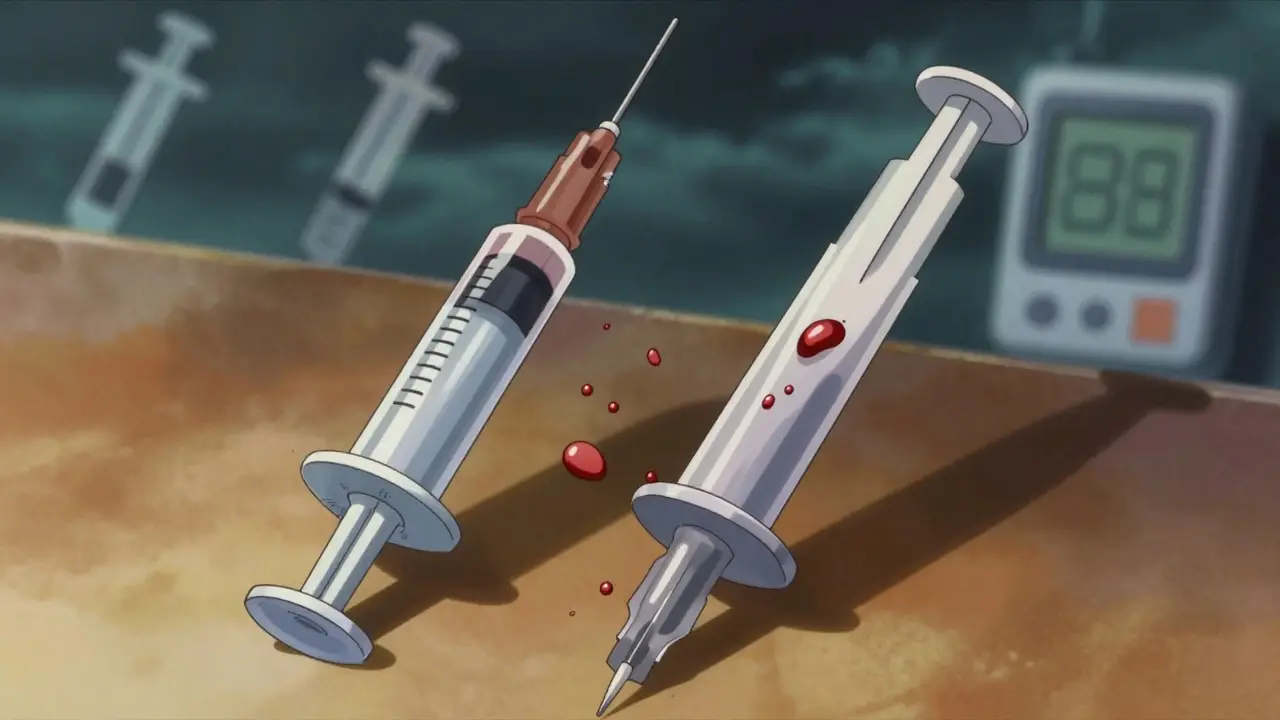
The Hidden Cost: Blood Sugar Chaos
This isn’t just about skin. It’s about your A1c. Your hypoglycemia. Your risk of diabetic ketoacidosis. When you inject into a lipohypertrophy lump, insulin absorption becomes unpredictable. It can take hours to start working-or it can flood your system all at once. That’s why people with these lumps have 3.2 times more unexplained low blood sugars. And 2.7 times more episodes of diabetic ketoacidosis. One patient in a study had an A1c of 7.2% for two years. Then she noticed a golf ball-sized lump on her belly. She kept injecting there. Her A1c jumped to 8.9%. No change in diet. No change in insulin. Just the lump. Doctors rarely check injection sites. One survey found 61% of patients said their provider never looked at their injection areas-even after 5 years of insulin use. That’s unacceptable. Your injection sites are as important as your blood sugar numbers.How to Fix It (And Prevent It)
The solution is simple. But it takes discipline.- Check your sites every time you inject. Use your fingers. Feel for lumps, bumps, or dents. Don’t just look-palpate.
- Rotate systematically. Divide your abdomen into four quadrants. Use one quadrant per week. Move to the thigh or arm next week.
- Use a new needle every time. Even if it doesn’t hurt. Even if it looks fine.
- Don’t inject into bruised or swollen areas. Wait until it’s fully healed.
- Use a site tracker app. InPen, Glooko, and others now map your injection spots and remind you when it’s safe to return.

What’s New in 2025
Technology is catching up. Abbott announced at the American Diabetes Association meeting in 2023 that they’re working on biosensors that can detect tissue changes at injection sites in real time. By 2025, some insulin pumps may alert you if you’re injecting into damaged tissue. AI tools like Glooko’s site-mapping feature already reduce lipohypertrophy by 31% in six months. These tools don’t replace education-they reinforce it. They turn a forgotten habit into a tracked, visible routine. The bottom line? Lipodystrophy and bruising aren’t inevitable. They’re preventable. But only if you treat your injection sites like the vital part of your diabetes care they are.When to See a Professional
If you find a lump larger than an inch, or if your skin looks sunken, discolored, or feels hard, get it checked. Don’t wait. Ask your diabetes educator or endocrinologist to examine your injection areas at your next visit. Bring a photo if you can. Or better yet, show them the spot with your fingers. If you’re bruising every time you inject-even with new needles and proper technique-it could mean you’re injecting too shallowly or into a blood vessel. Your provider can adjust your angle or needle length.Real Talk: What Patients Say
On Reddit, one user switched from 31G to 32G needles and stopped bruising. Another started using a site rotation app and cut her nighttime lows in half. A third found her lumps after years of ignoring them-and her A1c dropped from 8.6% to 6.8% in four months after she stopped injecting into them. But the ones who don’t change? They keep blaming their insulin. Their carb counting. Their stress. They don’t realize the problem is under their skin. Your body is telling you something. Listen.Can lipodystrophy be reversed?
Yes, but it takes time. Once you stop injecting into a lipohypertrophic area, the lump will slowly shrink. It can take 3 to 6 months to see improvement. Lipoatrophy is harder to reverse-fat doesn’t always grow back. But stopping injections in that spot prevents further damage and improves insulin absorption.
Do I need to stop using my belly for injections?
No. The abdomen is still the best place for fast insulin absorption. But you must rotate properly within it. Don’t use the same spot every day. Move at least one inch away from your last injection. Avoid areas with lumps, even if they’re painless.
Is bruising a sign of a serious problem?
Not always, but it’s a red flag. Bruising means you’re causing trauma to the tissue. If it happens often, you’re likely not rotating sites enough, reusing needles, or pressing too hard. Left unchecked, it leads to lipohypertrophy. It’s not dangerous by itself, but it’s a warning that your technique needs work.
Can I still use insulin pens if I have lipodystrophy?
Yes, but you must change where you inject. Insulin pens are fine. The problem isn’t the device-it’s the habit. Many people with lipodystrophy use pens successfully after switching to proper rotation. Some even switch to insulin pumps, but that doesn’t fix the issue unless they rotate sites on the pump infusion set too.
Why don’t doctors check injection sites more often?
Most providers are focused on A1c, weight, and medication doses. Injection sites aren’t part of routine checks unless the patient brings it up. That’s changing slowly, but patients need to speak up. Ask your doctor to examine your injection areas at every visit. It takes 30 seconds-and could save you from years of unstable blood sugar.




Erika Putri Aldana
December 20, 2025 AT 01:23Jon Paramore
December 20, 2025 AT 14:01Jerry Peterson
December 21, 2025 AT 05:38Sandy Crux
December 22, 2025 AT 06:04Christina Weber
December 23, 2025 AT 23:30Sarah Williams
December 24, 2025 AT 09:37Dan Adkins
December 24, 2025 AT 13:30Peggy Adams
December 26, 2025 AT 03:40Theo Newbold
December 27, 2025 AT 03:41Swapneel Mehta
December 28, 2025 AT 23:34mukesh matav
December 29, 2025 AT 20:35Cara C
December 31, 2025 AT 11:36Grace Rehman
January 2, 2026 AT 11:24Jay lawch
January 3, 2026 AT 20:26