
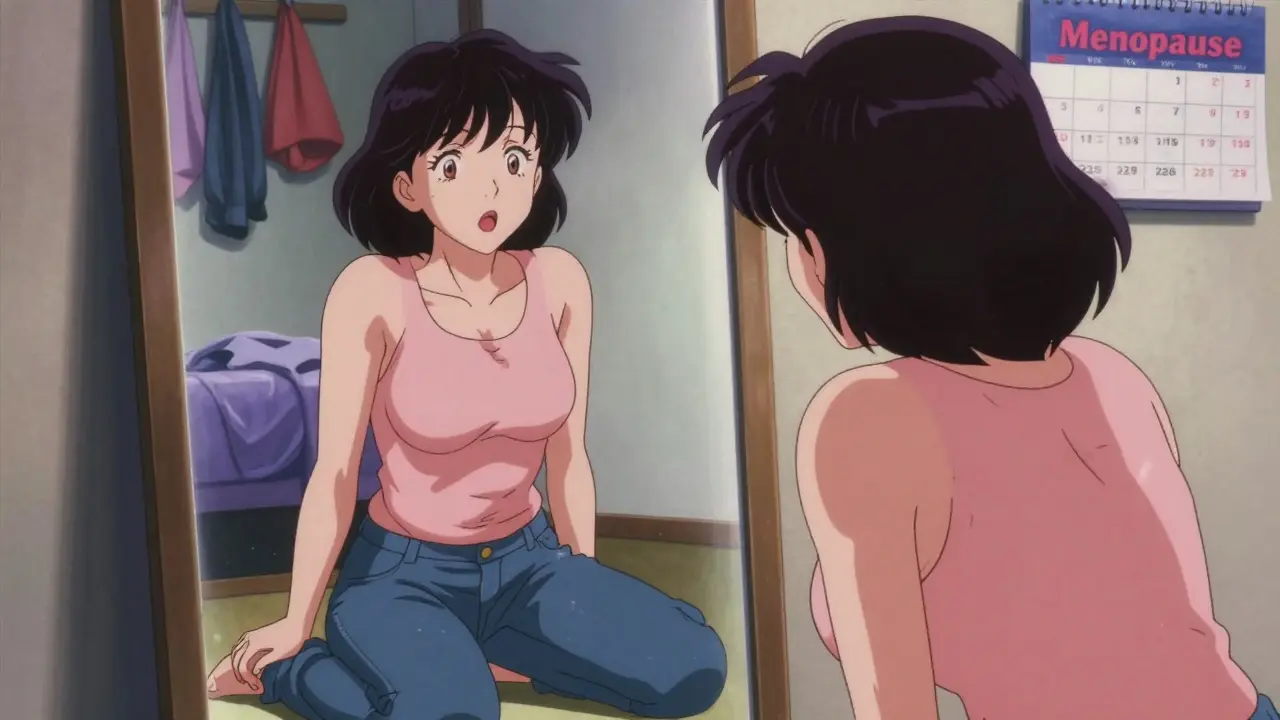
Women in their 40s and 50s often wake up one day and realize their clothes don’t fit anymore-even though they haven’t changed what they eat or how much they move. It’s not laziness. It’s not a lack of willpower. It’s biology. Menopause weight gain isn’t just about eating too much; it’s about how your body changes when estrogen drops, muscle fades, and your metabolism slows down. And it’s happening to millions of women right now.
Why Your Belly Gets Bigger Even If You Eat the Same
Before menopause, fat tends to settle in your hips, thighs, and butt. That’s estrogen at work. It tells your body to store fat in those areas because, evolutionarily, it’s useful for pregnancy and breastfeeding. But when estrogen levels crash-dropping from around 70-150 pg/mL to just 10-20 pg/mL-your fat storage strategy flips. Now, your body starts storing fat deep inside your abdomen, around your organs. This isn’t just stubborn belly fat. It’s visceral fat, the kind that releases inflammatory chemicals and makes insulin work less effectively.
Studies like the SWAN study, which tracked over 3,300 women for more than 20 years, show that women gain about 1.5 kilograms (3.3 pounds) per year during perimenopause-even if their calorie intake stays the same. After menopause, the pace slows to about 0.68 kilograms (1.5 pounds) a year. That’s not because you’re snacking more. It’s because your body is burning fewer calories at rest. Your resting metabolic rate drops by 2-3% every decade after 30, and menopause speeds that up.
Here’s the kicker: you lose 3-8% of your muscle mass every decade after 30. Menopause adds another 1-2% loss per year. Muscle burns calories. Fat doesn’t. So when you lose muscle, your body needs less fuel. But your appetite doesn’t get the memo. In fact, when estrogen drops, leptin-the hormone that tells you you’re full-plummets by 20-30%. Meanwhile, ghrelin, the hunger hormone, spikes because hot flashes and night sweats wreck your sleep. Poor sleep = more hunger. More hunger = more calories eaten, even if you’re trying not to.
Hormones Aren’t the Whole Story-Muscle Is
Many women blame hormones alone for their weight gain. But experts like Dr. Stephanie Faubion from The Menopause Society and the Mayo Clinic team say it’s not that simple. Hormones change where fat goes. But muscle loss and inactivity are what make the scale climb.
Think of it this way: if you used to lift weights or walk 10,000 steps a day in your 30s, your body was burning calories through movement and muscle activity. Now, life gets busier. Kids are older. Jobs are more sedentary. Gym time slips away. Your muscle mass drops. Your metabolism slows. You eat the same as before. The math doesn’t add up anymore.
One woman on Reddit, ‘MidlifeMama,’ posted: ‘I’ve had the same diet and workout routine for 20 years. Since menopause hit, I gained 25 pounds. My jeans won’t zip.’ She’s not alone. In a Mayo Clinic survey of over 1,200 women, 78% said they gained weight despite unchanged habits. And 63% noticed their waistline expanding-no matter how hard they tried to diet.
What’s different now? It’s not your discipline. It’s your body’s machinery. You need to upgrade your strategy.
What Actually Works: The Science-Backed Plan
Diets that worked in your 20s and 30s? They’re not enough anymore. You can’t out-eat this shift. You have to out-train it-with the right kind of training.
Here’s what research says works:
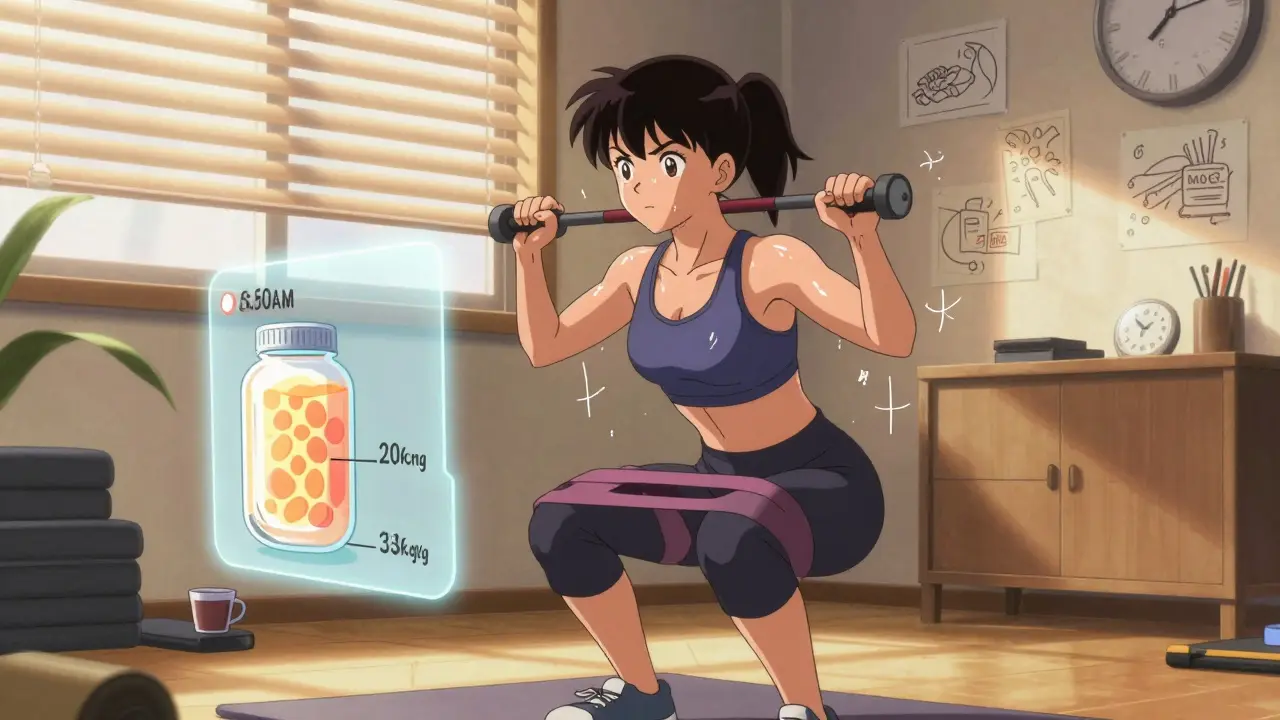
- Strength training 2-4 times a week-This is non-negotiable. Lifting weights or using resistance bands rebuilds muscle. A 2022 clinical trial found that women who lifted weights 3 times a week for six months gained 1.8-2.3 kg of lean muscle and lost 8-12% of belly fat. That’s not just weight loss. That’s body recomposition.
- Protein intake: 1.2-1.6 grams per kilogram of body weight daily-Your muscles need more protein as you age because your body becomes resistant to building them. Aim for 25-30 grams of protein per meal. That’s about two eggs, a chicken breast, or a scoop of whey protein. Don’t save protein for dinner. Spread it out. Your muscles need it all day.
- HIIT 1-2 times a week-High-intensity interval training (short bursts of hard effort followed by rest) boosts metabolism for hours after you finish. It’s more effective than steady-state cardio for burning visceral fat. Try 20 minutes: 30 seconds sprinting or jumping jacks, 60 seconds walking, repeat 8 times.
- Fix your sleep-Hot flashes and night sweats are real. But poor sleep directly increases hunger hormones. Aim for 7-8 hours. Keep your room cool. Try magnesium or low-dose black cohosh if hot flashes are keeping you up. Better sleep = less ghrelin, more leptin.
One woman in Bristol, 52, started doing bodyweight squats, lunges, and resistance band rows three times a week. She added a protein shake after her workouts and cut out late-night snacks. In four months, she lost 6 pounds of fat and gained 3 pounds of muscle. Her waist shrank by 3 inches. She didn’t starve herself. She just changed how she moved and what she ate.
Why Your Old Diet Doesn’t Work Anymore
Low-fat diets? They’re outdated for menopause. When you cut fat, you often replace it with carbs-and that spikes insulin. And insulin is the fat-storage hormone. High insulin + low muscle = fat stays on.
Calorie counting? It’s frustrating because your metabolism is slower, and your body holds onto fat tighter. Instead of counting calories, focus on quality: whole foods, lean protein, healthy fats (avocado, nuts, olive oil), and fiber-rich veggies. Skip sugary drinks, processed snacks, and refined carbs like white bread and pastries. They spike blood sugar, worsen insulin resistance, and feed belly fat.
And don’t fall for the ‘eat less, move more’ myth. That’s like trying to fix a leaky boat by bailing water faster. You need to fix the hole. The hole? Muscle loss. The fix? Strength training and protein.
The Bigger Picture: Why This Matters Beyond the Scale
Menopause weight gain isn’t just about looking different. It’s about health risk. Visceral fat isn’t just fat-it’s a metabolic hazard. It increases your risk of type 2 diabetes, heart disease, and stroke. Postmenopausal women are nearly five times more likely to develop abdominal obesity than women before menopause. And even if your BMI is normal, a waist over 88 cm (35 inches) puts you at higher risk.
That’s why the North American Menopause Society now recommends all women in perimenopause get their waist measured and their blood sugar, cholesterol, and blood pressure checked. It’s not vanity. It’s prevention.
And the stakes are rising. The global market for menopause-related care is projected to hit $32 billion by 2028. Why? Because women are demanding better answers. New drugs like bimagrumab-currently in Phase 3 trials-are being tested to rebuild muscle and burn fat simultaneously. But those aren’t available yet. The tools you have now? They’re powerful.
What to Expect-And What Not To
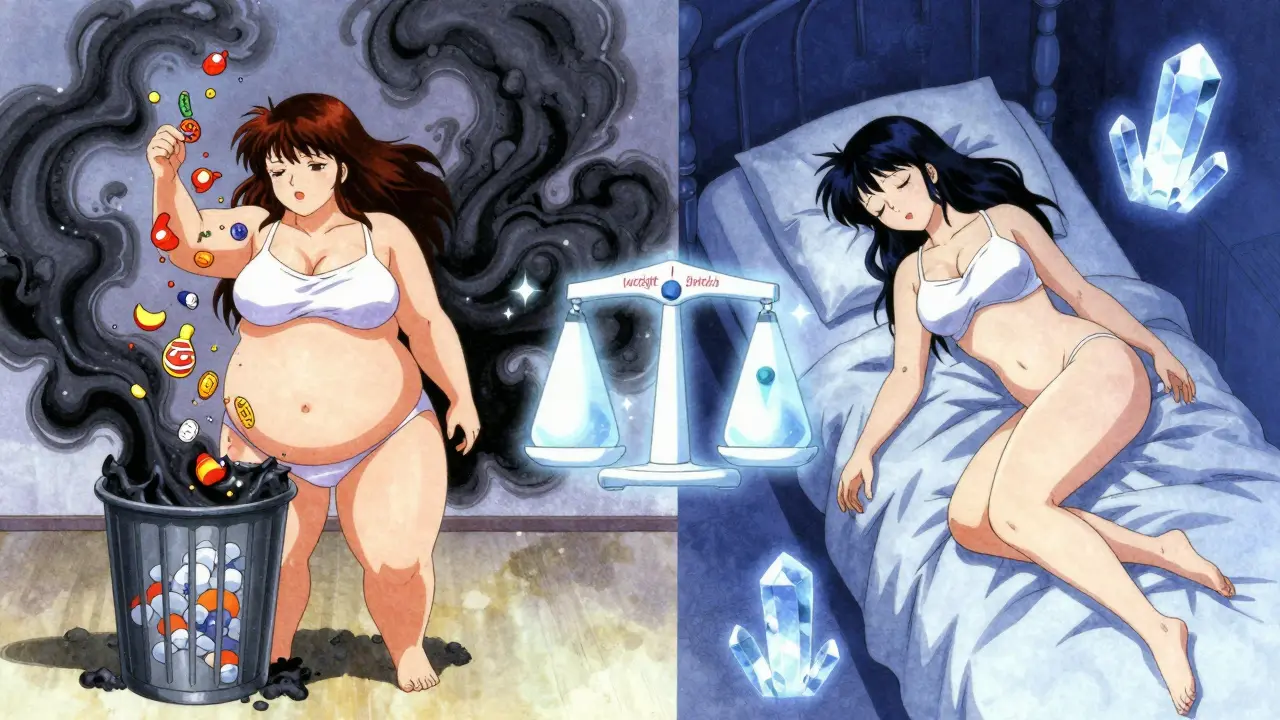
You won’t lose weight like you did in your 20s. That’s normal. Women in menopause lose weight 20-30% slower than younger women, even on the same calorie deficit. That doesn’t mean you’re failing. It means your body needs a different approach.
Don’t expect overnight results. It takes 3-6 months of consistent strength training and protein intake to see real changes. But when you do, it’s not just a smaller waist. It’s stronger legs, better balance, fewer aches, and more energy.
And if your doctor doesn’t talk about muscle loss or metabolic changes during menopause? Ask them. Only 17% of primary care physicians feel trained to handle this. You have to be your own advocate.
Start Small. Stay Consistent.
You don’t need a gym membership. You don’t need to run marathons. You just need to move differently.
- Start with two 20-minute strength sessions a week-bodyweight squats, push-ups against the wall, resistance band rows.
- Add a protein source to every meal-eggs, Greek yogurt, lentils, chicken, tofu.
- Walk 10 minutes after dinner. It helps blood sugar.
- Go to bed 30 minutes earlier. Protect your sleep.
Menopause isn’t the enemy. It’s a signal. Your body is changing. And you have the power to change with it-not by fighting your hormones, but by working with them. Build muscle. Eat enough protein. Move with purpose. Sleep well. That’s the strategy. Not a diet. Not a pill. Just science, consistency, and a little patience.


Bryan Coleman
January 31, 2026 AT 19:26Man, I’ve seen this play out with my mom and sister. They both hit 45 and suddenly their jeans were tighter even though they were still walking 5 miles a day. Nobody talks about the muscle loss part enough. It’s not laziness-it’s literally your body’s hardware being upgraded without a manual. Strength training isn’t optional anymore. It’s the new baseline.
Naomi Walsh
February 2, 2026 AT 18:50How is it still 2024 and people are still framing this as a ‘strategy’ issue? This is endocrinology 101. Estrogen decline → visceral adiposity shift → insulin resistance cascade. The fact that ‘MidlifeMama’ had to go to Reddit to find out her metabolism changed is a systemic failure of women’s healthcare. If your doctor hasn’t mentioned DEXA scans or lean mass preservation by 45, fire them.
vivian papadatu
February 2, 2026 AT 23:21This is the most accurate thing I’ve read all year. 🙌 I’m 51 and started doing bodyweight circuits three times a week. No gym. Just me, a yoga mat, and a resistance band. Lost 8 lbs of fat, gained muscle, and my back pain vanished. It’s not about willpower. It’s about working with your body, not against it. Thank you for writing this.
Bob Cohen
February 4, 2026 AT 22:08Wow. So you’re telling me the ‘eat less, move more’ advice from my 30-year-old personal trainer doesn’t work anymore? Mind blown. 😅 I’ve been blaming myself for 3 years. Turns out my body just upgraded to Windows 11 and I’m still trying to run Windows 7 software. Time to update the OS.
Deep Rank
February 6, 2026 AT 11:40Ugh. I’m so tired of women pretending they ‘didn’t change their habits’ when clearly they just started eating more carbs and skipping the gym. My cousin gained 30 lbs after menopause and she’s still eating ice cream for breakfast. Don’t pretend it’s all biology-some of us just choose to take care of ourselves. You can’t blame hormones for bad choices.
Lilliana Lowe
February 6, 2026 AT 21:19It’s fascinating how the SWAN study is cited as gospel, yet the authors themselves explicitly note that the 1.5 kg/year gain is an average with a standard deviation of ±2.1 kg. To generalize this as a universal biological inevitability is statistically irresponsible. Furthermore, the protein recommendation of 1.2–1.6 g/kg is below the 2.0 g/kg threshold recently proposed by the International Society of Sports Nutrition for postmenopausal women engaged in resistance training. This article is well-intentioned but dangerously oversimplified.
Aditya Gupta
February 8, 2026 AT 17:38Bro, just start with squats. 10 a day. Every morning. Add protein to your coffee. No gym needed. Sleep more. That’s it. You don’t need a PhD to fix this. Just start. Now. Not tomorrow.
Naresh L
February 10, 2026 AT 06:44It’s interesting how we frame menopause as a problem to be solved, rather than a natural transition. Maybe the body isn’t malfunctioning-it’s adapting. The real question isn’t how to lose belly fat, but how to live well while our biology reconfigures. Is the goal to look like we did in our 20s? Or to feel strong, present, and at peace? I wonder if we’re chasing the wrong metric.
Jaden Green
February 10, 2026 AT 14:27Let’s be honest-this is just another ‘biohacking’ article disguised as medical advice. The whole premise is built on a false dichotomy: either you’re a disciplined warrior lifting weights and drinking whey, or you’re a lazy, carb-craving failure. The truth? Most women over 45 are juggling aging parents, adult children, careers, and mental health issues. Telling them to do three strength sessions a week and hit 1.6g/kg protein is not just unrealistic-it’s tone-deaf. You’re not fixing biology. You’re just adding another burden to an already overtaxed system. And yes, I’ve tried it. It didn’t work. Because life isn’t a spreadsheet.
Melissa Melville
February 10, 2026 AT 19:51My sister says she gained 20 lbs because she started crying during yoga. I said, ‘Honey, that’s not a hormone, that’s your soul screaming for a nap.’