
Opioid Adrenal Insufficiency Risk Calculator
Assess Your Risk
This tool estimates your risk of opioid-induced adrenal insufficiency based on your treatment regimen.
Your Risk Assessment
Recommendations
Opioid-induced adrenal insufficiency is a hidden risk for people taking opioids long-term. This condition happens when opioids disrupt your body’s natural stress response system. It’s rare but serious, and many doctors miss it. Without treatment, it can lead to life-threatening crises during illness or surgery. Let’s break down what you need to know.
What Exactly Is Opioid-Induced Adrenal Insufficiency?
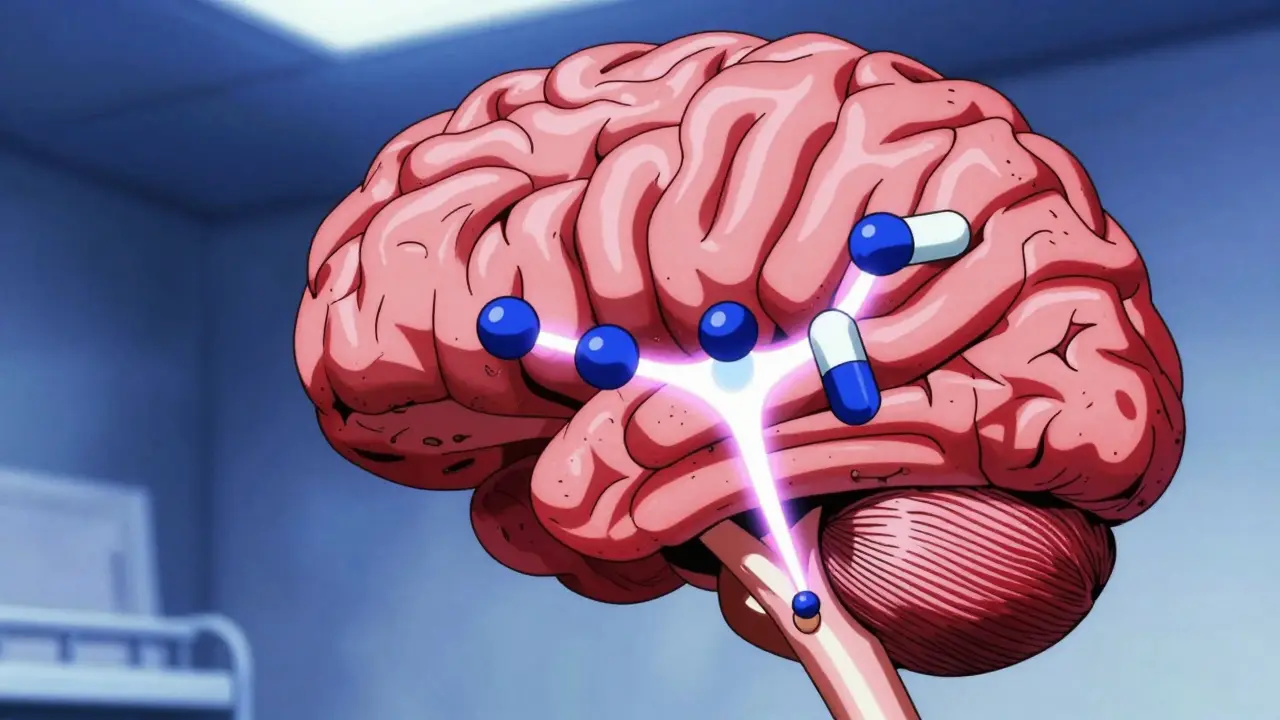
Opioid-induced adrenal insufficiency (OIAI) occurs when opioids suppress the HPA axis-the system connecting your brain and adrenal glands. This axis controls cortisol production, the hormone that helps your body handle stress. When opioids interfere, cortisol levels drop dangerously low. For example, a 2023 study in the Journal of Clinical Endocrinology & Metabolism found that chronic opioid users had 25% lower cortisol levels than non-users. This isn’t just about pain management; it’s about your body’s ability to survive emergencies.
How Opioids Break Your Stress Response System
Opioids bind to receptors in your brain, specifically in the hypothalamus and pituitary gland. This blocks signals that tell your adrenal glands to produce cortisol. Even short-term use can cause this. A 2024 review in Frontiers in Endocrinology showed that patients on opioids for just 30 days had reduced ACTH (adrenocorticotropic hormone) levels. ACTH is the signal that tells your adrenals to release cortisol. Without it, your body can’t respond to physical stressors like infections or injuries.
Symptoms You Might Mistake for Other Problems
Common symptoms include extreme fatigue, nausea, dizziness when standing, and unexplained weight loss. These often get blamed on opioid side effects or chronic pain. For instance, a 2021 case study in The Medicine Forum described a patient with chronic pancreatitis whose fatigue and nausea were initially thought to be from their pain condition. Only after a cortisol test did doctors discover opioid-induced adrenal insufficiency. Other signs include low blood pressure, muscle weakness, and darkening of the skin. These symptoms can be subtle but become dangerous during stress-like surgery or a car accident.

How Doctors Diagnose This Condition
Diagnosis starts with blood tests. A morning cortisol level below 3 mcg/dL (100 nmol/L) raises suspicion. The gold standard is the ACTH stimulation test. During this test, a doctor injects synthetic ACTH and measures cortisol levels after 30-60 minutes. A peak cortisol below 18 mcg/dL (500 nmol/L) confirms adrenal insufficiency. However, recent research suggests lower thresholds may be needed. A 2024 study found that 15% of opioid users with normal cortisol levels still had abnormal responses during stimulation tests. This shows why doctors must consider OIAI even when standard tests look "normal."
Who’s Most at Risk?
Risk increases with higher opioid doses and longer use. The American Medical Association (AMA) Ed Hub states that chronic therapy exceeding 20 morphine milligram equivalents (MME) daily significantly raises risk. For example, 20 MME is roughly equivalent to 20 mg of morphine daily. A 2023 study of 162 long-term opioid users found 5% developed OIAI, and those on higher doses were more affected. People using opioids for over 90 days, especially at doses above 50 MME, face the highest risk. Other factors include older age and pre-existing adrenal issues.

Treatment and Reversibility
Thankfully, this condition is often reversible. Treatment involves replacing cortisol with medications like hydrocortisone. In acute cases, intravenous saline and high-dose steroids may be needed. A 2015 case report in the Journal of Endocrine Society documented a 25-year-old man whose adrenal insufficiency resolved completely after stopping methadone. His symptoms improved within weeks. However, stopping opioids abruptly can cause withdrawal. Doctors usually taper doses slowly while monitoring cortisol levels. For patients who need ongoing pain management, switching to non-opioid alternatives or lower-dose opioids may reduce risks.
What Patients Should Do Now
If you’re on long-term opioids, talk to your doctor about checking for adrenal insufficiency. Mention symptoms like unexplained fatigue, dizziness, or weight loss. Ask for a morning cortisol test or ACTH stimulation test if symptoms persist. Never stop opioids suddenly-work with your healthcare team to adjust doses safely. For patients with chronic pain, consider alternatives like physical therapy or non-opioid medications to reduce risks. Early detection prevents life-threatening Addisonian crises, where cortisol levels crash during stress, causing shock or organ failure.
Can opioid-induced adrenal insufficiency happen with short-term opioid use?
Yes. While long-term use increases risk, even short-term opioid therapy can suppress cortisol production. A 2023 study found that patients on opioids for as little as 14 days had reduced cortisol levels. This is why doctors monitor patients during acute pain management, especially after surgery or major injuries.
Is this condition permanent?
No. Opioid-induced adrenal insufficiency is typically reversible once opioids are stopped or reduced. Studies show cortisol levels return to normal within weeks to months after discontinuation. However, the timeline depends on the duration and dose of opioid use. For example, patients on high-dose opioids for years may take longer to recover than those on short-term, low-dose therapy.
How common is this condition?
It’s rare overall but underdiagnosed. About 5% of people on long-term opioid therapy develop it, according to a 2023 study. However, this number rises to 22.5% in patients taking very high doses (over 100 MME daily). Given that over 5% of the U.S. population uses opioids long-term, this affects tens of thousands of people annually.
Can I prevent this condition?
Yes. Work with your doctor to use the lowest effective opioid dose for the shortest time possible. Regular cortisol testing during long-term use helps catch issues early. For chronic pain, explore non-opioid options like physical therapy, nerve blocks, or medications like gabapentin. Avoiding high-dose opioids (over 50 MME daily) significantly reduces risk.
What happens if it’s left untreated?
Untreated adrenal insufficiency can cause an Addisonian crisis-a medical emergency. During stress like infection or surgery, cortisol levels crash, leading to severe low blood pressure, shock, and organ failure. A 2020 review in the Journal of Clinical Endocrinology & Metabolism noted that 1 in 5 untreated cases resulted in death. Early diagnosis and cortisol replacement prevent these outcomes completely.



Elliot Alejo
February 5, 2026 AT 20:30Based on the data presented, cortisol testing should be standard for long-term opioid users. The evidence here is clear and actionable. Doctors need to prioritize this screening.
Johanna Pan
February 6, 2026 AT 01:06This info is so important! Opioid-related adrenal issues are often overlooked.
I'm glad they're bringing attention to it. Always check with your doc if you're on opioids long-term.
Don't wait until it's too late-early detection saves lives.
Bella Cullen
February 6, 2026 AT 18:46Doctors still ignore this.
Sam Salameh
February 7, 2026 AT 16:47America needs to wake up! This is a hidden crisis affecting our veterans and patients.
We need better healthcare policies to address this. It's time to prioritize patient safety over profits.
Arjun Paul
February 7, 2026 AT 18:58This is basic medical knowledge. Many doctors still don't know about OIAI. Patients must demand testing. It's not rocket science. Why is this not standard practice? It's a simple blood test. Doctors are failing patients by not screening.
divya shetty
February 9, 2026 AT 15:02It's irresponsible for doctors not to screen for this. Patients are being put at risk. This is a healthcare failure that must be addressed immediately. Every patient on opioids should be tested. This is non-negotiable.
Nancy Maneely
February 11, 2026 AT 11:20OMG THIS IS A TERRIBLE CRISIS! Opioids are killing people in so many ways, and this is just one of them. Why aren't we doing more? Someone needs to do something NOW! This isn't just about pain management; it's about saving lives. We need better education for doctors and patients. Every single opioid prescription should include a warning about adrenal issues. This is a public health emergency that's being ignored. How many people have to die before we act? The government needs to step in and force healthcare providers to screen for this. It's not okay to let people suffer because of negligence. We need action NOW before more lives are lost. This issue is being swept under the rug, and it's unacceptable. People's lives are at stake every single day. We can't wait any longer-this needs to be fixed immediately.
Phoebe Norman
February 12, 2026 AT 14:06HPA axis disruption leads to cortisol suppression this is a serious concern for opioid users requires careful monitoring no clear guidelines exist this is concerning lack of awareness is dangerous patients need to be informed doctors must be educated condition is reversible with proper treatment early detection prevents Addisonian crisis untreated cases can be fatal hidden risk often missed we need more research critical issue needs attention