
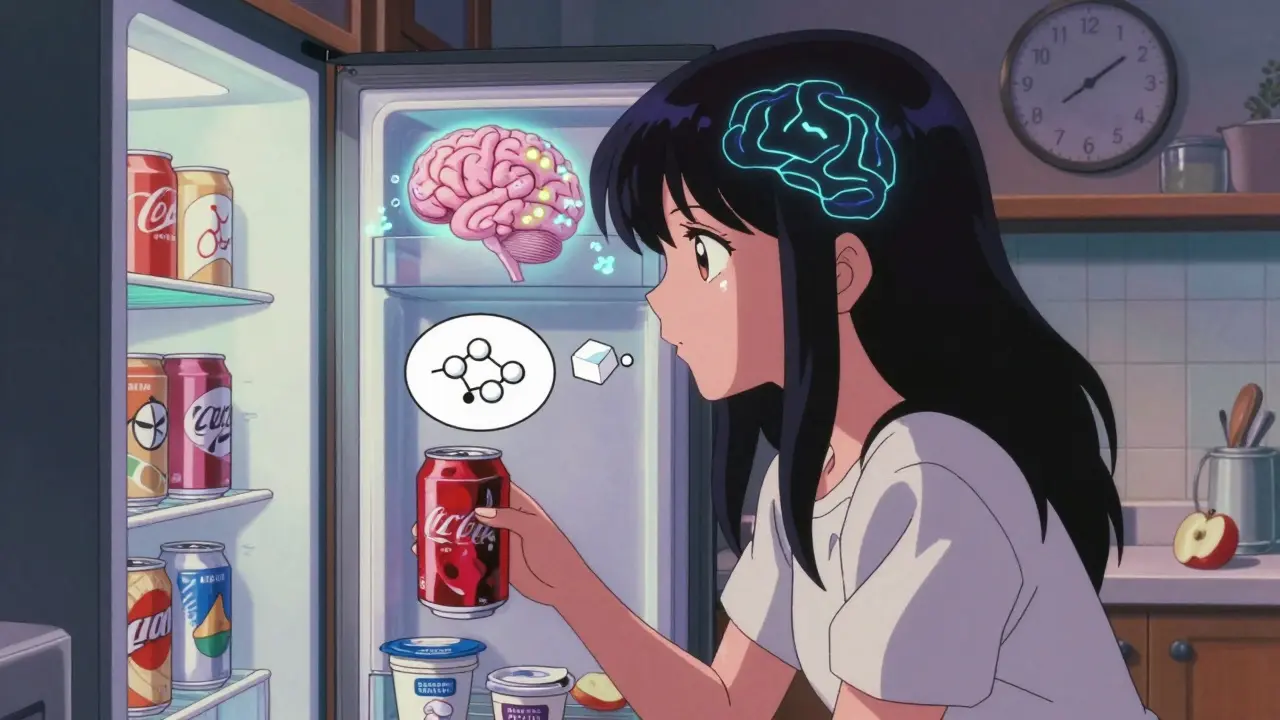
It’s 2026, and you’re trying to cut back on sugar. You reach for a diet soda, a sugar-free yogurt, or a packet of sweetener in your coffee. You tell yourself you’re doing the right thing-fewer calories, no blood sugar spikes. But then, an hour later, you’re raiding the kitchen. Why? Because your brain didn’t get the message.
Why Sugar Feels Different Than Sweeteners
Sugar isn’t just sweetness. It’s energy. When you eat sucrose, your body breaks it down into glucose and fructose. Glucose triggers insulin, which tells your cells to take in energy. That process also signals your brain: you’ve eaten something real. That’s why a piece of fruit or a slice of cake leaves you feeling satisfied-for a while. Artificial sweeteners? They’re chemical imitations. They activate the same taste receptors on your tongue as sugar, but they don’t trigger the same metabolic response. Your brain expects calories when it tastes sweetness. When none come, it gets confused. That mismatch is what scientists call a caloric disconnect. A 2023 study from the University of Southern California found that people who drank a sucralose-sweetened beverage had 17% higher hunger ratings than those who drank sugar water. Their bodies didn’t release enough GLP-1, the hormone that says, “I’m full.” And their brains? The hypothalamus, which controls hunger, lit up differently-especially in women.What the Research Actually Says
You’ve probably heard conflicting things. One study says sweeteners help you lose weight. Another says they make you hungrier. Both are right-depending on who you are and how long you’ve been using them. Short-term? Sweeteners often win. A 2022 trial from the University of Leeds showed that replacing sugar with sweeteners led to 18% lower insulin levels and 15% lower blood sugar over two hours. People ate fewer calories overall. That’s why diet sodas and sugar-free snacks are popular for people managing diabetes or trying to cut calories. But long-term? It gets messy. A 2016 study from the University of Sydney showed fruit flies exposed to sucralose for five days ended up eating 30% more calories later-even when given real sugar. Their brains had recalibrated. Sweetness no longer meant energy. So they ate more to compensate. Human studies back this up. A 2024 analysis from the German Center for Diabetes Research found that people who used sucralose daily for more than three months had a 34% higher activation in hunger centers of the brain. The same pattern showed up in a 2023 survey of 2,300 adults: 63% of long-term sweetener users reported increased hunger, especially after drinking diet soda.Not All Sweeteners Are the Same
It’s easy to think “all artificial sweeteners are equal.” They’re not. Each one interacts with your body differently.- Sucralose (Splenda): Doesn’t trigger GLP-1. Linked to higher hunger in obese individuals. Found in 78% of diet sodas.
- Aspartame (Equal, NutraSweet): May increase appetite in men, according to NIH studies. Often blamed for cravings in Reddit communities.
- Acesulfame K: Frequently blended with sucralose. Linked to altered gut bacteria in animal studies.
- Stevia and monk fruit: Natural alternatives. Less likely to spike hunger. In Amazon reviews, stevia-based products have 4.2/5 stars-15% fewer complaints about cravings than sucralose.
Gender Matters More Than You Think
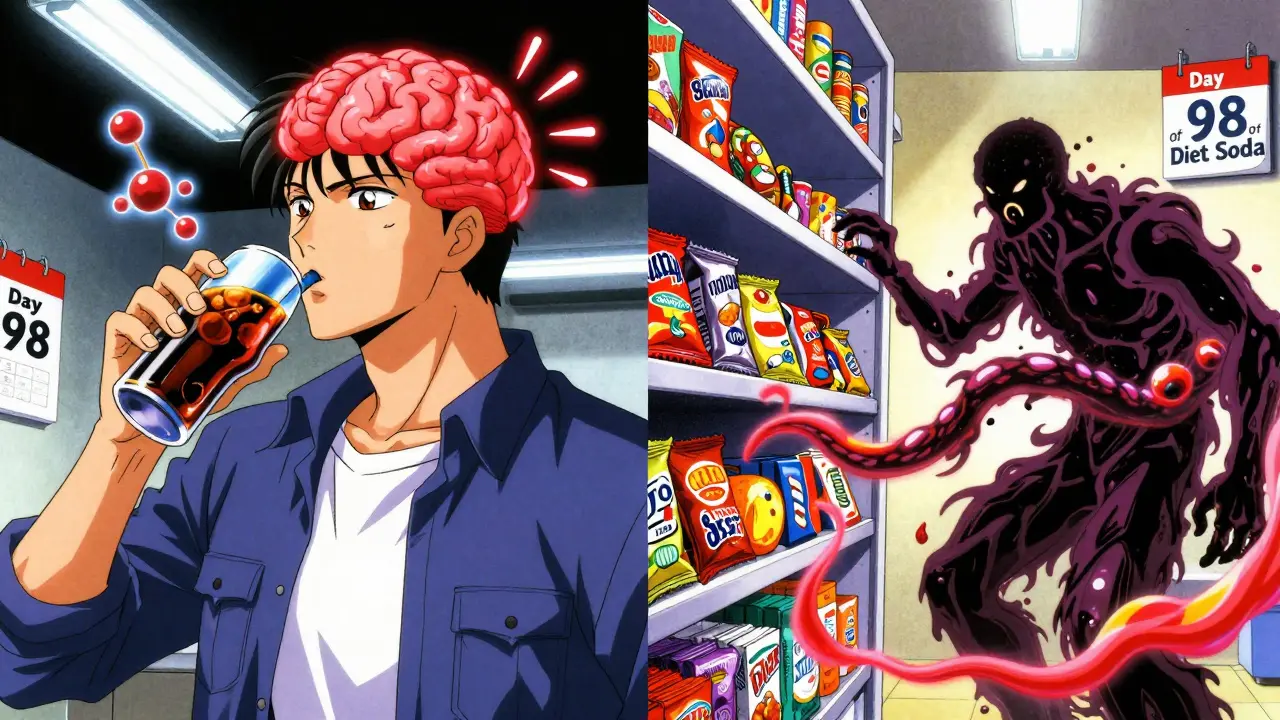
Here’s something rarely discussed: women respond differently. The 2023 USC fMRI study found that female participants had a 40% greater change in brain activity after consuming sucralose compared to men. Their hypothalamus showed stronger signals of hunger. Researchers think estrogen plays a role-it affects how sweet taste is processed in the brain. That’s why women are more likely to report increased cravings after switching to diet drinks. A 2023 American Diabetes Association survey found that 41% of women with type 2 diabetes who used aspartame said they felt hungrier. Only 27% of men said the same. It’s not about willpower. It’s biology.What Happens When You Stop
If you’ve been using sweeteners for months and now feel like you can’t enjoy anything that isn’t intensely sweet, you’re not broken. You’re recalibrated. Your taste buds and brain have adjusted. Real fruit tastes bland. Coffee without sweetener feels bitter. That’s not a flaw-it’s adaptation. The good news? It’s reversible. Most dietitians say it takes 4-6 weeks of cutting back on all sweeteners-natural and artificial-to reset your palate. One client in Bristol, a 42-year-old teacher, cut out diet soda and sugar-free snacks for six weeks. She said: “The first week was hell. I craved candy. By week four, I started tasting the caramel in my coffee. By week six, I didn’t want anything sweet at all.”
How to Use Sweeteners Without Getting Tricked
You don’t have to quit sweeteners cold turkey. But you do need a smarter strategy.- Pair them with protein. A 2021 study showed that adding Greek yogurt or nuts to a sweetener-sweetened snack reduced hunger by 22%. Protein tells your brain you’ve eaten something filling.
- Use them as a bridge, not a crutch. If you’re switching from soda to sparkling water with a splash of stevia, that’s fine. If you’re drinking three diet sodas a day because you think it’s “healthy,” you’re setting yourself up for cravings.
- Choose natural options. Stevia and monk fruit are less likely to trigger hunger signals. They’re also less processed.
- Give yourself a 2-week break. Every few months, go without sweeteners. Your taste buds will thank you.
Who Should Avoid Them Altogether?
Not everyone benefits from artificial sweeteners.- People with a history of binge eating. Sweeteners can intensify the “all-or-nothing” cycle. If one diet candy leads to a whole bag, you’re better off avoiding them.
- Children. The American Heart Association advises against regular use in kids. Their taste preferences are still forming.
- Those with insulin resistance. Even though sweeteners don’t raise blood sugar, the brain’s confusion can lead to increased appetite and fat storage over time.
The Bottom Line
Sugar isn’t the enemy. Neither are artificial sweeteners. The real problem is the pattern: using sweetness to manage hunger, without giving your body the energy it expects. If you want to reduce cravings, don’t just swap sugar for sweetener. Change your relationship with sweetness altogether. Eat whole foods. Get enough protein. Sleep well. Manage stress. These are the real levers for appetite control. Sweeteners can help you cut calories in the short term. But they won’t fix a diet built on processed foods and emotional eating. And if you’re using them to justify eating more junk, you’re playing a game your brain was never designed to win. The science is clear: your body knows the difference between real food and fake sweetness. Listen to it.Do artificial sweeteners make you gain weight?
They don’t directly cause weight gain, but they can lead to it indirectly. If sweeteners increase your hunger or make you crave sweeter foods, you might end up eating more overall. Long-term use-especially of sucralose and aspartame-has been linked to higher calorie intake in some studies, particularly in women and people with obesity.
Is stevia better than aspartame for controlling cravings?
Yes, for most people. Stevia and monk fruit are less intensely sweet than aspartame or sucralose, and they’re less likely to trigger the brain’s reward system in a way that increases hunger. User reviews and clinical data show fewer reports of cravings with stevia-based products. They’re also derived from plants, which many people prefer.
Can artificial sweeteners cause sugar cravings?
Yes, especially with prolonged use. When your brain gets used to intense sweetness without calories, it starts to expect more. This can make naturally sweet foods like fruit feel bland, pushing you toward higher-sugar options. This is called “sweetness recalibration,” and it’s been seen in both animal and human studies.
How long does it take to reset your taste buds after stopping sweeteners?
Most people notice a difference in 2-4 weeks. Full reset-where real food tastes satisfying again-usually takes 4-6 weeks. Cutting out all sweeteners, even natural ones like honey or maple syrup, helps speed up the process. Many report that after this period, they no longer crave sugary snacks.
Are diet sodas worse than sugar-sweetened ones?
For weight and appetite control, diet sodas aren’t better in the long run. While they have fewer calories, they can increase cravings and disrupt hunger signals. One 2023 study found that daily diet soda drinkers had higher belly fat over time than occasional drinkers-even when their overall calorie intake was the same. Water, unsweetened tea, or sparkling water with lemon are better choices.
Should I avoid artificial sweeteners if I have diabetes?
They can help control blood sugar in the short term-studies show 15% lower glucose spikes after meals. But if you notice increased hunger or cravings after using them, they might not be helping your overall goals. Many people with diabetes do well with small amounts of stevia or monk fruit, especially when paired with protein or fiber. Always monitor how your body responds.


vivek kumar
January 17, 2026 AT 10:30Let’s cut through the noise: artificial sweeteners don’t cause weight gain directly, but they rewire your dopamine response like a glitch in a video game where the power-up gives no points. Your brain is evolutionarily wired to associate sweetness with calories. When that link is broken, it doesn’t just get confused-it starts begging for compensation. The USC study isn’t anomalous; it’s predictable neurobiology. And yes, estrogen amplifies this in women because hormonal regulation of taste and reward is not a footnote-it’s the main script.
waneta rozwan
January 19, 2026 AT 09:24I’ve been using sucralose for five years. Thought I was being smart. Turns out I was just training my brain to crave more. Last month I quit cold turkey. First week: headaches, rage, nightmares about candy bars. Week three: I tasted the maple in my oatmeal for the first time. Week six: I stopped buying ‘sugar-free’ junk because it all tastes like chemical regret. This isn’t about willpower. It’s about your brain being hacked by food science that never asked if you wanted to be a lab rat.
Cheryl Griffith
January 20, 2026 AT 08:25My mom has type 2 diabetes and swears by diet soda. She’s lost weight but gained cravings so bad she eats entire bags of chips after one can. I showed her the 2024 German study. She cried. Not because she was wrong, but because she felt betrayed. The real tragedy isn’t the sweeteners-it’s how we’ve been sold a lie that ‘zero calories’ equals ‘zero consequences.’ We need better messaging, not just more studies.
Riya Katyal
January 20, 2026 AT 12:57Oh wow, so now it’s estrogen’s fault women crave sweets? How convenient. Maybe it’s not biology-it’s that women are constantly told to ‘eat less’ while men are told to ‘eat more protein.’ Your ‘science’ just sounds like sexism with graphs.
Isabella Reid
January 22, 2026 AT 00:41As someone raised in India where jaggery and coconut sugar are everyday staples, I find it wild that Western diets treat sweetness as a medical problem. We don’t have diet soda wars here-we have chai with a little sugar and a lot of love. Maybe the issue isn’t the sweetener, it’s the cultural obsession with control. Eat the candy. Savor it. Move on. Not everything needs to be optimized.
Nicholas Gabriel
January 23, 2026 AT 06:37Let me be clear: if you’re drinking three diet sodas a day, you’re not ‘cutting sugar’-you’re addicted to the ritual. The sweetness is just the delivery system for a dopamine loop that’s been running since 2018. The solution isn’t switching to stevia-it’s drinking water. Plain water. With lemon. Or mint. Or nothing. Your body didn’t evolve to need flavor bombs in every sip. And if you think monk fruit is ‘natural’ so it’s safe, you’re ignoring that ‘natural’ doesn’t mean ‘non-disruptive.’
Kasey Summerer
January 23, 2026 AT 07:09Stevia is fine. Monk fruit is fine. Sucralose? That’s just sugar’s evil twin in a lab coat. I tried a ‘sugar-free’ protein bar last week. Tasted like plastic and regret. Ate half. Then ate the whole bag. Now I just use a teaspoon of honey in my coffee. Life’s too short for chemical taste illusions. 🤷♂️
john Mccoskey
January 25, 2026 AT 00:50Here’s the uncomfortable truth nobody wants to say: artificial sweeteners are the perfect product for the modern capitalist food system. They’re cheap, shelf-stable, and create dependency. The industry doesn’t care if you’re hungrier afterward-because hungrier people buy more food. They don’t want you to reset your palate-they want you to keep buying ‘sugar-free’ snacks that cost 3x more and taste like nothing. This isn’t nutrition science-it’s behavioral economics disguised as wellness. The real enemy isn’t sucralose. It’s the corporations that profit from your confusion.
Henry Ip
January 26, 2026 AT 13:21Pair sweeteners with protein. That’s the golden rule. I used to drink diet soda with nothing and crash hard. Now I have sparkling water with stevia and a handful of almonds. Cravings dropped 80%. It’s not magic. It’s basic physiology. Your brain needs protein to feel full. Sweetness alone is just noise.
swarnima singh
January 27, 2026 AT 09:56my friend cut out all sweeteners for 6 weeks and now she says pizza tastes better... i think she just lost her mind. like why would you give up sweetness? its literally the only joy left in this world. also i still drink diet coke and i dont feel any different. maybe its just me. or maybe the science is just overhyped. 🤷♀️