

When you’re over 75 and have atrial fibrillation, your doctor might recommend a blood thinner. But then you hear about falls-how one tumble can turn deadly when you’re on these meds. It’s a real fear. And it’s not just patients who worry. Many doctors hesitate too. But here’s the truth: anticoagulants save more lives than they risk in seniors, even if they fall.
Why Anticoagulants Are Necessary for Older Adults
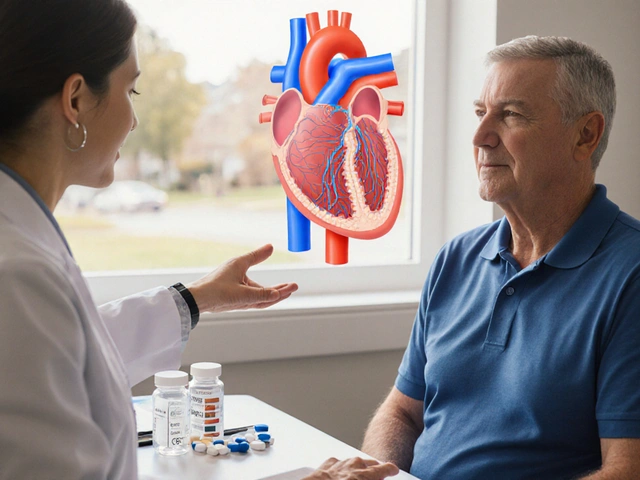
Atrial fibrillation, or AFib, is common in older people. About 9% of those 65 and older have it. And with each passing decade, stroke risk shoots up. At 70-79, your chance of having a stroke in a year is nearly 10%. By 80-89, it’s over 23%. That’s more than one in five people. Without treatment, AFib lets blood pool in the heart, forming clots. Those clots can travel to the brain and cause a stroke. Warfarin, used since the 1950s, cuts that risk by two-thirds. Newer drugs-dabigatran, rivaroxaban, apixaban, and edoxaban-do just as well or better. Apixaban, for example, reduces stroke risk by 21% compared to warfarin. And unlike warfarin, they don’t need constant blood tests. The BAFTA trial in 2007 studied seniors with an average age of 81.5. Those on anticoagulants had 52% fewer strokes or clots than those on aspirin. Aspirin? It only lowers stroke risk by about 22%. That’s why guidelines now say: if you have AFib and a CHA₂DS₂-VASc score of 2 or higher, you need a blood thinner-no exceptions for age.The Fall Risk Myth
The biggest reason doctors hold off? Fear of falls. And it’s understandable. A fall can mean a broken hip, a brain bleed, or death. Seniors on anticoagulants do have a higher risk of bleeding if they fall. Minnesota hospital data shows that 90% of fall-related deaths involve people over 85 or on blood thinners. But here’s what the data doesn’t say: most seniors with AFib won’t die from a fall. They’ll die from a stroke. A 2015 study of over 24,000 patients over 75 found that even those with multiple falls still had a net benefit from anticoagulants. The oldest patients-those 85 and up-gained the most. The Journal of Hospital Medicine called stopping anticoagulants because of fall risk “inappropriate practice.” The American Geriatrics Society’s Beers Criteria agrees. Falls don’t cancel out stroke prevention. They just mean you need to do more to prevent falls.DOACs vs. Warfarin: What’s Better for Seniors?
There are two main types of anticoagulants: warfarin and DOACs (direct oral anticoagulants). Warfarin works well but needs frequent blood tests to keep the INR between 2.0 and 3.0. Most seniors only spend 60-65% of their time in the right range. That’s not enough. DOACs are simpler. No daily blood draws. Fixed doses. But they’re cleared by the kidneys-and kidney function drops as we age. Dabigatran is 80% cleared by the kidneys. Edoxaban is 50%. If your creatinine clearance drops below 50 mL/min, your dose needs adjusting. Apixaban stands out. In the ARISTOTLE trial, seniors 75+ had 31% less major bleeding than those on warfarin. Rivaroxaban cuts intracranial bleeding by 34%. And if a bleed happens? We have reversal agents now. Idarucizumab works for dabigatran. Andexanet alfa reverses apixaban and rivaroxaban-both approved by the FDA since 2015. For most seniors, DOACs are the better choice. Fewer tests, fewer interactions, better safety. But kidney function must be checked every 6 to 12 months.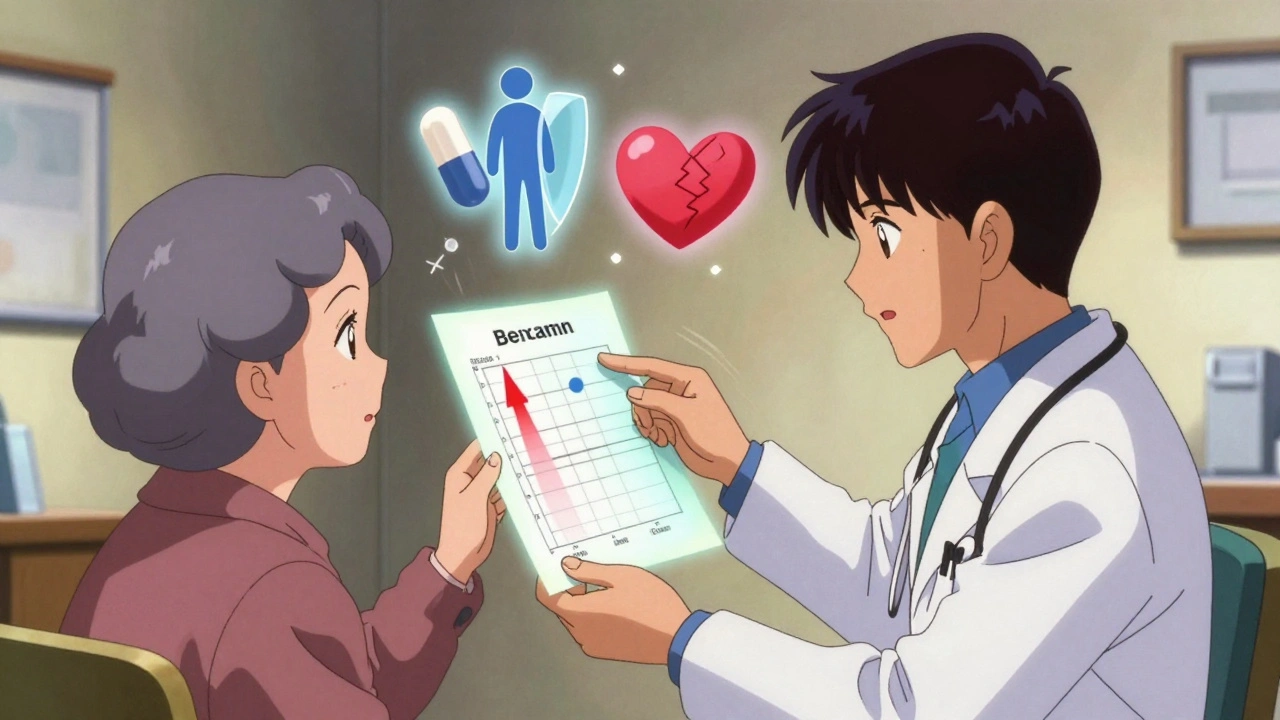
How to Reduce Fall Risk Without Stopping Medication
You don’t have to choose between stroke and a fall. You can reduce both. Start with a fall risk assessment. Tools like the Morse Fall Scale or Otago Exercise Program help. The Otago program-gentle strength and balance exercises done at home-cuts falls by 35% in seniors. Remove hazards. Loose rugs, poor lighting, cluttered hallways. Install grab bars in bathrooms. Use non-slip mats. Bed alarms can alert caregivers if someone gets up at night. Review all medications. Benzodiazepines, sleep aids, opioids, even some blood pressure drugs can make you dizzy. A pharmacist can help trim the list. Get your vision checked. Hearing tested. Feet examined. Poor vision and numb feet are silent fall risks. And don’t forget nutrition. Low vitamin D and calcium weaken bones. A simple supplement can reduce fracture risk by up to 20%.Why So Many Seniors Are Still Not Getting Treatment
Despite the evidence, only 55-60% of eligible seniors get anticoagulants. That number drops to 48% for those over 85. Why? A 2021 survey found 68% of primary care doctors would withhold anticoagulants from an 85-year-old with two falls-even if their stroke risk score was high. That’s not based on data. It’s fear. Clinicians say they don’t feel confident managing these drugs in the very old. They worry about kidney issues. They’re nervous about bleeding. And they don’t always know about the reversal agents. But guidelines are clear. The 2020 European Society of Cardiology says: “Anticoagulation is recommended in all AF patients with CHA₂DS₂-VASc ≥2, including the very elderly.” The real problem isn’t the medicine. It’s the mindset.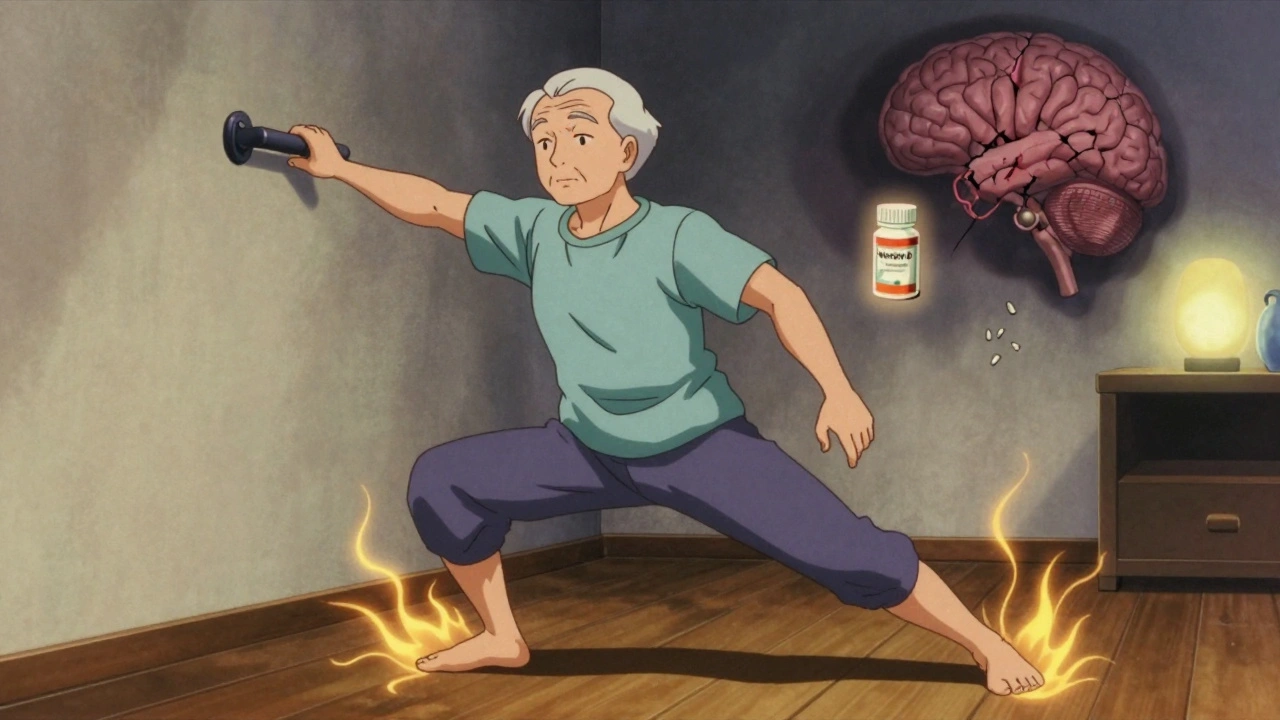
What Happens If You Skip Anticoagulants?
Let’s say you decide not to take a blood thinner because you’re afraid of falling. What’s the real cost? A 2023 analysis estimated that for every 100 octogenarians with AFib treated with anticoagulants for a year, 24 strokes are prevented. About 3 major bleeds occur. That’s a net gain of 21 prevented bad events. Strokes in seniors are devastating. Many don’t recover fully. They lose independence. They end up in nursing homes. Some die within a year. A fall on a blood thinner? It’s scary. But most falls don’t lead to death. And with proper prevention, even that risk drops. The alternative-doing nothing-is far more dangerous.Practical Steps for Seniors and Families
If you or a loved one has AFib:- Ask for your CHA₂DS₂-VASc score. If it’s 2 or higher, anticoagulation is recommended.
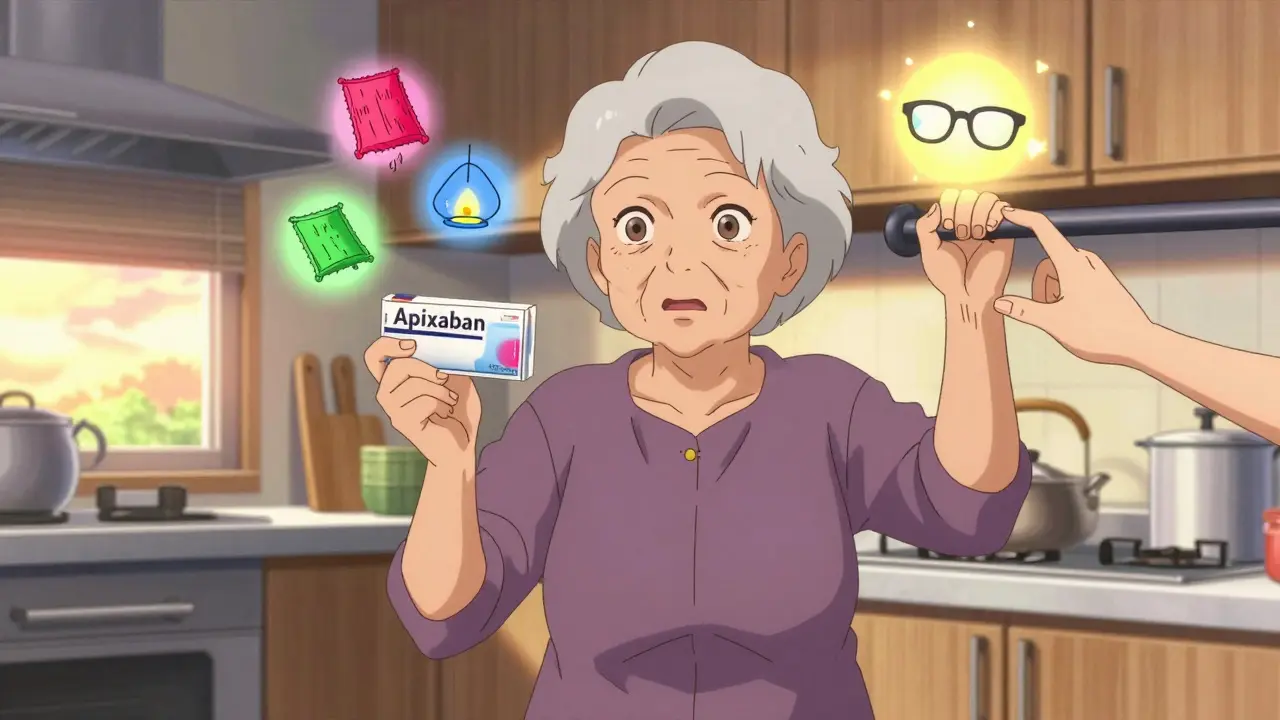
- Ask if a DOAC is right for you. Apixaban is often the best choice for seniors.
- Request a kidney function test every 6-12 months.
- Ask for a fall risk assessment and a medication review.
- Start the Otago Exercise Program or a similar balance program.
- Make your home safer: remove rugs, add nightlights, install grab bars.
- Don’t stop the medication because of a fall. Talk to your doctor instead.
The Bottom Line
Anticoagulants aren’t perfect. But they’re one of the most effective tools we have to prevent strokes in seniors with atrial fibrillation. Falls are a concern-but not a reason to avoid treatment. The data is clear: the risk of stroke far outweighs the risk of bleeding from a fall. And with modern drugs, better monitoring, and simple safety changes, most seniors can stay on anticoagulants safely. Your life shouldn’t be limited by fear. With the right plan, you can live longer, stronger, and safer-even if you’re 85 or older.Should seniors stop anticoagulants after a fall?
No. A single fall is not a reason to stop anticoagulants. The risk of stroke remains high, and stopping the medication increases that risk significantly. Instead, evaluate why the fall happened-was it due to dizziness, poor lighting, or a medication side effect? Address those causes, not the blood thinner. Guidelines from the American Heart Association and European Society of Cardiology agree: fall history alone does not justify discontinuing anticoagulation.
Are DOACs safer than warfarin for elderly patients?
Yes, for most seniors. DOACs like apixaban and rivaroxaban have lower rates of major bleeding, especially dangerous brain bleeds, compared to warfarin. They also don’t require frequent blood tests, which makes them easier to manage. However, they rely on kidney function, so regular creatinine checks are needed. Apixaban has the best safety profile in patients over 75, with 31% less major bleeding than warfarin in clinical trials.
Can seniors with kidney problems take anticoagulants?
Yes, but dosing matters. Many DOACs are cleared by the kidneys, so reduced kidney function requires lower doses. For example, apixaban can be safely used at 2.5 mg twice daily if creatinine clearance is below 30 mL/min. Dabigatran is less suitable in severe kidney disease. Always check kidney function every 6-12 months and adjust the dose as needed. Warfarin is an option if kidney function is very poor, but it still requires monitoring.
What if my parent is on a blood thinner and falls?
If they hit their head or have symptoms like confusion, vomiting, or weakness, go to the ER immediately. Even if they seem fine, a head CT may be needed to rule out bleeding. Don’t wait. Keep a list of their medication and dose handy. If they’re on a DOAC, tell the ER team-it helps them decide if a reversal agent is needed. Most falls don’t cause serious injury, but with anticoagulants, caution is essential.
Is aspirin enough for stroke prevention in seniors with AFib?
No. Aspirin reduces stroke risk by only about 22%, while anticoagulants reduce it by 60-70%. The BAFTA trial showed seniors on anticoagulants had half the rate of strokes compared to those on aspirin. Aspirin is not recommended for stroke prevention in AFib. It may be used for other reasons, like heart disease, but never as a substitute for anticoagulation in AFib.
How often should seniors on anticoagulants see their doctor?
For warfarin, blood tests (INR) are needed every 4 weeks. For DOACs, no routine blood tests are required, but kidney function should be checked every 6-12 months. Annual reviews are recommended to reassess stroke and fall risk, update medications, and check for new symptoms. If kidney function declines or new drugs are added, more frequent visits may be needed.




Doug Hawk
December 3, 2025 AT 11:33Man i read this whole thing and honestly the DOACs vs warfarin breakdown was gold. Apixaban for the win especially for folks over 75. Kidney checks every 6 months? Non negotiable. I’ve seen too many grandpas get dropped from warfarin because their INR was all over the place. DOACs dont need that mess. Just make sure their creatinine clearance is tracked. No more guessing games.
John Morrow
December 3, 2025 AT 11:58It’s fascinating how the medical establishment has converged on a consensus that contradicts decades of clinical intuition rooted in geriatric risk aversion. The BAFTA trial, while methodologically sound, still operates within a selection bias paradigm-those included were functionally independent, cognitively intact, and had access to follow-up care. The real world population-frail, polypharmacy-laden, with inconsistent medication adherence-is rarely represented in RCTs. Thus, the generalized recommendation to anticoagulate all CHA₂DS₂-VASc ≥2 patients, irrespective of frailty index or fall frequency, borders on evidence imperialism. The 2021 survey showing 68% of PCPs withholding anticoagulation is not fear-it’s clinical wisdom in the face of overgeneralized guidelines.
Kristen Yates
December 3, 2025 AT 20:41I work in home care and see this every week. An 86-year-old woman with AFib, fell twice last month, and her doctor wanted to stop her pill. I told her family to push back. She’s still walking, still cooking, still watching her grandkids. Stopping the blood thinner would’ve been worse. We fixed her lighting, got her a walker, checked her meds. She’s fine. The medicine isn’t the problem. The environment is.
Saurabh Tiwari
December 5, 2025 AT 11:20bro this is so true 😌 i have uncle in delhi on apixaban 2.5mg twice a day after kidney dose adjustment. he fell last year, hit head, went to hospital, no bleed. they checked his creatinine, kept him on it. now he does yoga every morning. life goes on. no need to fear the pill. fear the stroke. 🙏
Michael Campbell
December 5, 2025 AT 11:53They’re lying to you. Big Pharma pushed these DOACs because they make more money. Warfarin’s been around for 70 years. Why change it? And don’t even get me started on reversal agents-those cost a fortune. Your doctor’s just following the script. Aspirin’s fine. You don’t need a blood thinner unless you’re on a plane every week.
Victoria Graci
December 6, 2025 AT 03:14There’s a quiet tragedy here-not in the numbers, but in the silence. We treat stroke prevention like a math problem, but for the 85-year-old who just wants to sit on her porch without being told she’s a liability-her dignity is the real calculus. We don’t talk about how the fear of falling becomes a cage. We don’t say: ‘You’re not too old to live, you’re too old to be scared.’ The pills aren’t the enemy. The narrative is. Let’s stop treating seniors like fragile porcelain and start treating them like people who’ve earned the right to take a risk.
Saravanan Sathyanandha
December 7, 2025 AT 19:33This is a beautifully articulated summary of a critical clinical dilemma. The data unequivocally supports anticoagulation in elderly AFib patients with CHA₂DS₂-VASc ≥2, and the shift from warfarin to DOACs represents one of the most significant advances in geriatric cardiology this century. However, implementation remains uneven due to systemic gaps in geriatric training, lack of access to renal monitoring, and cultural hesitancy. I have witnessed firsthand in rural India how elderly patients are denied DOACs due to perceived cost and complexity-yet the true cost lies in preventable strokes. A multidisciplinary approach-pharmacists, physiotherapists, and community health workers-is essential to bridge this gap. The solution is not just medical, but social.
alaa ismail
December 8, 2025 AT 01:48My grandma’s on apixaban. She fell last winter. Didn’t stop it. We got her a cane. Now she’s out gardening again. Simple stuff works.