
CHA2DS2-VASc Stroke Risk Calculator
Calculate Your Stroke Risk
This tool helps you understand your stroke risk from atrial fibrillation compared to fall-related bleeding risk. It's designed to help you and your doctor make informed decisions about anticoagulation therapy.
Results
Your CHA2DS2-VASc Score:
Estimated Annual Stroke Risk:
Annual Fall-Related Bleeding Risk (DOACs):
According to clinical guidelines, patients with a score of 2 or higher (men) or 3 or higher (women) should receive anticoagulation therapy. Your score indicates .
Important: The risk of stroke (3-5% per year for your score) is significantly higher than the risk of serious brain bleeding from falls (0.2-0.5% per year) while on DOACs. Stopping anticoagulants due to fall risk alone can increase your stroke risk by 300-400%.
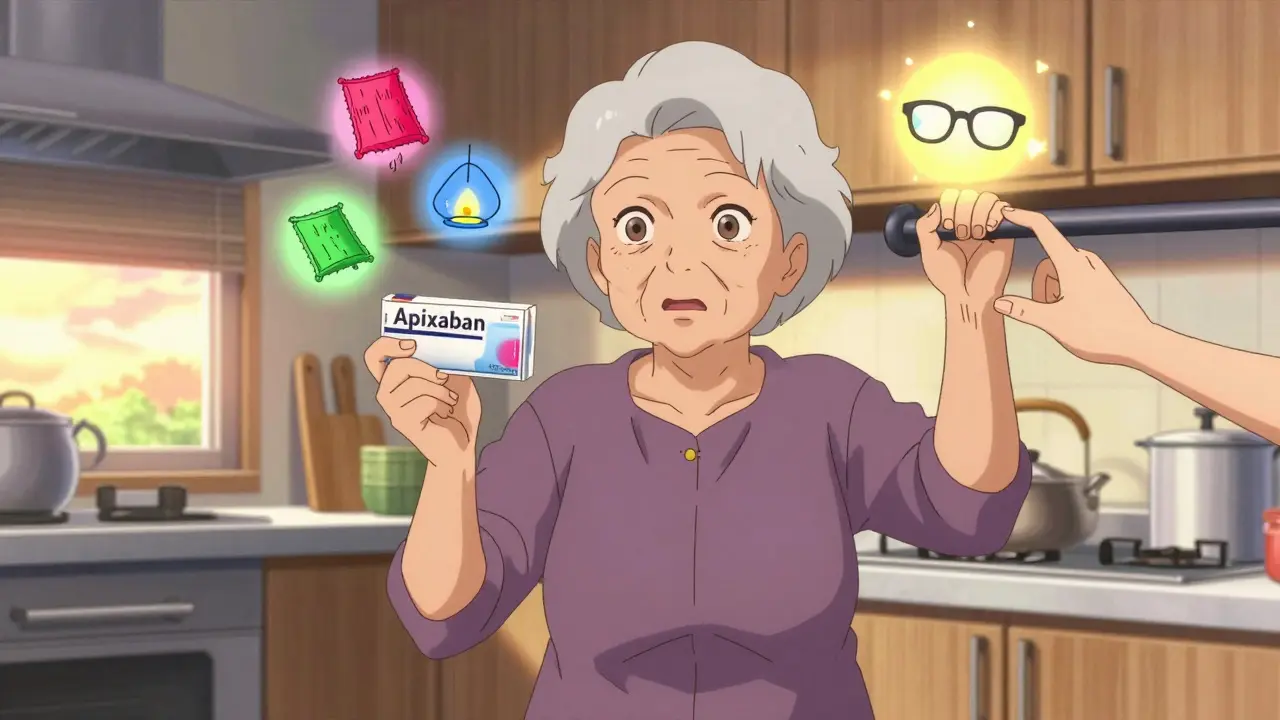
Many older adults on blood thinners are told to stop their medication because they’re at risk of falling. But here’s the truth: fall risk alone should never be the reason to stop anticoagulants. In fact, stopping them because of falls often puts patients at greater risk - not from bleeding, but from stroke.
Why Falling Doesn’t Mean Stopping Blood Thinners
It’s a common fear: if you’re on a blood thinner and you fall, you might bleed badly. That sounds scary, and it’s why some doctors avoid prescribing anticoagulants to older patients, especially those in nursing homes where falls are frequent. But data tells a different story.
For someone with atrial fibrillation (AFib) and a CHA2DS2-VASc score of 3 or higher, their annual stroke risk is between 3% and 5%. That’s 3 to 5 strokes per 100 people every year. Meanwhile, the risk of a serious brain bleed from a fall while on anticoagulants? Only about 0.2% to 0.5% per year. That’s less than one in 200 people.
Think about it this way: you’d have to fall nearly 300 times in a single year for the risk of bleeding to outweigh the benefit of preventing a stroke. That’s not just unlikely - it’s nearly impossible. And yet, many patients still get denied anticoagulation because they’ve had one or two falls.
What Anticoagulants Are Safe for Fallers?
Not all blood thinners are the same. Warfarin has been around for decades, but it’s messy to manage. It requires regular blood tests, interacts with food and other meds, and carries a higher risk of brain bleeds.
Direct Oral Anticoagulants (DOACs) - like apixaban, rivaroxaban, dabigatran, and edoxaban - are now the first choice for most patients. Why? Because they reduce the risk of intracranial hemorrhage by 30% to 50% compared to warfarin. They don’t need routine blood tests. They have fewer interactions. And for someone who’s prone to falls, that’s a game-changer.
According to 2022 data from IQVIA, DOACs now make up about 80% of new prescriptions for AFib in the U.S. That’s not because they’re trendy - it’s because they’re safer for older, fall-prone patients.
How to Know If You Need Anticoagulation
Not everyone with AFib needs a blood thinner. But if you’re over 65, have high blood pressure, diabetes, heart failure, or a history of stroke, your risk goes up. That’s where the CHA2DS2-VASc score comes in.
- Score of 2 or higher in men? Anticoagulation recommended.
- Score of 3 or higher in women? Anticoagulation recommended.
That’s it. Fall risk doesn’t change that. A 78-year-old who fell last month but has a CHA2DS2-VASc score of 4 still has a 4% chance of having a stroke this year. That’s four times higher than their chance of a serious brain bleed from a fall while on a DOAC.
There’s also the HAS-BLED score, which looks at bleeding risk factors like uncontrolled high blood pressure, kidney or liver problems, past bleeding, or heavy alcohol use. A score of 3 or higher means you need closer monitoring - not avoidance.

What You Should Do Instead of Stopping Medication
If you’re at risk of falling, the answer isn’t to stop your blood thinner. It’s to reduce the chances of falling in the first place.
Here’s what works:
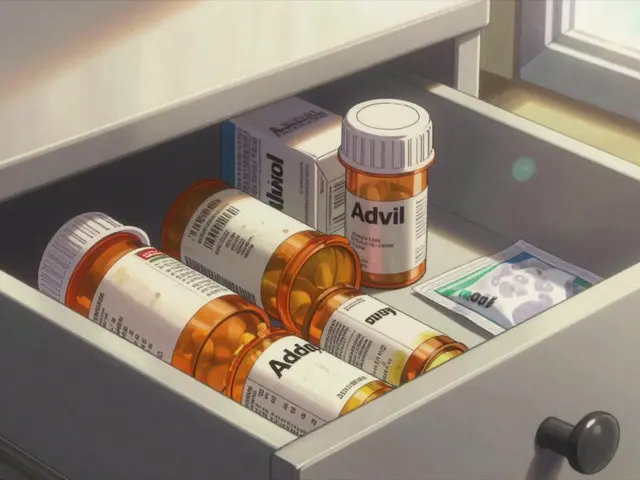
- Review all your medications. Sedatives, sleeping pills, blood pressure drugs, and antidepressants can make you dizzy or unsteady. Some might be unnecessary. A pharmacist or geriatrician can help cut what’s not needed.
- Test your balance. The Timed Up and Go test is simple: sit in a chair, stand up, walk 10 feet, turn, walk back, and sit down. If it takes more than 12 seconds, your fall risk is high. Physical therapy can help.
- Check your vision. Cataracts, glaucoma, or outdated glasses? Get them fixed. Poor vision is one of the biggest causes of falls.
- Make your home safer. Remove throw rugs, install grab bars in the bathroom, add nightlights, and clear clutter. Even small changes cut falls by 30%.
- Manage low blood pressure when standing. If you feel lightheaded when getting up, talk to your doctor. This is called orthostatic hypotension - and it’s treatable.
These steps take time - maybe 30 to 60 minutes for a full assessment - but they’re worth it. Studies show that when you fix the environment and the meds, falls drop by 40% or more. And you stay protected from stroke.
What Not to Do
Some providers try to "lower the risk" by reducing the dose of a DOAC or aiming for a lower INR with warfarin. That’s dangerous.
DOACs don’t work like warfarin. Lowering the dose doesn’t make them safer - it makes them less effective. You’re trading stroke prevention for no real drop in bleeding risk. Same with warfarin: targeting an INR below 2.0 doesn’t prevent bleeds - it lets clots form.
Professional guidelines from the American College of Cardiology, the American Heart Association, and the European Society of Geriatric Medicine all say: don’t do this. It’s not just ineffective - it’s harmful.

When Might You Actually Skip Anticoagulation?
There are exceptions. If you have active bleeding, a severe bleeding disorder, or uncontrolled high blood pressure (systolic over 180), anticoagulation is unsafe. But those are medical emergencies - not everyday fall risks.
For very frail patients with life expectancy under a year, the math changes. Stroke prevention takes months to years to show benefit. If someone is unlikely to live that long, the benefit may not outweigh the risks. But that’s not about falling - it’s about overall health and goals of care.
That’s why shared decision-making matters. Talk to your doctor. Ask: "What’s my stroke risk? What’s my bleeding risk? What can we do to prevent falls?" Don’t accept "you fall too much" as an answer.
Why This Misconception Still Exists
Despite all the evidence, a 2023 review found that 40% to 50% of primary care doctors still believe fall risk alone should stop anticoagulation. Why? Because it’s easier. It feels safer to stop a drug than to fix a home or adjust meds.
But the real danger isn’t falling - it’s under-treating stroke risk. Hospitals are now being penalized by Medicare for not prescribing anticoagulants to eligible AFib patients. That’s because we know: untreated stroke causes more death and disability than falls ever do.
Patients who stop their blood thinners out of fear often end up in the hospital - not from a bleed, but from a stroke. And those strokes are usually worse because they weren’t prevented.
The Bottom Line
Fall risk doesn’t cancel out stroke risk. It just means you need a better plan - not no plan.
Keep your anticoagulant. Switch to a DOAC if you’re still on warfarin. Work with your care team to fix what you can control: your meds, your balance, your home, your vision. You don’t have to live in fear of falling. You just have to live smarter.
Should I stop my blood thinner if I’ve had a fall?
No. Having one or even a few falls doesn’t mean you should stop anticoagulation. The risk of stroke from untreated atrial fibrillation is far greater than the risk of a serious bleed from a fall. Instead of stopping your medication, focus on reducing fall risk through medication review, balance training, and home safety changes.
Are DOACs safer than warfarin for people who fall?
Yes. DOACs (like apixaban and rivaroxaban) reduce the risk of brain bleeding by 30% to 50% compared to warfarin. They also don’t require frequent blood tests or dietary restrictions. For older adults at risk of falls, DOACs are the preferred choice unless kidney function is severely impaired.
Can I lower my DOAC dose to make it safer?
No. Reducing the dose of a DOAC doesn’t lower bleeding risk - it increases stroke risk. DOACs are designed to work at specific doses. Skipping or lowering them without medical supervision can leave you unprotected from clots. Always follow the prescribed dose.
What’s the best way to prevent falls while on blood thinners?
Start with a multifactorial assessment: review medications (especially sedatives and blood pressure drugs), test balance with the Timed Up and Go test, check vision, remove home hazards like rugs and poor lighting, and treat dizziness when standing. Physical therapy and home safety modifications can reduce falls by 40% or more.
Is it okay to avoid anticoagulation just because I’m old?
No. Age alone is not a reason to avoid anticoagulation. In fact, older adults benefit the most from stroke prevention because their risk of AFib-related stroke increases with age. What matters is your CHA2DS2-VASc score, not your age. A 90-year-old with a score of 4 has the same stroke risk as a 70-year-old with the same score - and both need anticoagulation unless other factors make it unsafe.






Natanya Green
February 22, 2026 AT 07:01OH MY GOSH, I CAN’T BELIEVE THIS IS EVEN A CONVERSATION!!!
I had my 82-year-old mom on warfarin for AFib, and her doctor wanted to stop it because she ‘fell once’ - like, in a grocery store, while reaching for oat milk???
Thank you SO MUCH for this post - I literally screamed when I read it. My mom’s stroke risk was 4.7% - FOUR POINT SEVEN!!! - and they were ready to gamble on her having a stroke just because she’s ‘clumsy’???
We switched her to apixaban, installed grab bars, got her new glasses, and cut her sleep meds. She hasn’t fallen since. And she’s dancing at my niece’s wedding next month. 🥹
Stop. Stopping. Blood thinners. Just. Stop.
Steven Pam
February 23, 2026 AT 09:38This is one of those posts that makes you want to hug the internet.
I work in geriatrics, and honestly? I’ve seen so many patients get dropped off warfarin just because they tripped over a rug. Like… you’re gonna let a stroke kill someone because they didn’t see a throw pillow?
DOACs are game-changers. My 89-year-old patient on rivaroxaban? Walks her dog twice a day. No falls. No bleeding. Just… living.
Also - yes, check vision. Cataracts are silent killers. And orthostatic hypotension? Totally fixable with hydration, compression socks, and a little time standing before you walk. So simple. So underused.
Thank you for writing this. Someone needs to put this on a billboard.
Timothy Haroutunian
February 25, 2026 AT 03:38Let’s be real - this whole argument is built on cherry-picked statistics.
Yes, DOACs reduce intracranial hemorrhage risk compared to warfarin - but they’re not zero-risk. And you’re ignoring the fact that many elderly patients have multiple comorbidities that compound bleeding risk: renal impairment, thrombocytopenia, even aspirin use.
Also, the 300-falls-per-year comparison? That’s absurd. You don’t need 300 falls. One fall onto concrete, one slip in the shower, one head impact - and you’re done. That’s not a statistical abstraction - that’s a funeral.
And then you say ‘don’t lower the dose’ - but guidelines explicitly allow dose reduction in renal impairment. You’re painting a black-and-white picture when this is all grayscale.
Yes, stroke is bad. But so is a brain bleed. And you’re dismissing the real-world complexity of frail elderly patients who can’t even stand up without help.
Erin Pinheiro
February 26, 2026 AT 17:15ok but like… i had my aunt on one of those doacs and she fell and it was a mess. like. bleeding from her ear. and they said 'its fine' but it wasnt fine. her head swelled up. like. a balloon. and they kept saying 'its normal' but it wasnt. so now i dont trust anything.
also why are we so obsessed with stroke? what about quality of life? what if she just wanted to nap in peace without being told she needs to 'optimize her health'? like. maybe she just wanted to die quietly.
and why is everyone so sure about these scores? what if the doctor got it wrong? what if the chart was messed up? what if she was 87 and just wanted to be left alone?
so like. maybe dont be so sure. maybe just… listen.
Michael FItzpatrick
February 26, 2026 AT 20:57This is the kind of clarity that should be taught in med school - not buried in a 50-page guideline appendix.
I love how you framed it: fall risk doesn’t cancel stroke risk - it demands better care. That’s not just medical wisdom - it’s moral wisdom.
Too many providers treat aging like a disease to be managed with withdrawal, not a life to be honored with adaptation.
When we fix the environment - the lighting, the rugs, the meds - we’re not just preventing falls. We’re saying: ‘You still belong here. You still matter. You still get to live.’
And DOACs? They’re not just safer drugs - they’re tools of dignity. They let people keep their routines, their pets, their coffee walks.
This isn’t about statistics. It’s about who we decide is worth protecting.
Larry Zerpa
February 27, 2026 AT 07:03Here’s the uncomfortable truth nobody wants to admit: this whole 'DOACs are safe for fallers' narrative is funded by pharmaceutical companies.
Warfarin is cheap. DOACs cost $400/month. Insurance companies pushed them hard. Hospitals got paid more for 'stroke prevention protocols.'
And now we’ve got a generation of doctors who treat these drugs like magic bullets - ignoring that real-world adherence is abysmal. Elderly patients forget doses. They mix them with NSAIDs. They don’t know they’re on two anticoagulants.
And when they bleed? It’s not a 0.2% risk - it’s a 10% risk because they didn’t take it right.
Also - 'don’t lower the dose' - really? What about the 65kg 88-year-old with CrCl 30? You’re telling me to give her the same dose as a 200lb 60-year-old?
This isn’t medicine. It’s marketing dressed as science.
Gwen Vincent
February 28, 2026 AT 15:19I’ve been a nurse for 22 years, and I’ve seen both sides.
I’ve held the hand of someone who had a stroke because they stopped their blood thinner after a fall.
I’ve also held the hand of someone who bled into their brain after a fall - and it was awful.
But here’s what I know: the people who survive the stroke? They’re never the same. They lose speech, movement, dignity. The person who bleeds? Sometimes they recover. Sometimes they don’t. But they don’t spend the next 5 years in a wheelchair.
So yes - DOACs are better. Yes - we need to fix the home. Yes - we need to review meds.
But more than anything? We need to stop making decisions for people. We need to ask them: 'What matters to you?'
Some people choose risk. And that’s okay too.
Christopher Brown
March 1, 2026 AT 03:25Stop. Using. DOACs. In. Elderly. People.
This is what happens when you let PhDs write medical guidelines. You think you’re saving lives - you’re just creating more expensive corpses.
Warfarin works. It’s been tested for 70 years. DOACs? 15. And now we’re told to avoid the only drug that’s been proven to work - because some study says '30% less bleeding'?
And you want to fix the house? What about the 70% of seniors who live in apartments with no grab bars? Who can’t afford a home health aide?
Stop pretending this is about medicine. It’s about privilege. Only rich people get DOACs. Poor people get strokes.
Lou Suito
March 1, 2026 AT 08:36So you say DOACs reduce brain bleed risk by 30-50% compared to warfarin - but what about GI bleeds? They’re more common with DOACs. And they’re deadly too.
And you say 'don’t lower the dose' - but the FDA approved lower doses for renal impairment. So why are you ignoring that?
Also - 'fall risk doesn’t change CHA2DS2-VASc' - true. But what if the patient has dementia? What if they can’t report dizziness? What if they’re on 8 other meds?
You’re reducing a complex clinical decision to a checklist. That’s dangerous.
And why no mention of reversal agents? DOACs don’t have universal reversal like warfarin. What if they fall and bleed? You can’t just give them vitamin K.
Stop oversimplifying. This isn’t a TikTok post.
Joseph Cantu
March 2, 2026 AT 00:34You know who benefits from this? The hospitals. The pharmaceutical reps. The insurance companies.
They don’t care if you live. They care if you’re on a drug that costs $400/month.
And now you’re telling people to 'switch to DOACs' - but what if they can’t afford it? What if they’re on Medicare Part D and hit the doughnut hole?
And why is no one talking about the 30% of patients who develop heparin-induced thrombocytopenia after DOACs? Or the fact that DOACs can’t be dialyzed?
This isn’t medicine. It’s a cult.
And you’re the prophet.
William James
March 3, 2026 AT 23:48I’ve been thinking about this all day - not as a clinician, but as a son.
My dad had AFib. He was 84. He fell once - slipped on ice. They wanted to stop his warfarin. I argued. We switched to apixaban. He’s still here. Still walks his dog. Still makes terrible coffee.
But here’s what I realized: we weren’t just preventing a stroke.
We were preserving his autonomy. His routine. His dignity.
He didn’t want to be 'safe.' He wanted to be free.
And maybe that’s the real question - not 'what’s the risk?' but 'what kind of life are we trying to protect?'
Because if we reduce everything to numbers - we forget the person behind the score.
David McKie
March 4, 2026 AT 15:26Let me tell you what’s really going on here.
The NHS is collapsing. The UK is drowning in stroke cases because we’ve been too afraid to prescribe anticoagulants. We’ve got a generation of elderly patients with undiagnosed AFib - because GPs are terrified of bleeding.
And now you’re telling us to use DOACs? They cost 10x more. We can’t afford them.
So we’re stuck - either we let them stroke, or we let them bleed.
This isn’t a solution. It’s a luxury.
And you’re preaching it like it’s gospel.
Southern Indiana Paleontology Institute
March 6, 2026 AT 11:47Y’all are overthinking this. If you fall, you stop the medicine. Simple. No stats. No scores. Just common sense.
People get hurt. People die. You don’t need a PhD to know that.
My grandpa fell. He died. They said 'he was on blood thinners' - so now I know: fall = stop.
That’s it.
Anil bhardwaj
March 7, 2026 AT 15:58in india we dont even have access to doacs. most people are on warfarin. and they dont even have home safety checks. so what do we do? just let them die?
also no one here knows what chadsvasc is. my uncle had afib. he fell. doctor said 'stop medicine'. he had stroke. now he cant talk.
so… what now?
lela izzani
March 8, 2026 AT 12:49I’m a physical therapist who specializes in geriatrics, and I can’t tell you how many times I’ve seen this exact scenario.
A patient comes in after a fall. Family is terrified. Doctor says 'stop the blood thinner.' We do a full assessment - and guess what? The patient has uncorrected cataracts, takes a benzodiazepine for sleep, and has no grab bars.
After 6 weeks of home modifications, vision correction, and medication review? Falls drop by 60%.
And the patient? They’re still on their DOAC. Still walking. Still independent.
It’s not about the drug. It’s about the system.
We need to stop treating fall risk as a reason to withdraw care - and start treating it as a signal to improve care.
Natanya Green
March 9, 2026 AT 13:49Wait - so you’re telling me that after I fought to keep my mom on apixaban, and we fixed her home, and she’s dancing now… I’m just supposed to accept that some doctor out there still thinks 'fall = stop meds'?
That’s not ignorance. That’s negligence.
I’m calling my state medical board tomorrow.