
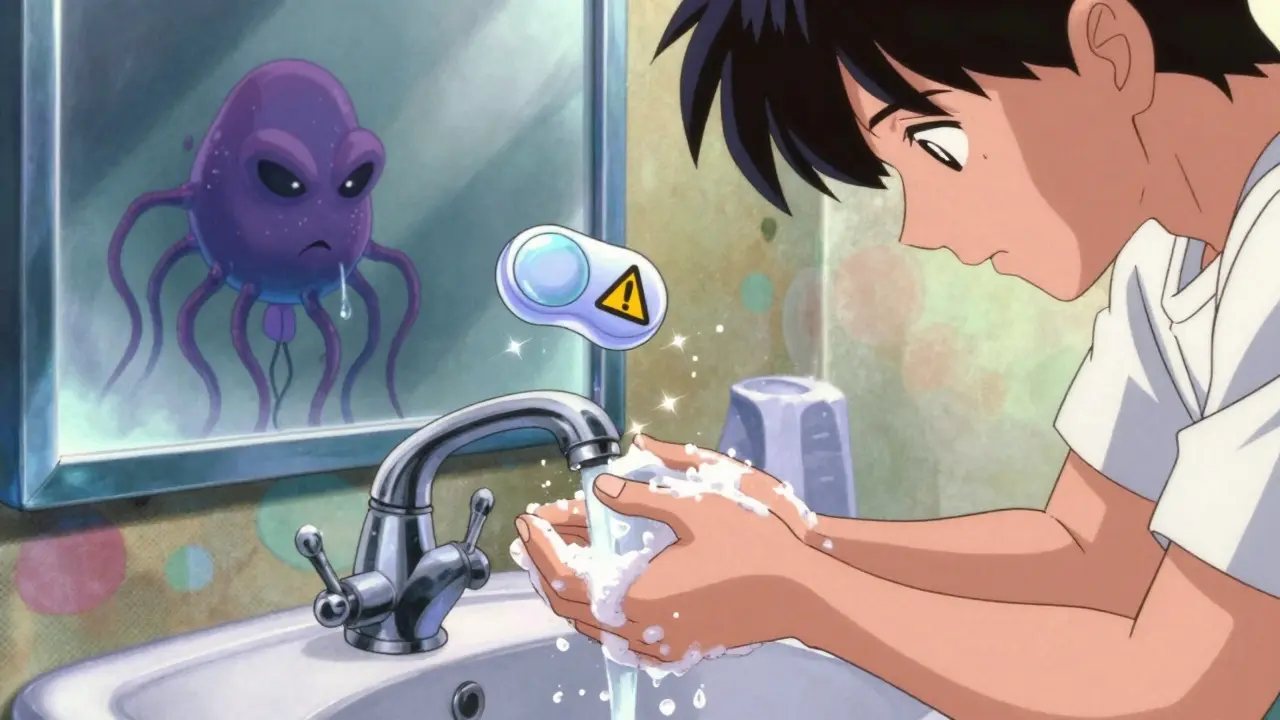
Every year, about 1 in 1,000 contact lens wearers in the U.S. ends up with a serious eye infection - and most of them didn’t need to. It’s not because the lenses are dangerous. It’s because of how they’re handled. You can see clearly with contacts, but if you skip the basics - washing your hands, using the right solution, or sleeping in them - you’re putting your vision at risk.
Hand Hygiene: The First Line of Defense
Your hands touch everything: doorknobs, phones, your face, your hair. And if you touch your lenses with dirty fingers, you’re bringing bacteria, fungi, or even amoebas straight to your cornea. The CDC and NIH both say handwashing is the single most important step in preventing eye infections.Don’t just rinse. Don’t use hand sanitizer. Use plain soap and water. Scrub for at least 20 seconds - the time it takes to sing "Happy Birthday" twice. Rinse well, then dry with a clean, lint-free towel. Paper towels work better than cloth ones, which can leave fibers behind.
Studies show only 53% to 77% of contact lens wearers do this properly. That means nearly half the people using contacts are skipping the most basic safety rule. And it’s not just about getting germs on your fingers - it’s about what you do next. If you open your lens case before washing your hands, you’re contaminating clean fingers before they even touch the lens. Always wash first. Then open the case.
Never Use Water - Not Even a Drop
Tap water, bottled water, distilled water, pool water, shower spray - none of it is safe for contact lenses. The FDA has issued multiple warnings about this. Why? Because water can carry Acanthamoeba, a tiny, tough parasite that burrows into the cornea and causes a rare but devastating infection called Acanthamoeba keratitis.This isn’t just a theoretical risk. In the UK, the rate of this infection is 6 to 8 cases per 10,000 contact lens users - higher than in the U.S. or Asia. Treatment can cost up to $7,500 per person. And even then, you might not fully recover your vision. Some patients need corneal transplants.
If you accidentally get water on your lenses - whether from showering, swimming, or even rain - take them out immediately. Don’t just rinse them with solution. Discard them if they’re daily disposables. If they’re reusable, clean and disinfect them with fresh solution, then wait 24 hours before wearing them again. Better yet: remove your lenses before any water exposure. Always.
Solutions: Not All Are Created Equal
Your lens solution isn’t just a cleaning agent - it’s your disinfectant. Using the wrong one can mean zero protection. Saline solution? That’s just salt water. It doesn’t kill germs. Rewetting drops? They moisturize, they don’t disinfect. Neither should ever replace your multipurpose or hydrogen peroxide solution.Always use the solution your eye care professional recommends. Not because they’re pushing a brand - because your lenses are made of specific materials that react differently to different chemicals. A solution that works for silicone hydrogel lenses might damage rigid gas permeable ones.
And never top off your solution. That means adding new solution to old solution in the case. It sounds like you’re saving money. But it’s actually reducing disinfection power by 30% to 50%. The CDC says this is one of the top reasons infections happen. Always empty the case, rinse it with fresh solution, then refill with new solution every single time.
Case Care: The Hidden Danger Zone
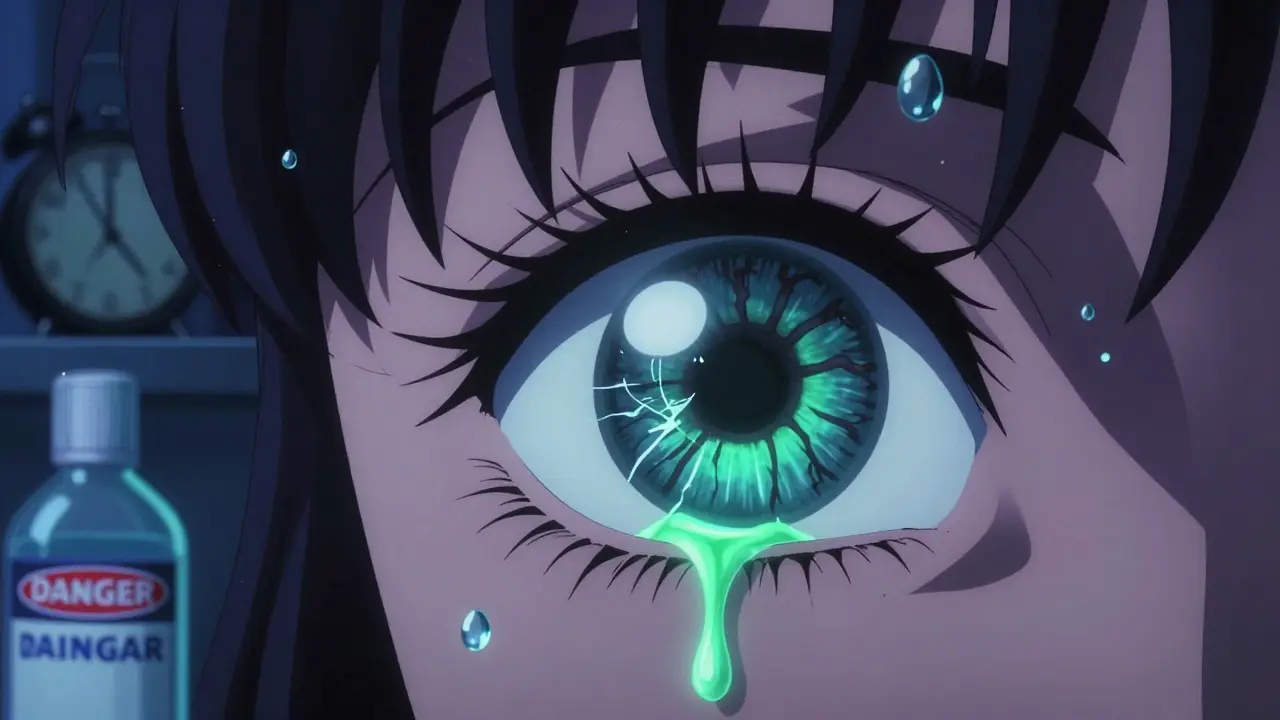
Your lens case is a breeding ground. It’s damp, dark, and full of biofilm - a slimy layer of microbes that cling to plastic. Even if you rinse it with solution, if you don’t let it dry properly, bacteria multiply.Replace your case every three months. If you’re prone to infections or wear lenses daily, replace it every month. Rinse it with solution after each use - never water. Then leave it open, upside down, on a clean tissue. Let it air dry overnight. A closed, wet case is a germ hotel.
Some people think buying a fancy case with antimicrobial coating makes a difference. It doesn’t. The only proven way to prevent contamination is consistent cleaning and timely replacement. No shortcuts.
Wear Time: When to Take Them Out
You’ve heard it before: don’t sleep in your contacts. But how many people actually do? Studies show 40% to 50% of wearers sleep in lenses not approved for overnight use. That’s a huge risk.Only 10% to 15% of contact lenses are FDA-approved for extended wear. Even then, your eyes still need a break. Sleeping in lenses cuts off oxygen to your cornea, making it easier for infections to take hold. And if you’ve been wearing them for 12 hours, don’t push it to 16 just because you’re tired.
Follow your replacement schedule exactly. Daily disposables? Throw them out at the end of the day. Biweekly? Replace them every 14 days, no exceptions. Monthly? Same thing. Wearing them past their date doesn’t just make them less comfortable - it increases your risk of infection by up to 5 times.
And if you’re under 25? You’re in the highest-risk group. The FDA reports 85% of contact lens complications happen in people aged 18 to 24. That’s not because you’re careless - it’s because you’re busy, tired, or think it won’t happen to you. But it does.
Why Daily Disposables Are Changing the Game
The market for contact lenses has shifted dramatically. In 2018, only 45% of U.S. wearers used daily disposables. By 2023, that number jumped to 65%. Why? Because they eliminate storage, cleaning, and case contamination - the three biggest sources of infection.With daily disposables, you start fresh every morning. No solution needed. No case to clean. No risk of biofilm buildup. Just open a new pair, wear them all day, toss them. Simple. Safer. And surprisingly, not much more expensive than monthly lenses when you factor in solution and case costs.
If you’ve been struggling with dry eyes, irritation, or repeated infections, switching to daily disposables might be the easiest fix you’ve ever made.
What’s Coming Next
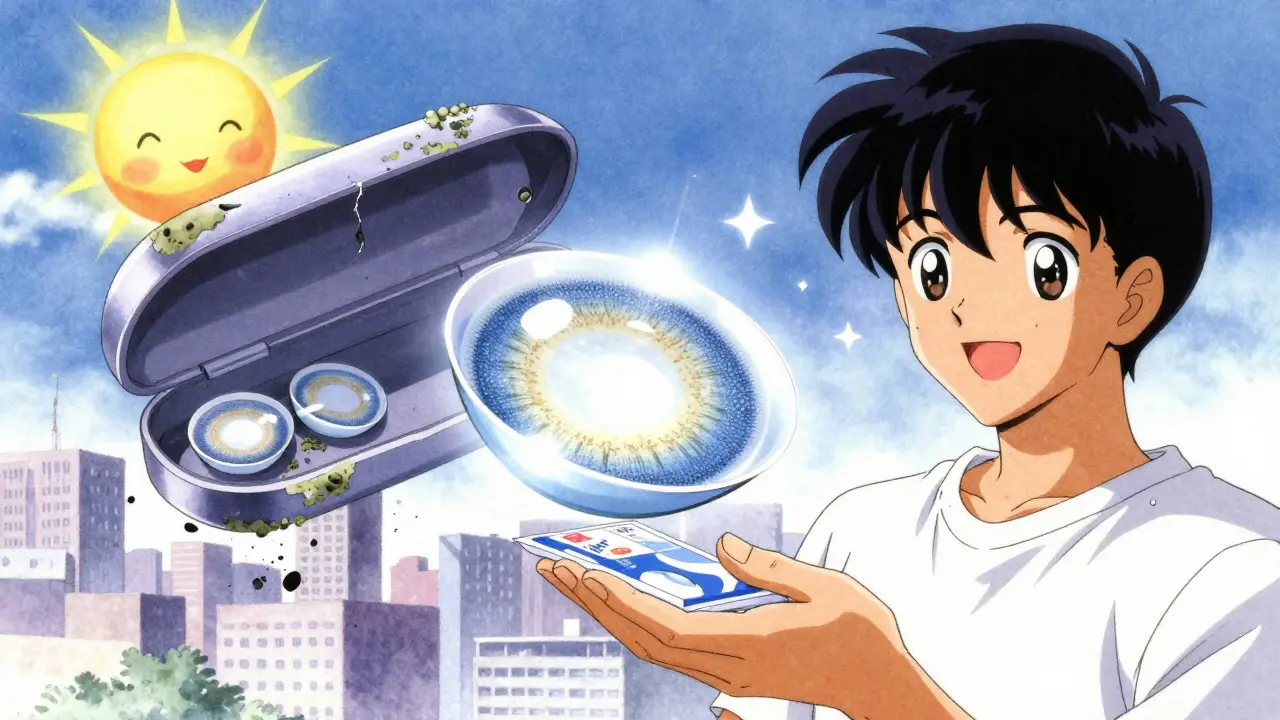
Science is catching up. New lens materials in clinical trials show a 70% reduction in bacterial adhesion compared to traditional lenses. That means future lenses might naturally resist germs. But don’t wait for them. Even the best lens won’t save you if you use tap water or sleep in them.Right now, the biggest barrier to safety isn’t technology - it’s behavior. Education hasn’t kept up. Most people get their first pair from a vending machine or online without proper training. That’s why compliance rates are stuck at 50% to 77%.
The CDC says infection rates won’t drop until people start treating their lenses like medical devices - not accessories. And they’re right.
Quick Checklist for Safe Contact Lens Use
- Wash hands with soap and water for 20+ seconds before touching lenses
- Never use water - ever - to rinse lenses or cases
- Use only the solution recommended by your eye care provider
- Never top off solution - always use fresh
- Replace your lens case every 3 months (or every month if you’re prone to infections)
- Always remove lenses before showering, swimming, or sleeping
- Follow your replacement schedule - no extensions
- Throw away daily disposables at the end of the day
Frequently Asked Questions
Can I reuse daily disposable contact lenses?
No. Daily disposables are designed for single use only. Reusing them, even for a few hours, increases the risk of infection, discomfort, and corneal damage. They’re thinner and more fragile than monthly lenses, so cleaning them doesn’t restore their integrity. Always throw them away after one day.
Is it safe to swim with contact lenses?
No. Swimming with contacts - even in a pool - increases your risk of eye infection by 10 to 15 times. Water contains bacteria, chlorine, and other microbes that can cling to your lenses. If you must swim with them, wear waterproof goggles. Afterward, remove and disinfect your lenses, or throw them out if they’re daily disposables.
Why does my eye feel dry even with rewetting drops?
Rewetting drops only add moisture - they don’t fix the root problem. If your lenses are old, dirty, or not designed for your tear film, your eyes will feel dry. Switching to daily disposables or a different lens material can help. Also, make sure you’re not wearing them longer than recommended. Dryness is often a sign your eyes are under stress.
Can I use hydrogen peroxide solution without a neutralizing case?
Absolutely not. Hydrogen peroxide solutions require a special case with a platinum disc that neutralizes the solution over 4 to 6 hours. If you pour it directly on your lens or skip the case, you risk severe chemical burns to your eye. Always follow the manufacturer’s instructions exactly.
How do I know if I have an eye infection from contacts?
Signs include redness, pain, blurred vision, sensitivity to light, or a feeling like something’s stuck in your eye. If you have any of these, take your lenses out immediately and call your eye doctor. Don’t wait. A corneal ulcer can develop in less than 24 hours. Early treatment saves vision.

anthony martinez
January 10, 2026 AT 08:21So let me get this straight - we’re supposed to wash our hands for 20 seconds, use only the right solution, replace the case every three months, and never, ever let water near our lenses… but somehow, 50% of people still mess it up? I guess the real medical device here is the human brain’s ability to ignore obvious warnings while scrolling TikTok with contacts in.
Ritwik Bose
January 11, 2026 AT 21:59Thank you for this meticulously detailed guide. In India, where water quality varies drastically across regions, the warning against tap water is not merely advisory - it is life-preserving. I have witnessed friends lose vision due to Acanthamoeba, and the tragedy lies not in the infection, but in the preventable nature of it. I urge all users to treat their lenses with the reverence they deserve - not as fashion accessories, but as delicate instruments of sight.
🙏
Jaqueline santos bau
January 13, 2026 AT 11:48Oh my god. I just realized I’ve been ‘topping off’ my solution since 2021. Like, I just pour new stuff on top like it’s coffee in a mug. And I thought I was being smart? I’m literally a walking biofilm incubator. My corneas are probably throwing a rave right now. Also, I sleep in my contacts like they’re pajamas. I’m gonna go cry into my saline solution now.
Aurora Memo
January 14, 2026 AT 05:47I’ve been wearing contacts since I was 16, and I didn’t know any of this until I got a nasty infection at 28. It took three months to recover. I switched to daily disposables and never looked back. It’s not expensive - it’s an investment in being able to see your kids grow up without a corneal transplant. Please, if you’re reading this and you’re under 25 - you’re the most at risk. Don’t be the statistic. Just buy the dailies.
chandra tan
January 15, 2026 AT 00:42Bro in India we just rinse lenses with bottled water and pray. No joke. My uncle wore contacts for 20 years like that - still sees fine. Maybe the bacteria here are chill? Or maybe we just got lucky. Still, I’ll try the dailies. Anything to stop my mom yelling at me to ‘not touch your eyes with dirty hands’ every time I eat biryani.
Dwayne Dickson
January 16, 2026 AT 06:47It’s worth noting that the CDC’s compliance data is self-reported, which introduces significant response bias. Actual hygiene adherence is likely closer to 20% - not 53%. Furthermore, the efficacy of hydrogen peroxide systems is contingent upon precise neutralization kinetics, which are compromised by user error in 68% of cases per a 2022 Journal of Ocular Pharmacology study. The real issue isn’t education - it’s behavioral inertia compounded by systemic lack of standardized ocular hygiene protocols in retail lens distribution channels.
Ted Conerly
January 16, 2026 AT 14:34I used to be the guy who slept in his lenses and rinsed them with tap water. Then I got a corneal ulcer. It hurt like hell. I couldn’t look at a screen for three weeks. I’m now a daily disposable convert - and honestly? It’s easier. Less mess, less stress. You don’t have to be perfect - just consistent. Start with one habit: wash your hands before touching your lenses. That’s it. You got this.
Faith Edwards
January 17, 2026 AT 19:14How is it still 2024 and people are treating their corneas like they’re disposable coffee cups? I mean, you wouldn’t reuse a syringe, but you’ll reuse a lens that’s been floating in a damp plastic tomb for 30 days? You’re not ‘saving money’ - you’re gambling with your eyesight while wearing a pair of plastic contact lenses you bought from a vending machine after a 3 a.m. bender. The FDA didn’t write this guide for fun. It’s a public health emergency dressed in a 20% discount coupon.