
When you pick up a generic pill at the pharmacy, you expect it to work just like the brand-name version. You don’t want to wonder if it’s weaker, contaminated, or inconsistent. The truth is, the FDA doesn’t just approve generic drugs - it ensures their quality at every single step of manufacturing. And that process is far more rigorous than most people realize.
It’s Not About the Final Product - It’s About the Process
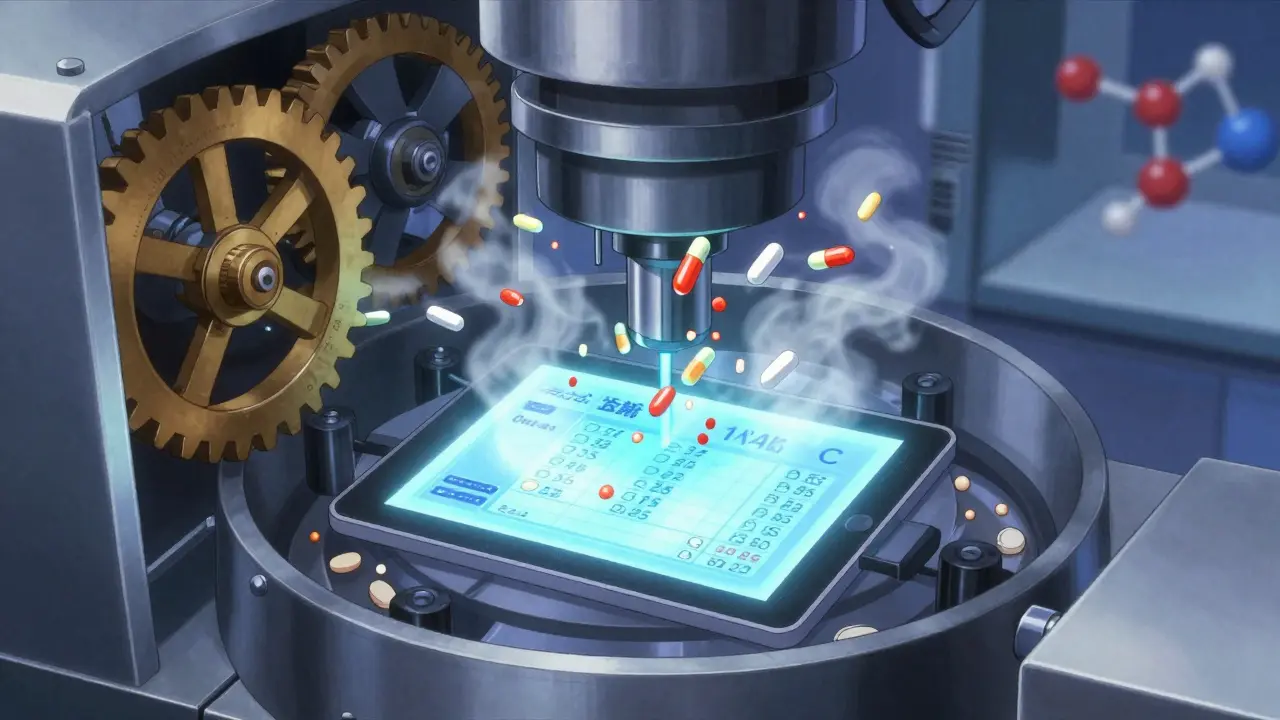
For decades, regulators tested drugs only after they were made. But in the 1960s, after testing over 4,600 medications, the FDA found that about 8% of them didn’t deliver the right dose. Some were too strong. Others were too weak. That wasn’t random. It was a systemic failure. The fix? Stop relying on end-product testing. Start controlling the entire manufacturing process. That’s where Current Good Manufacturing Practices (cGMP) came in. These aren’t suggestions. They’re federal law under Title 21 of the Code of Federal Regulations. Every generic drug maker - whether in the U.S. or overseas - must follow them. The FDA doesn’t wait for complaints. They inspect factories without notice, sometimes staying for days to watch every move.The Five Pillars of Generic Drug Quality
The FDA’s system rests on five non-negotiable pillars. Skip one, and the drug won’t get approved.- Control of Materials: Every ingredient, from the active drug to the coating, must be tested and traced. Suppliers are vetted. Records show where each batch came from. If a raw material is contaminated, the entire lot is rejected - even if the final product looks fine.
- Production and Process Controls: Every step of manufacturing is written down. Temperature, mixing time, pressure - all monitored in real time. If a machine goes out of range, the system stops. Workers can’t just guess what to do. There’s a procedure, and it’s followed exactly.
- Quality Control and Laboratory Testing: Every batch is tested. Not just the final product. Raw materials. In-process samples. Finished tablets. Tests must be validated. Data must be ALCOA+: attributable, legible, contemporaneously recorded, original or true copy, accurate, complete, consistent, enduring, and available. If a lab tech deletes a file or writes on a sticky note instead of a logbook, that’s a violation.
- Packaging, Labeling, and Distribution: Labels must match the approved version exactly. No typos. No missing warnings. Packaging must protect the drug from moisture, light, and heat. Even the shipping containers are checked. A pill that’s fine in the factory can degrade in a hot truck - and the FDA requires proof it won’t.
- Documentation and Record Keeping: This is where many companies fail. Every change, every test, every deviation must be documented. No exceptions. The FDA doesn’t just ask for records - they pull them randomly and cross-check them with equipment logs and video footage. If the paper trail doesn’t match reality, the facility gets flagged.
How Many Drugs Get Approved? And How Long Does It Take?
The FDA doesn’t approve generic drugs quickly. It takes months - often over a year - just to review one application. Manufacturers must submit three separate batches of the drug: one for the middle strength, one for the lowest, and one for the highest. Each batch is tested for bioequivalence. That means the generic must absorb into the bloodstream at the same rate and extent as the brand-name drug. No more than a 20% difference - and usually it’s under 5%. The Office of Generic Drugs works hand-in-hand with the Office of Pharmaceutical Quality. That’s key. The same team that reviews the chemistry also checks the factory. No silos. No handoffs. If the data looks off, they send inspectors to the plant before approving anything.
Foreign Factories Are Inspected Too
About 90% of generic drugs sold in the U.S. are made outside the country - mostly in India and China. The FDA inspects roughly 1,200 facilities each year. About 1,700 facilities total supply the U.S. market. Foreign sites get inspected less often than U.S. ones - 17% of foreign facilities had cGMP violations in 2021, compared to 8% of domestic ones. But the gap is shrinking. Remote inspections, introduced during the pandemic, are now used 35% of the time. They’re not a shortcut. They’re a tool. Inspectors watch video feeds of production lines, review digital logs, and even request live demonstrations.What Happens When Something Goes Wrong?
The FDA doesn’t wait for people to get sick. They use data to catch problems early. The Drug Quality Reporting System (DQRS), launched in January 2023, lets manufacturers report quality issues faster. The agency also does risk-based sampling. If a company changes its supplier, updates its equipment, or moves production to a new building, the FDA pulls samples before the drug hits shelves. That’s proactive - not reactive. In 2022, over 40% of FDA Form 483 observations (inspection reports) cited data integrity issues. That’s a red flag. If a company is falsifying records, they’re hiding something. The FDA can shut down a facility, block imports, or even pursue criminal charges.
Why Do Generic Drugs Cost So Much Less?
They’re not cheaper because they’re lower quality. They’re cheaper because generic makers don’t spend billions on advertising or clinical trials. But they still spend $2-5 million on quality infrastructure before they even submit an application. The cost of compliance - training, equipment, documentation, audits - makes up 15-20% of total development costs. That’s a lot. But it’s the price of safety. And it works. Generic drugs make up 90% of prescriptions filled in the U.S. - over 6.8 billion a year. In 98-99% of cases, they perform identically to brand-name drugs. That’s not luck. It’s a system built on control, not chance.What’s Changing in 2025?
The FDA is pushing toward smarter manufacturing. The Pharmaceutical Quality for the 21st Century initiative is testing real-time monitoring and continuous production. Instead of testing batches after they’re made, they want to monitor quality as it’s being made - like a car factory with sensors checking every part on the line. Draft guidance is expected in mid-2024. Also, by 2025, manufacturers will have to report every source of active ingredients. No more hidden suppliers. No more anonymous chemical vendors. Transparency is the next step.Is the System Perfect?
No system is. The FDA is underfunded. Inspectors are stretched thin. Some small companies say the paperwork is overwhelming. But the results speak for themselves. Millions of Americans rely on generics every day. And the vast majority get safe, effective medicine - because the FDA doesn’t trust luck. They trust processes. They trust data. And they trust inspections.Are generic drugs as safe as brand-name drugs?
Yes. The FDA requires generic drugs to have the same active ingredient, strength, dosage form, and route of administration as the brand-name version. They must also be bioequivalent - meaning they work the same way in the body. Both types are held to the same manufacturing standards under cGMP rules.
Does the FDA inspect generic drug factories?
Yes. The FDA conducts unannounced inspections of all manufacturing facilities - domestic and foreign - that produce drugs for the U.S. market. About 1,200 inspections happen each year. Inspectors stay as long as needed to verify compliance with cGMP regulations.
Why do some generic drugs look different from brand-name ones?
The appearance - color, shape, size, or inactive ingredients - can differ because trademarks and branding are protected. But the active ingredient, dose, and effectiveness must be identical. The FDA approves these differences as long as they don’t affect how the drug works.
How does the FDA catch counterfeit or substandard generics?
The FDA uses risk-based sampling, data analysis, and reports from manufacturers and healthcare providers. They test products in their own labs and track trends in adverse events. If a pattern emerges - like multiple reports of a drug failing - they investigate the manufacturer and may recall the product or block imports.
Can a generic drug be pulled from the market after approval?
Yes. If new data shows a quality issue - like contamination, inconsistent potency, or falsified records - the FDA can issue a recall, suspend manufacturing, or block imports. Over 100 generic drug recalls happen each year, mostly due to manufacturing flaws, not safety concerns.
Do generic drugs take longer to work than brand-name drugs?
No. Bioequivalence testing ensures that generics are absorbed into the bloodstream at the same rate and extent as the brand-name drug. Any difference in how quickly you feel the effect is usually due to individual metabolism, not the drug itself.
Ashley Porter
January 24, 2026 AT 22:28The cGMP framework is insane when you break it down. It’s not just about testing pills - it’s about controlling every variable like a nuclear reactor. Real-time monitoring, ALCOA+ compliance, vendor traceability - this isn’t pharma, it’s aerospace-grade quality control for medicine.
shivam utkresth
January 26, 2026 AT 10:32As someone from India where a ton of generics are made, I’ve seen both sides. Yeah, some shops cut corners - but the FDA inspections? They don’t play. I’ve worked with factories that had to scrap entire batches because a lab tech used a sticky note. Brutal, but necessary. We’re not just making pills - we’re making trust.
Shawn Raja
January 27, 2026 AT 11:22So let me get this straight - we’re spending millions to make sure a $2 pill doesn’t turn into a $200 nightmare… but brand-name drugs cost $500 and nobody questions their factory in Switzerland? 😏
Uche Okoro
January 28, 2026 AT 18:36The ALCOA+ framework is the unsung hero of pharmaceutical integrity. Attributable, legible, contemporaneous, original, accurate - and don’t even get me started on complete, consistent, enduring, available. That’s not bureaucracy. That’s epistemological hygiene. Without it, you’re not manufacturing medicine - you’re gambling with pharmacokinetics.
When a lab tech deletes a dataset or scribbles on a napkin, they’re not just violating SOPs - they’re undermining the entire inferential chain of clinical trust. This isn’t about compliance. It’s about preventing epistemic collapse.
And yet, the public thinks generics are ‘cheap knockoffs.’ They don’t realize that the cost isn’t in the API - it’s in the audit trails, the calibration logs, the validation reports, the 17-hour inspections where they watch you mix a batch under infrared.
The real scandal? The FDA’s budget hasn’t kept pace with the global supply chain. We’re inspecting 1,200 facilities with a team that could fit in a minivan. And somehow, 98% of generics work perfectly.
That’s not luck. That’s institutional discipline. The system is brittle, yes - but it’s also the most rigorous drug quality assurance regime in human history. And it’s all built on paperwork.
Next time you pick up a generic, don’t think ‘cheap.’ Think ‘verified.’ Think ‘traceable.’ Think ‘unforgivingly documented.’
And if you’re still skeptical? Go read a Form 483. You’ll understand why we don’t need more regulation - we need more inspectors.
Aurelie L.
January 29, 2026 AT 21:30Ugh. I still won’t take generics. My cousin’s thyroid med didn’t work and she ended up in the ER. Coincidence? Maybe. But I’m not a lab rat.
Ryan W
January 30, 2026 AT 03:2790% of generics made overseas? No wonder we’re losing the war on counterfeit drugs. Why are we letting foreign factories dictate American health? We need tariffs. We need inspections. We need AMERICA MAKING AMERICAN PILLS.
Ashley Karanja
January 30, 2026 AT 14:11Okay but imagine if ALL industries operated like this?? 🤯 Like, your car’s engine part had to be ALCOA+ compliant? Your phone battery tracked every microsecond of its production? Your coffee maker’s thermostat logs? I’d sleep SO much better. I mean, we trust our meds with our lives - why wouldn’t we demand that level of obsession? 🙏💕 I’m crying thinking about all the lab techs staying late to log data properly. We owe them so much.
Kipper Pickens
February 1, 2026 AT 11:01What’s wild is that the FDA’s process is more transparent than most tech companies’ data policies. You can read the guidance docs, the inspection reports, the bioequivalence thresholds - all public. Meanwhile, your TikTok algorithm’s a black box. Funny how we trust a government agency more than a Silicon Valley startup with our health than our data.
Sally Dalton
February 3, 2026 AT 05:22my doctor switched me to a generic last month and i was nervous af but honestly? i didn’t even notice a difference. like… i still got my migraine relief. i still didn’t feel like a zombie. it just cost me 12 bucks instead of 80. i think we need to chill and trust the system more. also the FDA is doing a lot of heavy lifting we never see. big love to the inspectors 🙌
TONY ADAMS
February 3, 2026 AT 21:45My cousin’s mom died because her generic blood thinner didn’t work. So yeah, I’m not buying it. You can’t just say ‘it’s 98% effective’ - that 2% is someone’s funeral.
Joanna Domżalska
February 5, 2026 AT 02:06So you’re telling me the FDA is the hero? Funny. They approved OxyContin. They approved Vioxx. They approved 300+ recalls last year. If you trust this system, you’re not informed - you’re naive.