
Ever wondered why your pharmacist can swap a brand-name drug for a generic one without calling your doctor? It seems like a simple cost-saving measure, but for the person behind the counter, it is a legal minefield. Dispensing a generic isn't just about checking a box; it is about navigating a complex web of federal guidelines and state laws that vary wildly depending on where the pharmacy is located. One wrong move can lead to a disciplinary action from a state board or, worse, a patient health crisis.
The Foundation of Generic Substitution
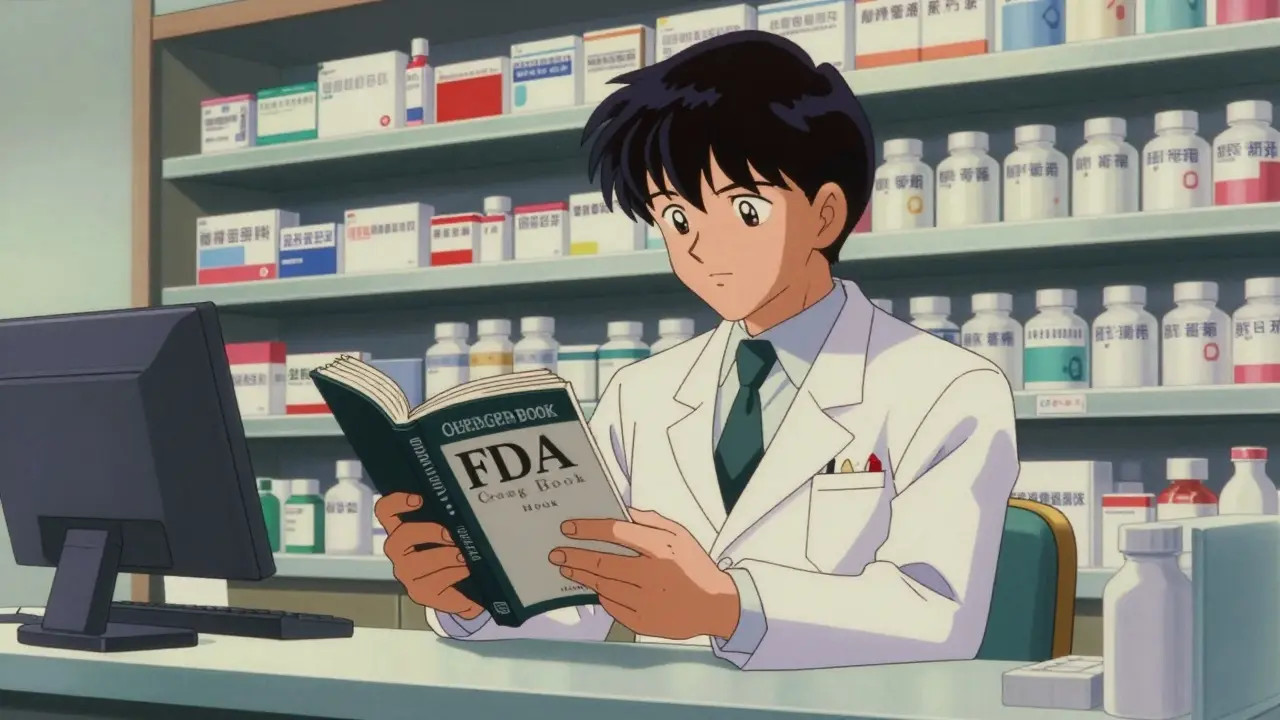
At the heart of this process is the FDA Orange Book is the official publication used to determine if a generic drug is therapeutically equivalent to a brand-name drug. This book is the gold standard for pharmacists. To be substituted, a drug generally needs an 'A-rating,' meaning it has the same active ingredient, dosage form, strength, and route of administration as the original.
This system was largely shaped by the Hatch-Waxman Act is a 1984 law that created the modern generic drug industry by allowing abbreviated applications for generic drugs. Because of this, generics now make up over 90% of all prescriptions filled in the U.S., saving the healthcare system hundreds of billions of dollars every year. However, the FDA's approval is just the first step. The actual act of substituting is governed by state law, which is where things get tricky.
Navigating Mandatory vs. Permissive States
Depending on the state, a pharmacist might be required to substitute or simply allowed to. In mandatory substitution states, the law basically says, "Give the generic unless the doctor explicitly says no." This typically leads to higher generic use-around 92.7% in states like New York and California. In permissive states, the pharmacist has more leeway to use professional judgment, though the utilization rates are slightly lower.
Then there is the issue of consent. In some jurisdictions, pharmacists operate under "presumed consent," where they can swap the drug without a formal conversation. In other states, explicit consent is required, meaning the pharmacist must get a "yes" from the patient before making the switch. If a pharmacist misses this step, they are technically in violation of state practice acts.
| Regulatory Model | Pharmacist's Role | Patient Interaction | Common Outcome |
|---|---|---|---|
| Mandatory Substitution | Must dispense generic unless prohibited | Variable (Presumed or Explicit) | Highest generic utilization rates |
| Permissive Substitution | May dispense generic if equivalent | Often requires patient agreement | Higher reliance on professional judgment |
| Restrictive/Prohibited | Cannot substitute without specific auth | Required prescriber/patient consent | Lowest generic penetration |
High-Risk Medications and Narrow Therapeutic Indices
Not all drugs are created equal. There is a category known as Narrow Therapeutic Index (NTI) drugs is medications where small differences in dose or blood concentration may lead to serious adverse effects or therapeutic failure. For these, the "A-rating" in the Orange Book might not be enough to guarantee safety.
For example, in Tennessee, pharmacists are strictly prohibited from substituting antiepileptic drugs used for seizures, regardless of the FDA rating. Why? Because a tiny shift in bioavailability can trigger a breakthrough seizure. Similarly, some pharmacists avoid swapping cardiac glycosides or thyroid medications like levothyroxine because the risk of therapeutic failure is higher. In fact, some research has shown a 12.7% increase in adverse events when certain cardiac drugs are substituted, even when they are technically bioequivalent.
Handling the "Dispense As Written" (DAW) Order
When a doctor wants to prevent a generic swap, they use a "Dispense As Written" (DAW) instruction. However, how this is handled varies. In Florida, for instance, the law is very specific: the prescriber must write "MEDICALLY NECESSARY" in their own handwriting on a physical script or use a specific electronic "overt act" to block substitution. If a pharmacist ignores a properly formatted DAW order, they are stepping outside their legal authority.
This creates a tension between the American Medical Association is the largest association of physicians and medical students in the US, which argues that doctors should have total control over the product, and the American Pharmacists Association is a professional organization representing pharmacists to improve health outcomes, which emphasizes the pharmacist's right to exercise independent professional judgment.
The Cost of Compliance Errors
For a pharmacist, the biggest risk isn't usually the clinical choice, but the paperwork. Documentation errors account for roughly 68% of all substitution-related disciplinary actions by state boards of pharmacy. If you substitute a drug but fail to document the patient's consent or the specific product used, you are vulnerable to sanctions.
Maintaining compliance is a full-time job. Pharmacists often spend 40 to 60 hours a year on continuing education just to keep up with changing state laws. With 17 states amending their substitution rules in a single year, a pharmacist moving from Oklahoma (one of the most restrictive states) to California faces a completely different set of legal obligations.

The Future of Substitution: Biosimilars
We are now entering the era of Biosimilars is biologic products that are highly similar to a reference biologic product. Unlike simple generics, which are chemical copies, biosimilars are made from living cells and are far more complex. Over 30 states have already introduced specific biosimilar substitution laws.
These rules are different from traditional generics. Because biologics are more complex, the "interchangeable" designation is much stricter. Pharmacists must now learn a whole new set of rules for these high-cost drugs, as the stakes for an incorrect substitution in oncology or immunology are significantly higher than with a standard antibiotic.
What is the difference between an A-rated and B-rated drug in the Orange Book?
An A-rated drug is considered therapeutically equivalent, meaning it has the same active ingredient, strength, and dosage form, and bioequivalence has been proven. A B-rated drug is pharmaceutical equivalent (same ingredients and strength) but has not been proven bioequivalent or the study was insufficient. Most state laws only allow automatic substitution for A-rated products.
Can a pharmacist substitute a drug if the doctor wrote "No Substitution"?
Generally, no. If a prescriber clearly indicates "Dispense As Written" (DAW) or "No Substitution," the pharmacist must honor that request. In some states, like Florida, specific phrasing like "MEDICALLY NECESSARY" is required for the block to be legally binding.
What happens if a pharmacist makes a substitution error?
Consequences can range from professional reprimands and fines from the State Board of Pharmacy to loss of licensure. If the error leads to patient harm-such as a seizure due to an incorrect antiepileptic swap-the pharmacist may face malpractice lawsuits.
Do all states have the same laws for generic substitution?
No. Laws vary by state. Some are "mandatory substitution" states, while others are "permissive." Some require explicit patient consent, while others presume consent. Additionally, some states have specific bans on substituting certain classes of drugs, like anticonvulsants in Tennessee.
Are biosimilars the same as generics?
No. Generics are exact chemical copies of small-molecule drugs. Biosimilars are versions of large-molecule biologic drugs. Because biologics are grown in living cells, they cannot be identical copies; they are "highly similar." Therefore, they have different legal substitution rules than traditional generics.
Next Steps for Pharmacy Professionals
If you are managing a pharmacy or working as a staff pharmacist, your first priority should be a state-specific audit. Ensure your pharmacy software is configured to the correct consent protocol (Explicit vs. Presumed) for your specific jurisdiction. For those in states with high NTI drug usage, creating a "Negative Formulary"-a list of drugs that should never be substituted without a direct call to the doctor-can prevent catastrophic errors.
Finally, keep an eye on the 2024 FDA labeling updates. New requirements for generic labeling aim to make it clearer to patients why a substitution occurred, which should help reduce the common patient complaint regarding a lack of notification during the swap.





Jarrett Jensen
May 1, 2026 AT 06:54The utter banality of this overview is almost impressive. One would assume a sophisticated reader already possesses a fundamental understanding of the Hatch-Waxman Act without requiring such a pedestrian breakdown. It is quite tedious that we must continually simplify these pharmacological nuances for the masses.
prince king
May 1, 2026 AT 16:38Such a great look at the balance between cost and safety! 🌟 It really makes you think about the unseen weight pharmacists carry every day. Total respect for the pros keeping us safe while saving us money! 💊🙏
Amber McCallum
May 3, 2026 AT 05:54This is just a system of control. They tell you it is about safety, but it is really about money and power. Simple as that.
Darrin Oneto
May 4, 2026 AT 09:56Man, the NTI stuff is a real nail-biter. Imagine the sheer panic when a tiny slip in bioavailablity causes a total meltdown in a patient's system. Absolute chaos in a bottle if you mess that up. Glad there are guardrails for that wild ride.
Jean Robert
May 5, 2026 AT 11:02I really feel for the pharmacists who have to balance these conflicting state laws while dealing with a long line of tired patients, and I truly believe that with a bit of patience and a supportive environment, we can help them manage this stress more effectively. It is so important to remember that they are humans first and professionals second, and providing them with the tools and emotional support they need will ultimately lead to better patient outcomes for everyone involved in the healthcare journey, so let's keep encouraging them to stay diligent while remaining kind to themselves during these hectic shifts.
Jenna Riordan
May 6, 2026 AT 07:14I once had a pharmacist swap my meds without telling me and I ended up calling the corporate office to complain about the lack of transparency.
Raymond Lipanog
May 6, 2026 AT 10:55The juxtaposition between the American Medical Association and the American Pharmacists Association presents a profound philosophical conflict regarding the nature of professional autonomy. One must wonder if a synthesis of these perspectives is possible, or if the tension is an inherent necessity of the healthcare hierarchy to ensure multiple layers of verification.
Michael Yoste
May 6, 2026 AT 12:06I totally get why people are scared of the mistakes, but honestly, it's just so sad that the system puts so much pressure on one person. I've had such bad experiences with pharmacy errors in the past that I still get anxiety just walking into a drugstore, but I'm sure most pharmacists are doing their absolute best despite the corporate greed!