
Medication Guide Checker
Check if Your Drug Requires a Medication Guide
Medication Guides are legally required for certain high-risk prescription drugs. Enter your medication below to check if it requires one.
Select a medication and click 'Check Medication Guide Requirement' to see if it requires a Medication Guide.
When you pick up a prescription, you might not think to ask for a Medication Guide. But if your drug requires one, you have a legal right to receive it - in paper form, or electronically if you prefer. Many patients never get these guides, even when they’re required by law. Others get them but can’t read them because the font is too small or the language is too confusing. You don’t have to accept that. Here’s what you need to know about getting your Medication Guide, what the law says, and how to make sure you actually get it.
What Is a Medication Guide, Really?
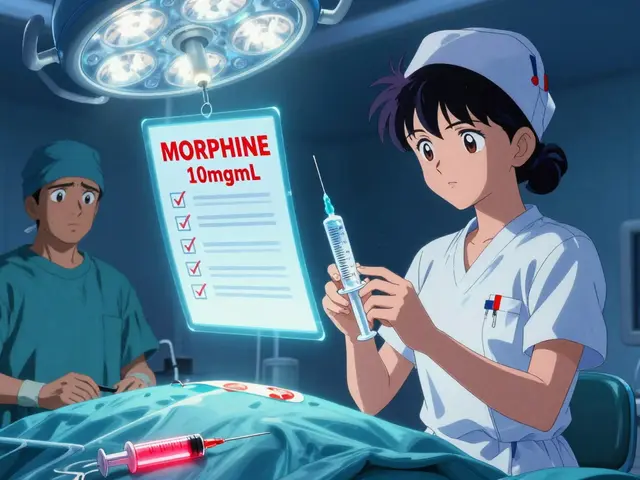
A Medication Guide is not just a leaflet that comes with your pills. It’s a legally required, FDA-approved document that gives you critical safety information about certain prescription drugs. These aren’t optional. The FDA only orders them for drugs that carry serious risks - like life-threatening side effects, dangerous interactions, or risks if you don’t take them exactly as directed. As of late 2023, about 150 prescription drugs in the U.S. require a Medication Guide. That’s roughly 5% of all prescriptions. Common examples include certain antidepressants, blood thinners, diabetes medications, and drugs for autoimmune diseases. These guides are written by the drug maker, then reviewed and approved by the FDA. They must be accurate, clear, and free of marketing language. The FDA requires them to be written in plain language - no medical jargon. The type size must be at least 10-point. The words “Medication Guide” must be at the top, followed by the brand name and generic name of the drug. At the bottom, it must say: “This Medication Guide has been approved by the U.S. Food and Drug Administration.”Your Legal Right to Get It - In Paper or Digital
Under FDA rules (21 CFR §208.24), pharmacies must give you the Medication Guide when you pick up your prescription. Not later. Not when you ask for it. Not if you “seem like you already know what you’re doing.” Right then. In your hands. You might hear a pharmacist say, “We don’t have any left,” or “You can download it online.” That’s not okay. Pharmacies are required to have enough on hand - either printed copies or the ability to print them on the spot. If they don’t have them, they’re violating federal law. Here’s something many people don’t know: you can ask for it electronically instead. Since May 2023, the FDA officially allows patients to receive Medication Guides via email, text, or a secure patient portal. The pharmacy can’t force you to take a paper copy. If you say, “I’d prefer to get it on my phone,” they have to honor that. They just need to make sure you actually receive it.Why So Many People Never Get Their Guides
You’d think this would be simple. But a 2022 survey found that 43% of patients who were supposed to get a Medication Guide never received one. Why? One big reason: workload. Pharmacists are busy. Filling prescriptions, answering questions, managing insurance issues - adding a 15- to 20-second step for each Medication Guide adds up. In high-volume stores, it’s easy for staff to skip it, especially if they’re not trained to track which drugs require them. Another issue: inconsistent systems. Chain pharmacies like CVS or Walgreens usually have digital systems that auto-print guides when a qualifying drug is scanned. But smaller, independent pharmacies might still rely on manual shipments from manufacturers. If the shipment is late or lost, they’re out of luck - and so are you. A 2022 audit by the Department of Health and Human Services found that over 30% of pharmacy sites had problems tracking Medication Guide distribution. That’s not a glitch. That’s a systemic failure.
What’s Wrong With the Guides Themselves?
Even when you get one, it might not help much. A 2023 analysis by the American Society of Health-System Pharmacists found that 68% of Medication Guides are written at an 11th-grade reading level or higher. That’s too complex for many adults. The FDA says they must be in plain language - but “plain” doesn’t always mean “easy.” Some guides are full of warnings that sound scary but don’t tell you what to do. For example: “This drug may cause serious liver damage.” But what are the signs? When should you call your doctor? What if you’re taking other meds? If the guide doesn’t answer those questions, it’s not doing its job. Patients report the font is too small, the layout is cluttered, and the information feels repetitive. One patient said, “I got the guide for my blood thinner. It said ‘don’t take with aspirin.’ But my prescription label already said that. Why do I need a whole page for that?”How to Make Sure You Get Your Guide - Step by Step
You don’t have to wait for someone to hand you a piece of paper. Take control. Here’s how:- Know if your drug needs one. Check the FDA’s list of drugs requiring Medication Guides. Or ask your pharmacist when you pick up the prescription: “Does this drug require a Medication Guide?”
- Ask for it. Don’t assume they’ll give it to you. Say: “I’d like the Medication Guide for this prescription, please.”
- Check the format. Does it say “Medication Guide” at the top? Is the drug name clearly shown? Is there the FDA approval line at the bottom? If not, it’s not the real thing.
- Ask for electronic delivery. If you don’t want paper, say: “Can you email or text me the guide instead?” They’re legally required to accommodate this.
- Don’t accept “We don’t have any.” If they say that, ask to speak to the manager. Remind them it’s required by federal law. You can say: “I understand this is a requirement under 21 CFR §208.24.”
The Big Change Coming: Patient Medication Information (PMI)
The FDA isn’t ignoring these problems. In 2023, they announced a major overhaul: replacing Medication Guides with something called Patient Medication Information (PMI). PMI will be a single, standardized one-page document for every drug that needs one. No more random layouts. No more 20-page booklets. Just clear, consistent info: what the drug does, what to watch for, what to avoid, and what to do if something goes wrong. The FDA tested PMI prototypes with real patients and found comprehension improved by 37%. That’s huge. The goal is to roll out PMI by 2027. After that, the old Medication Guide rules will be retired. This change will force pharmacies to update their systems - a $450 million to $600 million industry-wide project. But for patients, it means less confusion and more useful information.What to Do If You’re Denied
If you’re repeatedly denied your Medication Guide, you’re not alone. And you’re not powerless. First, document it. Write down the date, the drug name, the pharmacy name, and what was said. If possible, get the pharmacist’s name. Then, file a complaint. You can report it to the FDA directly through their MedWatch program. You don’t need to be an expert. Just describe what happened. The FDA tracks these reports and follows up with pharmacies that have repeated violations. You can also call your state’s Board of Pharmacy. They regulate local pharmacies and can investigate complaints about failure to provide required materials. And if you’re part of a patient advocacy group - like Patients for Safer Drugs - share your story. Real experiences are what push change.Why This Matters
Medication Guides aren’t bureaucracy. They’re safety nets. In one survey, 22.5% of patients who received a guide said it helped them avoid a dangerous drug interaction. Seventeen people reported they prevented a serious reaction just by reading the guide. That’s not a small number. That’s real lives. The system isn’t perfect. But you have rights. And those rights exist because someone, somewhere, had a bad experience - and fought to make sure it didn’t happen to others. You don’t need to be a doctor or a lawyer to use them. You just need to know they’re there - and that you’re allowed to ask for them.Do I have to accept a paper Medication Guide if I don’t want one?
No. Since May 2023, the FDA allows patients to request electronic delivery of Medication Guides via email, text, or secure patient portals. Pharmacies cannot require you to take a paper copy if you prefer digital. They must provide the guide in your chosen format.
What if the pharmacy says they don’t have the Medication Guide?
That’s not acceptable. Pharmacies are legally required to have Medication Guides available - either printed or through an on-demand printing system. If they say they’re out, ask to speak to a manager. You can remind them this is required under 21 CFR §208.24. If they continue to refuse, file a complaint with the FDA’s MedWatch program or your state’s Board of Pharmacy.
Are Medication Guides the same as the leaflets that come with my pills?
No. The small leaflet inside the pill bottle is the “Patient Package Insert” or “Drug Facts” label - it’s required for all prescriptions and often contains basic dosage info. Medication Guides are separate, FDA-approved documents that only come with high-risk drugs. They’re more detailed, standardized, and legally required to be handed to you at the counter.
Can I get a Medication Guide for an over-the-counter drug?
No. Medication Guides are only required for certain prescription drugs that the FDA has identified as having serious safety risks. Over-the-counter medicines have different labeling rules and don’t require these guides.
What should I do if the Medication Guide is hard to read?
If the font is too small or the language is confusing, you can ask the pharmacy for a digital copy - sometimes the online version is formatted better. You can also contact the drug manufacturer directly. They’re required to provide the guide in a readable format. If you believe the guide doesn’t meet FDA standards, report it to the FDA’s MedWatch program.


Michelle Edwards
December 10, 2025 AT 23:57Just got my blood thinner guide yesterday and honestly? I didn’t even know it was a thing. Thanks for laying this out so clearly. I’m going to start asking for it every time now-no more assuming they’ll hand it to me. Small steps, right?
Raj Rsvpraj
December 11, 2025 AT 22:49Oh, please. In India, we don’t have time for this Western bureaucracy. You get your pills, you take them, you survive-or you don’t. Why are you wasting time reading pamphlets? The real issue is that your doctors are lazy, not the pharmacy.
Aileen Ferris
December 12, 2025 AT 23:14wait… so they *have* to give it to u? like… really? i thought it was just a freebie. also, is it spelled ‘medication’ or ‘medication’? i’m confused now.
Nikki Smellie
December 14, 2025 AT 14:36This is all a government ploy to track us. The FDA doesn’t care about safety-they care about your data. Every time you request a guide, they log your medication, your pharmacy, your IP if you take it digitally. Next thing you know, your insurance rates go up because ‘you’re high-risk’. Don’t be fooled. This is surveillance dressed as care.
Neelam Kumari
December 15, 2025 AT 21:02Wow. So you’re telling me people are too lazy to read a one-page guide? And now we’re supposed to feel sorry for them? Maybe if you didn’t take five different pills at once, you wouldn’t need a 20-page warning label. Stop being entitled and start being responsible.
Queenie Chan
December 17, 2025 AT 03:54I’ve got a stack of these guides at home-some in Comic Sans, others with fonts so tiny I need a magnifying glass and a PhD in pharmacology to decode them. One even had a paragraph about ‘avoiding contact with radioactive squirrels’ (I swear). The FDA says ‘plain language’-but plain doesn’t mean ‘written by a robot who hates humans’.
Ben Greening
December 17, 2025 AT 11:21Interesting read. I’ve worked in pharmacy for 12 years. The system is broken, not because pharmacists are negligent, but because the workflow hasn’t adapted. We’re expected to handle 150 scripts an hour, answer insurance calls, and hand out 10+ guides daily-all without a dedicated staff member for compliance. It’s a miracle we don’t make more mistakes.
Stephanie Maillet
December 19, 2025 AT 00:18It’s funny… we spend so much time fighting for access to information, yet when it’s handed to us, we don’t know what to do with it. Is the guide meant to empower us-or just absolve the system of responsibility? If the information doesn’t change behavior, is it just performative safety? I wonder if the real solution isn’t the guide… but the relationship between patient and provider.
Jack Appleby
December 19, 2025 AT 08:39Let’s be real: the FDA’s ‘plain language’ mandate is a joke. I’ve read the guides. They’re written at a 12th-grade level-by copywriters who think ‘adverse reaction’ is ‘bad side effect’ and ‘hepatic toxicity’ is ‘your liver might get mad’. If you can’t understand the difference between CYP3A4 inhibition and a common cold, you shouldn’t be on these drugs. This isn’t a patient rights issue-it’s a literacy crisis.
Rebecca Dong
December 21, 2025 AT 04:37THEY’RE WATCHING YOU. I SAW IT ON A FORUM. THEY’RE USING THE GUIDES TO FLAG PEOPLE WHO ASK FOR THEM AS ‘HIGH RISK’ FOR INSURANCE DENIALS. MY COUSIN GOT HIS PRESCRIPTION DENIED AFTER HE REQUESTED HIS GUIDE. IT WASN’T A COINCIDENCE. THE PHARMACY SENT HIS INFO TO THE ‘MEDICATION INTELLIGENCE NETWORK’. I’M NOT KIDDING. CHECK THE THREAD FROM LAST WEEK. I SWEAR TO GOD.
Sarah Clifford
December 22, 2025 AT 11:28i asked for the guide and they were like ‘uhhh we dont have it’ and i was like ‘ok cool’ and just took my pills. why do i need more paper? my phone has all the info. also, my dog ate the last one. it was probably better off.
Regan Mears
December 22, 2025 AT 21:45Michelle, your comment made me smile. I’ve been in your shoes-confused, overwhelmed, afraid to ask. But you’re doing it right: asking, checking, advocating. That’s how change happens. Not with rage, not with silence-but with quiet, consistent courage. Keep going. You’re not alone.
David Palmer
December 23, 2025 AT 07:09so like… if i dont want the guide, can they just shove it in my face? because my last pharmacy did that. they handed it to me like it was a holy scroll and said ‘this could save your life’. i was like… bro, i just want my zoloft. why are you making me feel guilty for being alive?