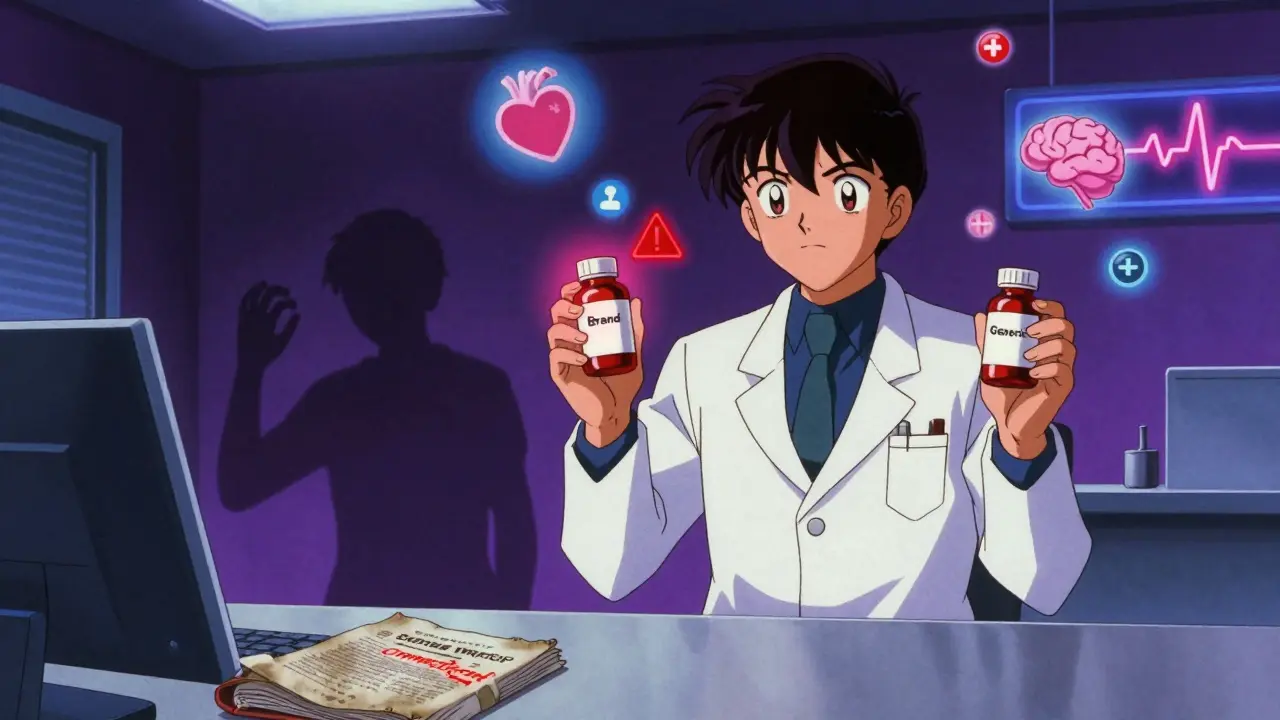
When a pharmacist fills a prescription for a generic drug instead of the brand-name version, they’re not just saving money-they’re stepping into a legal gray area that can have serious consequences. The generic substitution system was designed to cut costs, and it works: 90% of prescriptions in the U.S. are filled with generics. But behind that statistic is a growing tension between efficiency and safety. Pharmacists are caught in the middle. One wrong substitution, especially with drugs that have a narrow therapeutic index, can lead to patient harm, lawsuits, and even career-ending liability. The good news? There are clear, actionable steps to reduce that risk.
Why Generic Substitution Creates Legal Risk
The federal government made generic drugs widely available in 1984 with the Hatch-Waxman Act. The goal was simple: let companies make cheaper versions of drugs once patents expired. But there was a hidden trade-off. The 2011 Supreme Court case PLIVA v. Mensing ruled that generic manufacturers can’t be sued for failing to update warning labels-even if new safety data emerges. Why? Because federal law requires their labels to match the brand-name version exactly. They can’t change them on their own. This created a legal gap. If a patient is harmed by a side effect that wasn’t on the label, they can’t sue the generic maker. They can’t sue the brand-name maker because they didn’t produce the drug they took. And if the pharmacist substituted it without warning? That’s where liability falls. States have tried to fill this gap with their own laws, but the rules vary wildly. In 27 states, pharmacists are legally protected from greater liability when they substitute generics. In 23 states? No such protection. Connecticut, for example, has no shield-pharmacists there face higher risk. And in 18 states, patients must be notified separately that substitution occurred. In others? No notification required. This patchwork makes it easy for a pharmacist to unknowingly break the law just by following routine practice in one state, then moving to another.The Dangerous Drugs: Narrow Therapeutic Index Medications
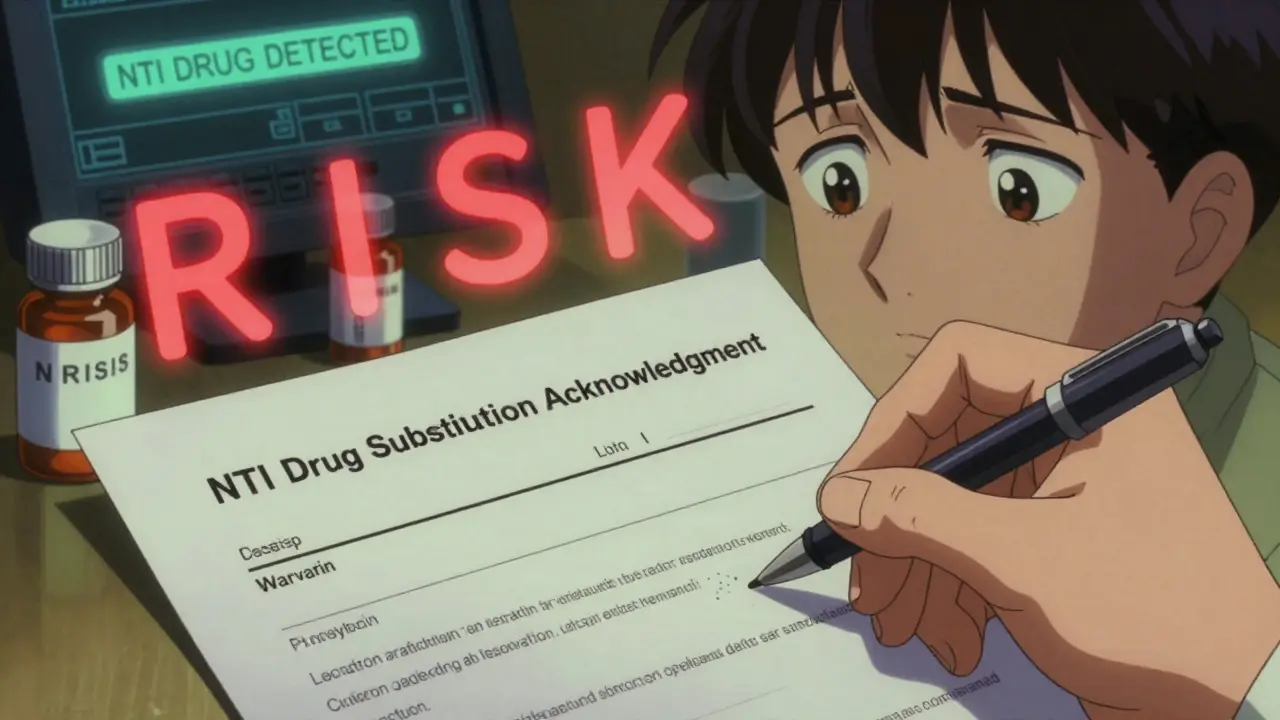
Not all generics are equal. For drugs like warfarin, levothyroxine, and antiepileptics, even tiny differences in how the body absorbs the drug can be life-threatening. These are called narrow therapeutic index (NTI) drugs. The difference between a safe dose and a toxic one is razor-thin. Studies show real harm. A 2017 study in Epilepsy & Behavior found that 18.3% of patients experienced therapeutic failure after switching from brand to generic antiepileptic drugs. Another study in JAMA Internal Medicine in 2020 linked state-level substitution policies directly to higher rates of hospitalization for NTI drugs. One patient on Reddit shared how switching to generic levothyroxine caused severe fatigue, weight gain, and brain fog-symptoms that didn’t resolve for months. Their pharmacist never told them about the switch. The American Epilepsy Society warns that generic substitution for antiepileptic drugs can increase seizure risk by 7.9%. That’s not a small number. It’s a clinical red flag. Yet in many states, pharmacists are still allowed to substitute these drugs without consent. And in many cases, they don’t even know the patient is on one.How Pharmacists Can Protect Themselves
The good news? You don’t have to guess. There are proven, practical steps to reduce liability and keep patients safe.- Know your state’s law-and check it every year. The National Association of Boards of Pharmacy updates its compendium of state laws annually. What’s allowed in Texas isn’t allowed in Massachusetts. Don’t assume.
- Use EHR alerts. If your electronic health record system flags NTI drugs (warfarin, levothyroxine, phenytoin, cyclosporine), make sure it’s turned on. Set up automatic prompts whenever one of these is prescribed.
- Require written consent for NTI drugs. Even if your state doesn’t require it, do it anyway. Use a simple form: “I understand this generic has been substituted for my brand-name medication. I’ve been told of the potential risks.” Get the patient’s signature. It’s not just paperwork-it’s protection.
- Document everything. Keep a log of every substitution: drug name, brand, generic, batch number, date, and whether the patient was notified. If a problem arises, this record could save your license.
- Talk to prescribers. If a doctor writes for a brand-name NTI drug, don’t assume they didn’t mean to. Call them. Ask: “Is substitution okay here?” Many physicians don’t know the risks either.
- Get extra liability coverage. Standard malpractice insurance often doesn’t cover substitution-related claims. Look for policies that specifically include generic substitution risk. Premiums may rise, but the cost of one lawsuit could be far higher.
What Patients Don’t Know Is Hurting Everyone
A 2021 survey by the Patient Advocacy Foundation found that 41% of patients didn’t know their prescription had been switched until they felt worse. In 28% of those cases, pharmacists didn’t give the legally required notice. That’s not just unethical-it’s dangerous. Patients trust their pharmacist. They assume the drug they get is interchangeable. But with NTI drugs, it’s not. That’s why the American Medical Association now recommends requiring explicit consent before substituting any NTI medication. And 87% of pharmacists surveyed by the National Association of Chain Drug Stores agree. You can’t control whether a patient gets a generic. But you can control how you handle it. If you’re not telling them, you’re not just missing an opportunity-you’re exposing yourself.The Bigger Picture: Where the System Is Broken
The system was built to save money. And it does. Between 2009 and 2018, generics saved the U.S. healthcare system $1.67 trillion. That’s real value. But the cost isn’t just financial. It’s human. A 2019 case documented in the Journal of Patient Safety involved a young man who suffered permanent brain damage after a generic antiepileptic drug substitution. The court dismissed the lawsuit because federal law blocked liability. No one could be held accountable. No one. Experts like Dr. Aaron Kesselheim call this an “unfairness to injured patients.” The current system protects manufacturers and lets states set their own rules, but leaves patients and pharmacists exposed. The 2023 proposal for a “consensus labeling” model-where all manufacturers adopt the same updated safety labels-could fix this. But until then, pharmacists are on the front line.
What’s Next: Biologics and the Next Frontier
The same issues are coming for biosimilars-generic versions of complex biologic drugs like Humira or Enbrel. Forty-five states have already passed laws allowing substitution, but liability rules are even less clear. The FDA’s 2023 pilot program for label changes has approved only 68% of requests, and generic makers initiated just 12% of them. That means safety updates are still stuck. If you’re dispensing biosimilars now, you’re already in the same legal gray zone. The same rules apply: know your state, document consent, alert prescribers, and track every batch. The stakes are higher. The risks are real.Final Takeaway: Your Actions Matter
You don’t need to stop substituting generics. You just need to do it smarter. The cost savings are real. The benefits are real. But the risk? It’s not theoretical. It’s in your pharmacy right now. Start with one thing: if a patient is on warfarin, levothyroxine, or an antiepileptic, don’t substitute without consent. Even if your state doesn’t require it. Even if the patient doesn’t ask. Protect them. Protect yourself. The system isn’t perfect. But you can still be the difference between a safe outcome and a preventable tragedy.Can a pharmacist be held liable for substituting a generic drug?
Yes, depending on state law. While federal law shields generic manufacturers from liability for label changes, pharmacists can still be held responsible if they substitute without proper notification, consent, or when required by state law. In states without liability protections (like Connecticut and Massachusetts), pharmacists face higher risk of malpractice claims if substitution leads to patient harm.
Which drugs are most risky to substitute with generics?
Drugs with a narrow therapeutic index (NTI) are the most risky. These include warfarin (blood thinner), levothyroxine (thyroid hormone), phenytoin and other antiepileptic drugs, cyclosporine (immunosuppressant), and lithium. Even small differences in absorption can cause toxicity or therapeutic failure. Studies show up to 18.3% of patients on substituted antiepileptic drugs experience increased seizure risk.
Do I need patient consent to substitute a generic drug?
It depends on your state. Thirty-two states allow patients to refuse substitution, and 18 require explicit notification beyond the package label. Even if your state doesn’t require consent, best practice is to obtain it-especially for NTI drugs. Written consent forms reduce liability and improve patient trust.
What should I do if a patient reports side effects after a generic switch?
First, document the report in detail: symptoms, timing, medication name, batch number. Contact the prescribing physician immediately. Offer to switch back to the brand-name drug if appropriate. Report the incident to your state’s pharmacy board and consider filing a MedWatch report to the FDA. This helps track patterns and protects you legally.
Is my malpractice insurance enough to cover substitution claims?
Many standard policies exclude or limit coverage for generic substitution claims, especially those involving NTI drugs. Check your policy carefully. Consider adding supplemental coverage specifically for substitution risk. Premiums may increase slightly, but the cost of defending a lawsuit without coverage could be catastrophic.
Are biosimilars subject to the same liability rules as generics?
Yes, and the risks are even more complex. Biosimilars are biologic drugs with more variability than traditional generics. Forty-five states have enacted substitution laws, but liability rules are inconsistent. Always verify state requirements, obtain patient consent, document substitutions, and maintain traceability records. The FDA has not yet fully resolved labeling rules for biosimilars, making pharmacist vigilance critical.