Here is a hard truth about the pharmaceutical industry: when you hear that a drug patent lasts for 20 years from the filing date, it sounds like two decades of total market control. In reality, most brand-name drugs only enjoy exclusive sales for about seven to twelve years. Why the massive gap between the law and the ledger?
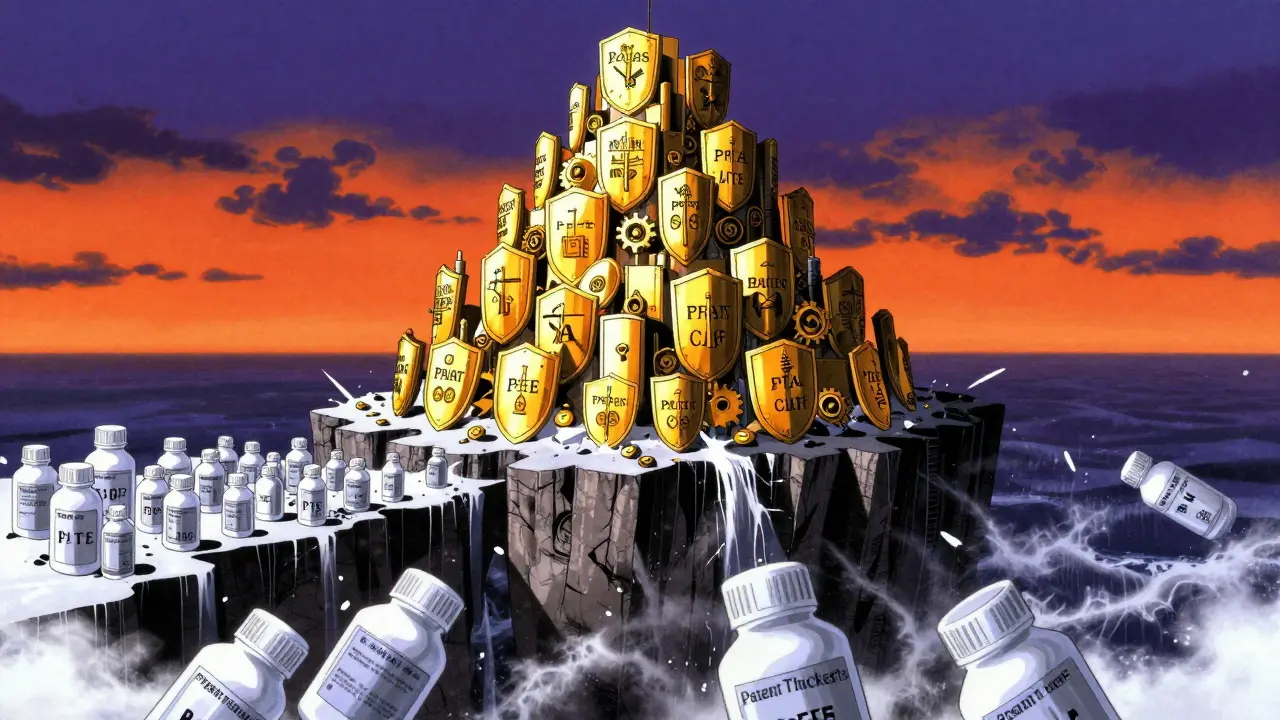
The answer lies in the grueling timeline of bringing a new medicine to market. By the time a drug actually reaches your local pharmacy shelf, half of its legal protection clock has already ticked away during clinical trials and regulatory reviews. This discrepancy creates what analysts call the "patent cliff"-a steep drop in revenue as generics flood the market.
Understanding this timeline isn't just for lawyers or CEOs; it affects your wallet directly. It dictates when cheaper generic versions become available and why some prices stay high while others plummet overnight. Let’s break down exactly how these dates are calculated, where the loopholes exist, and what happens when the clock runs out.
The 20-Year Myth vs. Reality
To understand expiration, we first have to look at the starting line. Under U.S. law (specifically 35 U.S.C. § 154(a)(2)), a utility patent expires 20 years from the earliest effective filing date. This standard was set by the Uruguay Round Agreements Act of 1994 to align with international trade rules.
However, developing a new drug takes time-lots of it. The process typically involves:
- Pre-clinical testing: Lab and animal studies (1-2 years).
- Clinical Trials Phase I, II, and III: Human safety and efficacy tests (5-7 years).
- FDA Review: Regulatory approval process (1-2 years).
If you file a patent on Day One of research, and it takes eight years to get FDA approval, you have only 12 years left of patent life once you can actually sell the product. This is why the "20-year term" is often misleading for consumers expecting two full decades of monopoly pricing.
How Companies Extend Their Monopoly
Pharmaceutical companies don't like losing revenue, so Congress created mechanisms to compensate for that lost time during development. These aren't loopholes in the traditional sense; they are statutory adjustments designed to balance innovation incentives with public access.
| Mechanism | Purpose | Max Extension |
|---|---|---|
| Patent Term Adjustment (PTA) | Compensates for USPTO delays in processing the application. | Varies based on delay length |
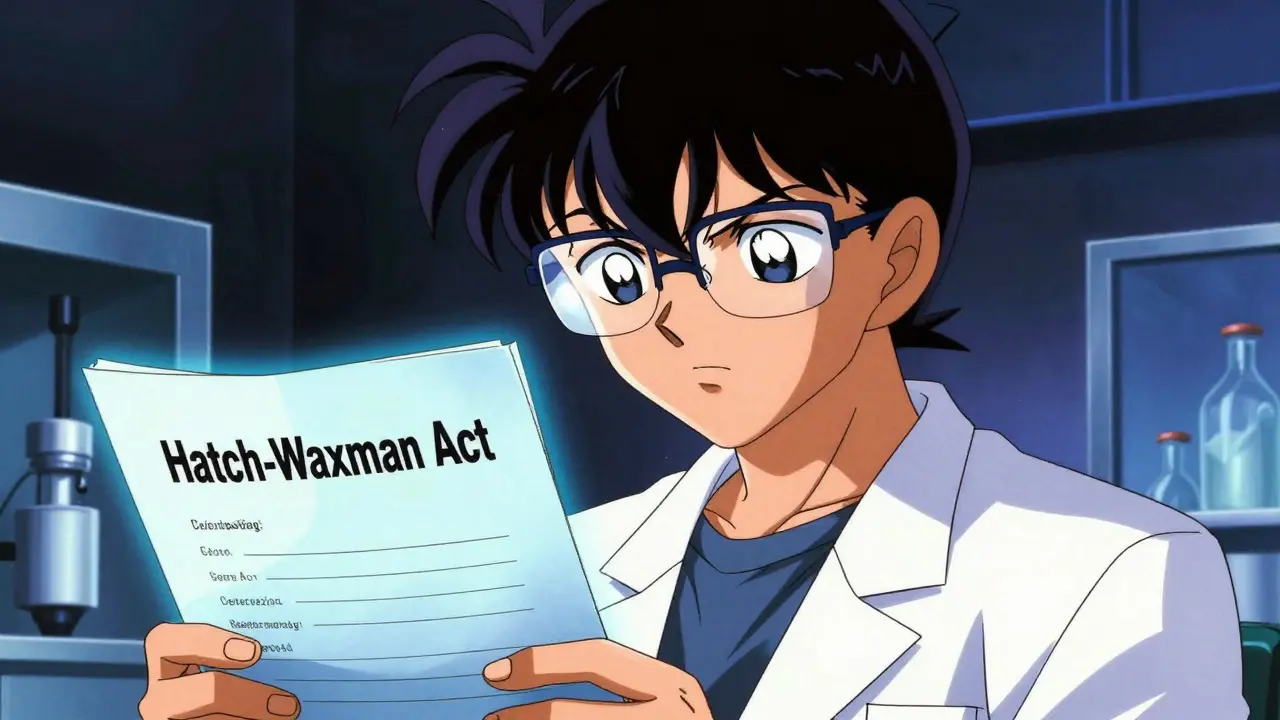
| Patent Term Extension (PTE) | Compensates for FDA regulatory review time under the Hatch-Waxman Act. | Up to 5 years |
| Pediatric Exclusivity | Reward for conducting pediatric studies requested by FDA. | 6 months added to all exclusivities |
Patent Term Adjustment (PTA) fixes bureaucratic slowdowns. If the United States Patent and Trademark Office (USPTO) takes too long to issue an initial decision (A-Delay) or fails to grant the patent within three years of filing (B-Delay), the patent term is extended to make up for that time. However, if the applicant caused the delay, no adjustment is given.
Patent Term Extension (PTE) is more impactful. Established by the Hatch-Waxman Act of 1984, PTE allows companies to add back some of the time spent waiting for FDA approval. There is a strict cap, though: the total period of market exclusivity after approval cannot exceed 14 years, and the total patent life cannot exceed 14 years post-approval plus any remaining pre-approval time. Crucially, companies must apply for PTE within 60 days of FDA approval, or they lose the right forever.
The Layered Defense Strategy
You might think one patent covers a drug, but that’s rarely the case. Big pharma uses a strategy called "patent thickets." Instead of relying on a single expiration date, they file dozens of patents covering different aspects of the same medication.
Consider a blockbuster drug like Spinraza (nusinersen). While the core chemical compound might have a specific expiry, the company also holds patents for:
- The specific formulation (how the drug is mixed).
- The delivery mechanism (e.g., the injection device).
- The manufacturing process.
- New methods of use (treating a different condition with the same drug).
This creates a staggered expiration schedule. Even if the main ingredient patent expires, a secondary patent on the delivery method might block generic competitors for another two or three years. This practice, sometimes criticized as "evergreening," keeps prices high longer than the base 20-year term would suggest.
Regulatory Exclusivity: The Non-Patent Shield
Even without a valid patent, a drug can be protected by regulatory data exclusivity. This is a separate clock run by the FDA, not the USPTO. During this period, the FDA simply refuses to accept applications for generic versions, regardless of patent status.
Key types include:
- New Chemical Entity (NCE): 5 years of exclusivity for entirely new molecules.
- Orphan Drug Exclusivity: 7 years for drugs treating rare diseases (affecting fewer than 200,000 people in the U.S.).
- New Clinical Investigation: 3 years if new clinical studies were required for a new dosage or indication.
This means a generic manufacturer might legally be able to copy a drug (if patents expired), but they still can’t get FDA approval until the exclusivity period ends. This adds another layer of complexity to predicting when competition will arrive.
The Patent Cliff: What Happens Next?
When the last enforceable intellectual property right expires, the "patent cliff" hits. For the brand-name company, this is a financial disaster. For patients, it’s usually good news-until it isn’t.
Data from the National Bureau of Economic Research shows that physician-administered drug prices drop by 38% to 48% shortly after generic entry. For small molecule drugs (traditional pills), generics often capture 90% of the market share within 18 months. Prices can fall by over 80% compared to the brand name.
However, biologics (complex drugs made from living organisms) behave differently. Biosimilars-the generic equivalent of biologics-face higher barriers to entry. They typically capture only 40-60% market share, and price reductions are slower and less dramatic. This is why drugs like Humira (adalimumab) saw a complex transition involving multiple biosimilar competitors rather than a single instant price crash.
Why Your Copay Might Go Up Before It Goes Down
Here is a scenario that confuses many patients. You’ve been taking a brand-name drug with a $50 copay. The patent expires, and a generic becomes available. Suddenly, your insurance plan switches you to the generic, but your copay jumps to $200. How does that happen?
Insurance formularies are dynamic. Sometimes, during the transition period, insurers negotiate better rates with the brand-name manufacturer to keep them on the preferred list temporarily, especially if there are shortages of the generic version. Or, if a "pediatric exclusivity" extension adds six months to the patent term, the brand retains its monopoly status slightly longer, keeping prices artificially high.
Additionally, the "first-to-file" rule for generics grants 180 days of exclusivity to the very first generic company that challenges the patent. During those 180 days, that single generic maker acts as a mini-monopoly, potentially keeping prices higher than if ten generics had entered simultaneously.
Global Differences and Future Changes
The U.S. system is unique. Other countries handle patent terms differently. For example, Japan uses a "reference date" calculation that looks at when the examination request was filed, not just the initial application date. This often results in different expiration timelines across borders.
Looking ahead, the landscape is shifting. Legislative proposals like the "Restoring the America Invents Act" bill (introduced in early 2024) aim to eliminate certain patent term adjustments, which could reduce average market exclusivity by 6-9 months. Meanwhile, the World Health Organization has recommended harmonizing patent terms globally, suggesting a reduction to 15 years to improve access to medicines.
For now, however, the 20-year baseline remains, heavily modified by PTA, PTE, and strategic litigation. The average large pharmaceutical company maintains over 8,500 active patents worldwide, ensuring that the race to the finish line is rarely a straight sprint.
Does every drug have a 20-year patent?
Yes, the statutory term for a utility patent in the U.S. is 20 years from the filing date. However, this does not mean 20 years of market exclusivity. Due to the time spent in clinical trials and FDA review, most drugs only have 7-12 years of actual market protection before generics can enter.
What is the Hatch-Waxman Act?
The Hatch-Waxman Act of 1984 is a landmark U.S. law that balances the interests of brand-name and generic drug manufacturers. It allows for Patent Term Extension (PTE) to compensate for time lost during FDA approval, while also creating a streamlined pathway (ANDA) for generic drugs to enter the market once patents expire.
Why do some drugs stay expensive after their patent expires?
Several reasons can keep prices high: 1) Secondary patents on formulations or delivery methods may still be active. 2) Regulatory exclusivity periods may prevent the FDA from approving generics. 3) For biologics, biosimilars face higher entry barriers, leading to less competition. 4) Supply chain issues or lack of multiple generic competitors can sustain higher prices.
What is a "Patent Cliff"?
The Patent Cliff refers to the sharp decline in revenue a pharmaceutical company experiences when a major drug's patent expires and generic competitors enter the market. It marks the end of the drug's monopoly pricing power and is a critical event in the industry's financial cycle.
Can a company extend a patent indefinitely?
No. While companies use strategies like filing secondary patents (patent thickets) or seeking Pediatric Exclusivity extensions, there are legal limits. Patent Term Extension cannot extend market exclusivity beyond 14 years post-approval, and courts often invalidate weak secondary patents through Inter Partes Review (IPR) proceedings.