

Cold & Allergy Medication Safety Checker
Select the active ingredients present in this product.
Select the active ingredients present in this product.
Daily Dose Tracking
It is 2 AM. You are congested, your head aches, and you reach for the medicine cabinet. Inside, you find two boxes: one for allergies and one for the cold. They look different, smell different, but do they contain the same stuff? If you take both, you might not be getting double relief; you could be doubling your risk of liver damage or spiking your blood pressure. cold medication interactions are a silent danger because the ingredients hide in plain sight under different brand names.
The convenience of combination products is undeniable. One pill handles the sneezing, the pain, and the stuffy nose. But that convenience comes with a catch. The U.S. Food and Drug Administration (FDA) has issued warnings about these multi-ingredient formulas, noting that accidental overdoses are common. To stay safe, you need to understand what is actually inside those bottles and how the ingredients talk to each other.
What Is Actually Inside Your Medicine Cabinet?
Most over-the-counter (OTC) cold and allergy meds fall into four main categories based on their active ingredients. Knowing these helps you spot duplicates before they cause trouble.
- Antihistamines: These stop the allergic response. Common ones include diphenhydramine (Benadryl) and loratadine (Claritin). They dry up runny noses and itchy eyes but often make you drowsy.
- Decongestants: These shrink swollen nasal passages. Pseudoephedrine (Sudafed) and phenylephrine are the big players here. They open up airways but can raise heart rate and blood pressure.
- Analgesics: These kill pain and lower fever. Acetaminophen (Tylenol) and ibuprofen (Advil) are standard. Acetaminophen is the most dangerous when doubled up because it stresses the liver.
- Antitussives: These suppress coughs. Dextromethorphan (often labeled as 'DM') is the go-to ingredient. It works by affecting the brain's cough center.
The problem arises when a single box contains three or four of these at once. For example, a "Multi-Symptom" formula might have acetaminophen, pseudoephedrine, and an antihistamine. If you take that plus a separate headache pill with acetaminophen, you are now taking two doses of the pain reliever without realizing it.
The Hidden Danger of Double-Dosing
You might think, "I only took two pills, how could I overdose?" This is where the labeling fails us. Many consumers do not read the full ingredient list. A survey found that nearly half of people admit to skipping this step. When you combine a cold syrup with a day-time liquid gel, you might end up with too much acetaminophen.
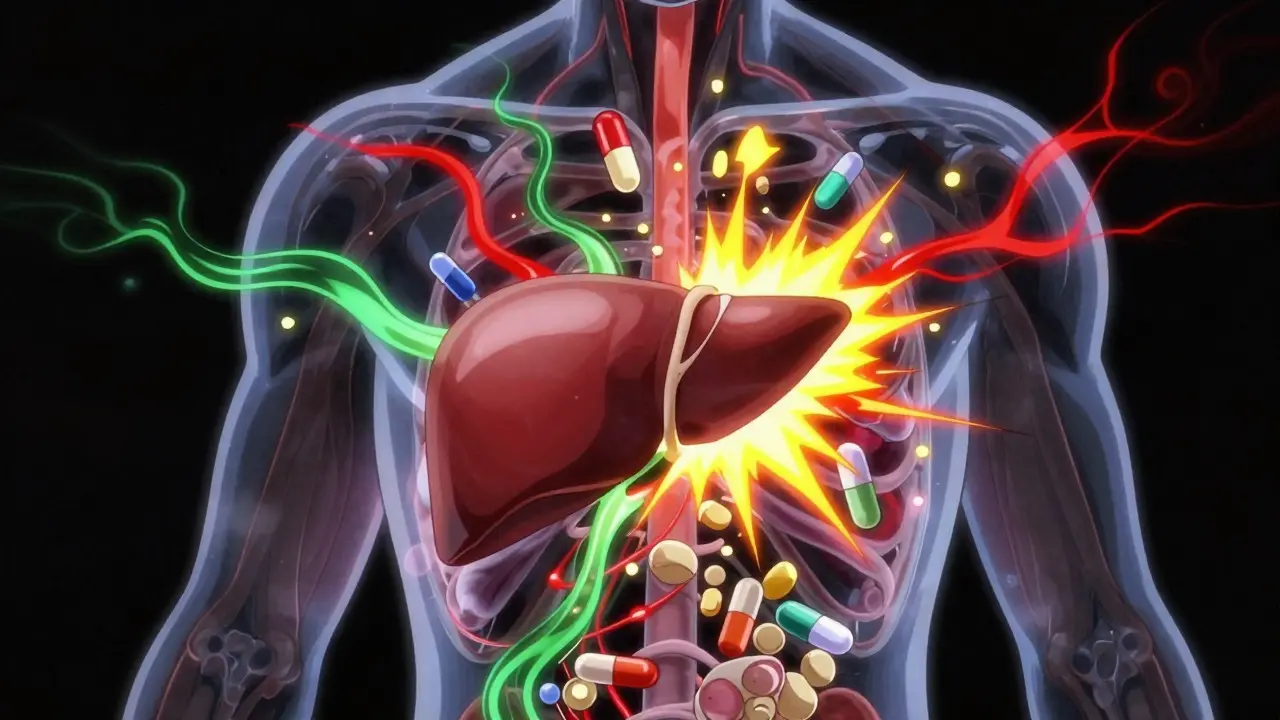
The liver processes acetaminophen. If you exceed 4,000mg in 24 hours, you risk hepatotoxicity, which is serious liver damage. Symptoms don't always show up immediately. By the time you feel sick, the damage may already be starting. This is why checking the milligram amount on every label is non-negotiable. Look for the abbreviation "APAP"-that is just another name for acetaminophen. If it appears on two different boxes, you have a conflict.
How Decongestants Interact With Other Drugs
Decongestants are stimulants. They tighten blood vessels to clear nasal passages. While helpful for congestion, they act like a mild caffeine hit on your cardiovascular system. This creates specific interaction risks.
| Ingredient | Interaction Risk | Potential Outcome |
|---|---|---|
| Pseudoephedrine | High Blood Pressure / MAOIs | Hypertensive crisis, rapid heart rate |
| Phenylephrine | Acetaminophen | Increased bioavailability, higher BP spikes |
| Dextromethorphan | SSRIs / SNRIs | Serotonin syndrome risk increases significantly |
Research shows that combining phenylephrine with acetaminophen can raise blood levels of the decongestant four times higher than expected. This isn't just theory; it leads to real side effects like dizziness and tremors. If you are on antidepressants, specifically SSRIs or SNRIs, watch out for dextromethorphan. Mixing them can trigger serotonin syndrome, a rare but serious condition caused by too much serotonin in the brain. The risk jumps dramatically when these two meet.
Allergy Meds vs. Cold Meds: Where They Overlap
People often confuse seasonal allergies with a common cold. Both involve a runny nose and congestion. However, the treatments differ slightly. Allergy meds focus heavily on antihistamines. Cold meds focus on decongestants and pain relievers. The overlap happens in the decongestant component.
If you have hay fever and catch a cold, you might be taking an allergy pill in the morning and a cold remedy at night. If both contain pseudoephedrine, you are stacking the cardiovascular load. This is particularly risky if you have uncontrolled hypertension. Systolic blood pressure above 180mmHg or diastolic above 110mmHg makes decongestants contraindicated. Always check your blood pressure status before grabbing a decongestant-heavy product.

Practical Steps to Stay Safe
You do not need to be a pharmacist to avoid these pitfalls. Just follow a simple routine every time you pick up a box.
- Read the Active Ingredients List: Ignore the brand name. Look at the back. Write down the active ingredients if you are unsure.
- Check for Duplicates: Do you have acetaminophen in both? Is there pseudoephedrine in both? If yes, adjust the dose or choose one product.
- Consult a Professional: If you take prescription medications, ask your pharmacist. They have access to interaction databases that process millions of checks daily.
- Watch the Clock: Some meds work for 4 hours, others for 12. Taking a 4-hour med too frequently can lead to accidental overdose within a day.
Smartphone apps can help here. Tools that scan barcodes can identify duplicate ingredients instantly. It takes less than a minute and saves you from potential ER visits. Remember, the goal is symptom relief, not chemical chaos. Keep it simple. If you only have a sore throat, use a pain reliever alone. Don't grab the multi-symptom box unless you actually have multiple symptoms.
Frequently Asked Questions
Can I take Benadryl with a cold medicine?
Yes, but check for duplication. If your cold medicine already contains an antihistamine like chlorpheniramine, adding Benadryl (diphenhydramine) means you are taking two antihistamines. This increases drowsiness and dry mouth risks. Usually, one is enough unless directed otherwise.
Is Tylenol Cold & Flu safe with Advil?
Generally, yes, because they contain different pain relievers (acetaminophen vs. ibuprofen). However, ensure the Tylenol product doesn't also contain aspirin or other NSAIDs. Taking ibuprofen and acetaminophen together is safer for the stomach than taking two NSAIDs, but keep track of total fluid intake and kidney health.
What should I avoid if I have high blood pressure?
Avoid decongestants like pseudoephedrine and phenylephrine. They constrict blood vessels and can spike blood pressure. Stick to antihistamines for runny noses and saline sprays for congestion. Always consult your doctor before using any new OTC med if you have hypertension.
Why does my cold medicine make me dizzy?
Dizziness is a common side effect of first-generation antihistamines (like diphenhydramine) and decongestants. It can also signal a blood pressure change from the decongestant. If it persists, check if you are double-dosing on ingredients that affect the central nervous system or blood flow.
How long should I wait between taking different cold meds?
Wait at least 4 to 6 hours between doses of the same active ingredient. If switching products, ensure the next dose doesn't push you over the maximum daily limit for any single ingredient. Spacing them out helps prevent peak concentration spikes that cause side effects.




Betty Childers
August 26, 2026 AT 20:58Thanks for breaking this down so clearly. It’s easy to feel overwhelmed when you’re sick and just want relief, but knowing what to look for on the label makes a huge difference. I always try to keep it simple now.
Amy Zalkin
August 27, 2026 AT 01:37omg i love this post!! 🌟
i never realized how many diff ingredients hide in those little boxes. like my head hurts so bad i just grab whatever looks good at the store. thanks for saving me from a liver nightmare lol. super helpful info right here!!
Alex Brown
August 27, 2026 AT 15:35The concept of 'chemical chaos' is quite apt. We often treat symptoms as isolated events rather than systemic inputs into a complex biological machine. Understanding the pharmacokinetics of common OTC drugs is essential for maintaining homeostasis without introducing unnecessary stressors to the hepatic system.
Kaylyn Mello
August 27, 2026 AT 20:16this is so true i did this last winter and felt terrible for days. thought i was getting sicker but it was just the meds fighting each other. glad i found this before next cold season
joyce Hogewoning
August 28, 2026 AT 22:39Oh my gosh, do you guys realize that these companies are literally out to get us? I mean, why would they make it so hard to read the labels if they wanted us to be safe? It’s all about profit, obviously. They put acetaminophen in everything because it’s cheap and they don’t care if we end up in the ER! It’s a conspiracy of convenience!
Thhomas Fox
August 30, 2026 AT 04:34Good point about the barcode apps. I use one on my phone and it’s saved me a few times. Keep it simple, folks.
Owen John
August 30, 2026 AT 21:26One must question the veracity of such 'guides.' The FDA is merely a puppet of Big Pharma, ensuring that the populace remains docile through chemical dependency. Pseudoephedrine is not merely a decongestant; it is a subtle agent of control, tightening the vessels of both the nose and the spirit. Do not trust the label; trust your intuition, which has been suppressed by generations of pharmaceutical indoctrination.
Maneesh kv
August 30, 2026 AT 22:46Nice breakdown 👍
But honestly people need to stop being lazy with their meds. If you cant read the label maybe dont take it?? 🤔
Its basic stuff. Stop making excuses for bad habits. #BeSmart
John Park
September 1, 2026 AT 21:10Let's be real, most people are too stupid to read anyway. Why bother writing long guides? Just ban the multi-symptom pills. Problem solved. But nah, we'll keep pretending we're smart consumers while our livers rot away. Classic.
Kathleen McGrath
September 2, 2026 AT 09:45This is really encouraging! I always worry about mixing things up when I'm not feeling well. Knowing to check for APAP specifically gives me a clear step to follow. Thanks for the simple tips!
Lemuel Gomez
September 3, 2026 AT 20:08I agree... completely. ...It's just... so easy to overlook. ...The packaging is designed to be confusing, isn't it? ...I find myself double-checking every time now. ...It's a bit tedious, but... worth it. ...For sure. ...Definitely.
Emmanuel Umana
September 5, 2026 AT 18:09In many cultures, herbal remedies are used alongside OTC meds. This creates even more potential interactions. Awareness is key globally.
Lilian Binda
September 6, 2026 AT 13:58typical western nonsense. we dont have these fancy pills in nigeria we just drink tea and rest. your bodies are just weak because you rely on chemicals. stop complaining about side effects and start taking care of yourself naturally. its obvious you dont know what youre doing
Fabian Saldana
September 8, 2026 AT 04:04An excellent reminder of the importance of informed self-care. By understanding the components of our medications, we empower ourselves to make safer choices. Let us continue to educate ourselves and share this vital information with our communities. Stay healthy and stay informed!
Colin Finch
September 9, 2026 AT 13:24Wow, this is a massive topic! I never knew phenylephrine could spike BP that much. It’s shocking how much is hidden in plain sight. Great read, really opened my eyes to the risks involved in casual medication use. Thanks for sharing!