
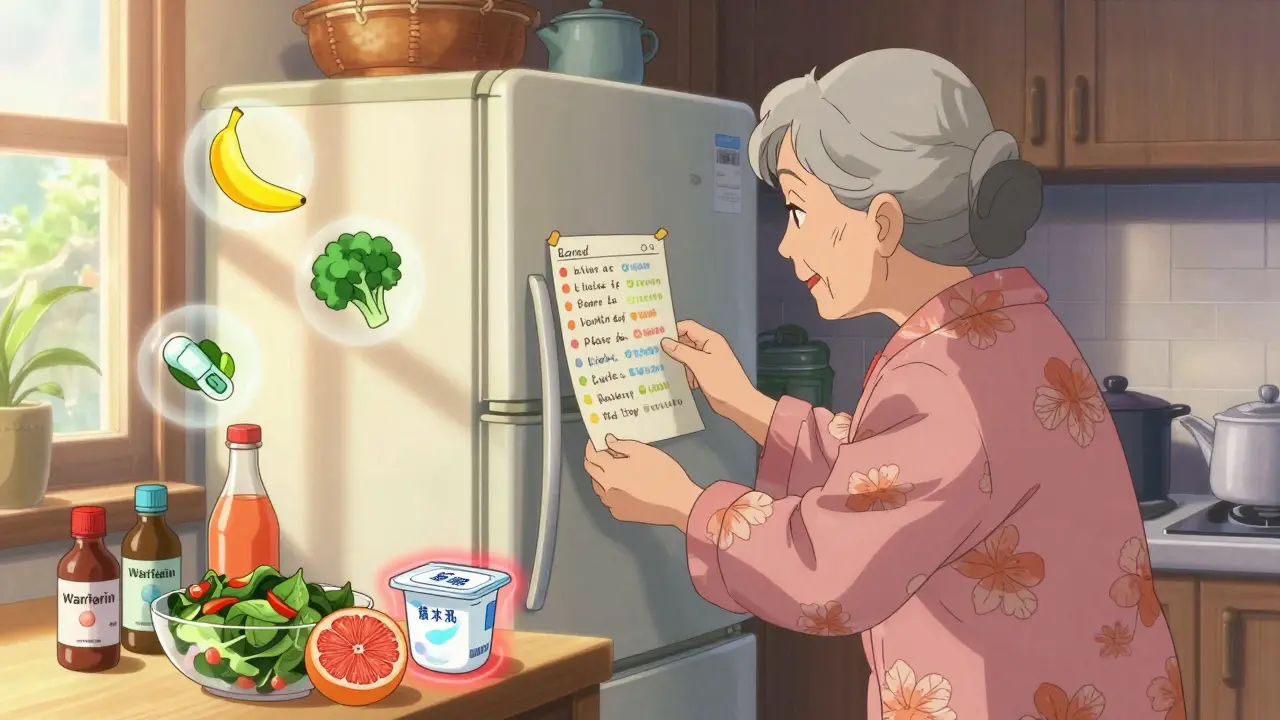
Every time you take a pill, you’re not just interacting with the medicine-you’re also interacting with what’s on your plate. A banana with your blood pressure med. A glass of grapefruit juice with your cholesterol drug. Spinach with your blood thinner. These aren’t harmless habits. They can make your medication work too well, not well enough, or even cause dangerous side effects. The food and medication interaction checklist isn’t just a good idea-it’s a lifesaving tool, especially if you take three or more medications daily. And you don’t need a doctor’s office to build one. You can create it at home, with just your meds, a notebook, and a few trusted resources.
Why This Checklist Matters
About 1.3 million emergency room visits in the U.S. each year are tied to bad drug reactions. Nearly 12% of those involve food or drink messing with your meds. That’s not a small risk. It’s a quiet, everyday danger. Warfarin, a common blood thinner, can become dangerous if you suddenly eat a big salad one day and nothing leafy the next. Grapefruit juice can boost the level of certain statins in your blood by 300-500%, turning a safe dose into a toxic one. Dairy products can block antibiotics like ciprofloxacin from being absorbed if you take them too close together. The good news? Most of these interactions are preventable. Patients who keep a detailed, up-to-date record of their meds and food interactions have 37% fewer adverse events, according to the American Pharmacists Association. This checklist isn’t just for doctors-it’s for you. It’s your personal safety net.What to Include on Your Checklist
A good checklist isn’t just a list of pills. It’s a detailed map of how your food and meds interact. Here’s exactly what to write down for every medication you take:- Drug name - Both brand and generic (e.g., “Lipitor” and “atorvastatin”)
- Dosage and schedule - “10 mg, once daily at 8 AM”
- Purpose - Why you take it (“lowers cholesterol,” “treats depression”)
- Prescribing doctor - Name and clinic (e.g., “Dr. Sarah Chen, Cardiology Associates”)
- Food or drink interaction - What to avoid or time around (e.g., “Avoid grapefruit juice,” “Take 2 hours before or after dairy”)
- Risk level - High, Moderate, or Low. Use color coding: red for high, yellow for moderate, green for low.
- Source - Where you got the info (e.g., “FDA Drug Safety Communication #2024-087,” “New Zealand Formulary, July 2024”)
- Last updated - Always include the date. Medications change. Your diet changes. Your checklist must too.
How to Find Your Interactions
Don’t guess. Don’t rely on apps that might be outdated. Use trusted, official sources:- Medication package inserts - The small booklet that comes with your prescription. Look for section 4.5: “Drug Interactions.”
- New Zealand Formulary (NZF) Interaction Checker - Free, reliable, and updated regularly. It’s used by pharmacists worldwide.
- SEFH Drug-Food/Herb Interaction Guide (2024) - A laminated card set that’s perfect to stick on your fridge. Color-coded and easy to read.
- FDA’s My Medicines template - Downloadable PDF from fda.gov/MyMedicines. Includes 12 essential fields and works even without internet.
Some interactions are obvious. Others aren’t. For example:
- Warfarin - Interacts with vitamin K. Don’t avoid spinach. Just eat about the same amount every day. Document it: “1 cup raw spinach daily.”
- MAO inhibitors (like tranylcypromine) - Must avoid aged cheeses, cured meats, soy sauce, tap beer. Even one bite can spike blood pressure to dangerous levels.
- Statins (atorvastatin, simvastatin) - Grapefruit juice, even one glass, can cause muscle damage or kidney failure.
- Antibiotics (ciprofloxacin, tetracycline) - Calcium in milk, yogurt, or antacids blocks absorption. Take them 2 hours before or after dairy.
- Thyroid meds (levothyroxine) - Fiber, soy, iron, and calcium supplements can block absorption. Take on empty stomach, 30-60 minutes before breakfast.
Choose Your Format: Paper or Digital?
There’s no one-size-fits-all. Your choice depends on your life.Paper checklist - Best for seniors, people without smartphones, or those who want something visible. The FDA’s printable template is simple, free, and works during power outages or emergencies. A 2023 study found 92% of seniors over 75 used paper checklists versus 63% who used apps. Tape it to your fridge. Keep a copy in your purse. Give one to your caregiver.
Digital checklist - Apps like Medisafe (v12.3.1) and MyTherapy (v5.8.2) can send alerts, track doses, and sync with updated interaction databases. They’re great if you take 5+ meds. A JAMA study showed digital tools cut medication errors by 42% over 12 months. But they require a smartphone, internet, and regular updates. And they can miss cultural foods-like miso or fermented soy-that aren’t in Western databases.
Best option? Use both. Keep a paper copy on the fridge. Use an app for reminders. That way, you’re covered whether you’re at home, at the doctor’s, or in an emergency.
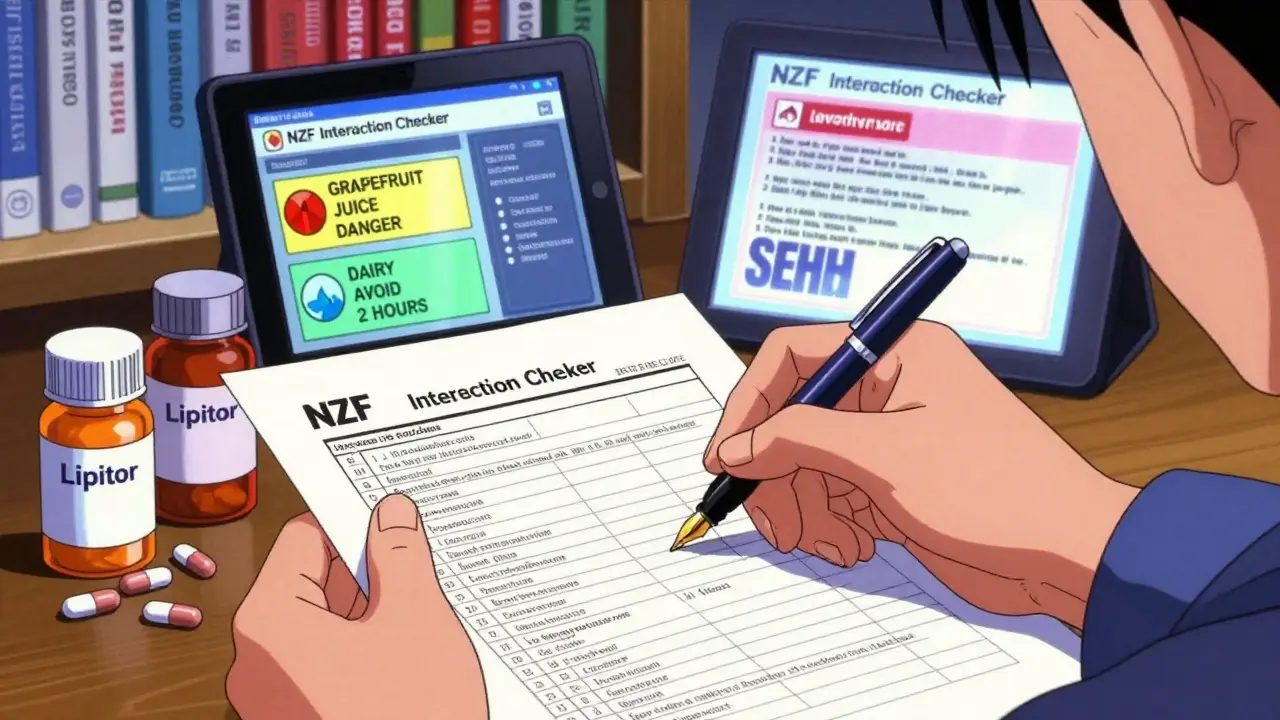
How to Build It Step by Step
Step 1: Gather everything. Pull out every pill, capsule, patch, liquid, and supplement you take. Include OTC meds like ibuprofen, antacids, and herbal teas. Put them all on the table. Step 2: Write down each one. Use your checklist template. Fill in name, dose, schedule, purpose, and doctor. Don’t skip anything-even if you think it’s “just a vitamin.” Step 3: Research each interaction. Go to the NZF website or check the FDA’s MedWatch database. Look up each drug. Write down exactly what to avoid and why. Don’t rely on memory. Write it down. Step 4: Add timing rules. “Take with food” or “take on empty stomach” matters. “Avoid dairy for 2 hours” isn’t enough. Write: “Take ciprofloxacin at 8 AM. No yogurt, milk, or calcium supplements until 10 AM.” Step 5: Add emergency contacts. Name and number for your doctor, pharmacist, and a trusted family member. Include your allergies and past reactions (“hives after penicillin,” “stomach cramps with sulfa”). Step 6: Set a reminder. Update your checklist every time your prescription changes. Link it to your refill schedule. Every third Friday of the month, sit down for 10 minutes and review.What People Get Wrong
Most people make the same mistakes:- They forget supplements. St. John’s wort can make birth control, antidepressants, and blood thinners useless. Magnesium can block thyroid meds.
- They use vague terms. “Avoid citrus” isn’t helpful. “Avoid grapefruit and Seville oranges” is.
- They don’t track amounts. “Some spinach” doesn’t help. “1 cup raw spinach daily” does. Cooking changes vitamin K content by up to 70%.
- They don’t update. 28% of checklist errors come from outdated info. If your doctor changes your dose or adds a new med, update the checklist the same day.
How to Use It Every Day
Your checklist only works if you use it.- Keep it on the fridge. 82% of people who kept it visible reported fewer mistakes.
- Show it to every pharmacist when you pick up a new prescription. Ask: “Does this interact with anything on my list?”
- Bring it to every doctor’s visit-even if you think you’ve told them before.
- Give a copy to a family member or caregiver. If you pass out, they’ll know what’s dangerous.
- Use it when traveling. Pack a printed copy in your bag. Airplane meals, foreign food, and time changes can all throw off your routine.
One Reddit user shared how their checklist saved them. They took tacrolimus after a kidney transplant. They drank grapefruit juice every morning. Their checklist flagged it. They stopped-and avoided kidney failure.
What’s Coming Next
The future of food-medication safety is here. By 2025, the FDA will update its “My Medicines” tool to include interactive food interaction alerts. Samsung’s new smart fridges will scan your groceries and warn you if you’re about to buy something that clashes with your meds. AI tools are being tested to analyze your food diary and predict risks.But right now, the most powerful tool is still the one you can make with pen and paper. No app required. No subscription. Just truth, clarity, and control over your own health.
Frequently Asked Questions
Can I just rely on my pharmacist to warn me about food interactions?
Pharmacists are trained to spot interactions, but they can’t know everything about your diet unless you tell them. You might eat a daily smoothie with kale and ginger, or drink herbal tea your pharmacist has never heard of. Your checklist fills those gaps. It’s your responsibility to share what you eat-not theirs to guess.
Do I need to avoid all foods that interact with my meds?
Not always. For high-risk interactions like grapefruit and statins, yes-avoid completely. But for others, like warfarin and vitamin K, consistency matters more than avoidance. Eating the same amount of leafy greens every day is safer than eating a salad one day and none the next. Your checklist should reflect your real habits, not a perfect diet.
What if I take supplements? Do they count?
Absolutely. Supplements like St. John’s wort, calcium, iron, magnesium, and even garlic pills can interfere with medications. Many people think “natural” means safe, but that’s not true. Include every pill, powder, or drop you take-even if it’s from a health food store.
How often should I update my checklist?
Update it every time your meds change-new prescription, dose change, or stopping a drug. Also review it every three months, even if nothing changed. Your diet might have changed. A new study might have come out. The FDA updates its warnings regularly. Keep it current.
Can I use a free app instead of making my own checklist?
Apps like Medisafe or MyTherapy can help, but they’re not foolproof. Many don’t include regional foods, cultural diets, or newer drug interactions. Use them as a helper, not a replacement. Always cross-check with official sources like the NZF or FDA. And always keep a printed backup.
Is this checklist only for older adults?
No. While 47% of Americans over 40 take three or more meds, younger people are increasingly on multiple prescriptions too-antidepressants, birth control, thyroid meds, antibiotics, and more. Anyone taking more than one medication daily should have one. It’s not about age. It’s about risk.
Next Steps
Start today. Grab a notebook. Pull out your meds. Go to the New Zealand Formulary website. Spend 45 minutes building your first checklist. Don’t wait for your next doctor’s visit. Don’t wait until something goes wrong. This isn’t busywork. It’s protection.When you’re done, hang it on the fridge. Show it to your pharmacist. Give a copy to someone who lives with you. Then, every month, spend five minutes updating it. That’s all it takes. Five minutes a month to prevent an emergency room visit. That’s a deal no one should pass up.

Mandy Vodak-Marotta
February 3, 2026 AT 13:34Okay but let’s be real-how many of us actually do this? I’ve got a shoebox under my bed with half-empty pill bottles and a napkin that says ‘avoid citrus’ in Sharpie. I’m not even kidding. This checklist idea? Brilliant. But the real win is making it visible. I taped mine to my coffee maker. Now I see it before I even curse the alarm clock. 10/10, would not die without it.
Joseph Cooksey
February 5, 2026 AT 06:11Let me tell you something, folks-this isn’t just ‘good advice,’ it’s the difference between living and becoming a cautionary tale on WebMD. I’ve seen it firsthand. My uncle took simvastatin with grapefruit juice every morning like it was a ritual. He thought ‘natural’ meant ‘safe.’ He didn’t know one glass could turn his muscles into Swiss cheese. He ended up in ICU with rhabdo, kidney failure, and a $200K bill. This checklist? It’s not a chore. It’s your last line of defense. And if you’re still relying on your pharmacist to ‘remember’ what you eat? Honey, they’re juggling 40 scripts and your ‘kale smoothie’ isn’t even in their database. Write it down. Color code it. Frame it. Your future self will weep with gratitude.
Susheel Sharma
February 6, 2026 AT 13:12While the article presents a well-structured framework, it lacks critical nuance regarding cultural dietary practices. For instance, the NZF and FDA resources are Western-centric and omit key interactions with fermented soy (miso), turmeric, or neem tea-common in South Asian households. Moreover, the assumption that ‘paper is best for seniors’ is patronizing. Many elderly users in India use WhatsApp to share medication logs with pharmacists. The digital vs. paper dichotomy is outdated. A hybrid, culturally adaptive system is needed-not a nostalgic return to pen and paper. 🤔
caroline hernandez
February 6, 2026 AT 21:08As a clinical pharmacist, I can confirm: adherence to a structured food-med interaction log reduces ER visits by up to 40% in polypharmacy patients. The key isn’t just the checklist-it’s the behavioral reinforcement. Pair it with a pill organizer that has time-stamped compartments, and you’ve created a closed-loop system. Also-don’t forget to include OTCs. NSAIDs + ACE inhibitors? That’s a silent killer combo. Document everything. Even the ‘harmless’ ginger tea. Consistency is the real medication.
Alex LaVey
February 7, 2026 AT 15:16Love this. Seriously. I’ve got my mom on this checklist now-she’s 78, takes 7 meds, and still insists her ‘vitamins’ are just ‘herbs.’ I printed the FDA template, laminated it, and stuck it to her fridge with magnets shaped like tacos. She laughs, but she checks it every morning. Last week she asked me if turmeric interferes with her blood thinner. I said yes. She wrote it down. That’s progress. You don’t need tech. You need love, a printer, and someone who won’t let you wing it.
Kunal Kaushik
February 9, 2026 AT 05:49Jesse Naidoo
February 9, 2026 AT 22:26So you’re telling me I have to track my daily avocado toast because of my blood pressure med? I mean, I get it-but this feels like surveillance. Who’s gonna police my smoothies? My husband? My smart fridge? My therapist? I’m not a lab rat. I’m a human who likes breakfast. Why does everything have to be a checklist? Can’t we just… trust our bodies? 😔
Janice Williams
February 10, 2026 AT 15:36While the author’s intent is commendable, the article exhibits a dangerous oversimplification of pharmacokinetics. The notion that ‘eating the same amount of spinach daily’ mitigates warfarin risk is medically irresponsible. INR fluctuations are not linear, and dietary vitamin K is subject to bioavailability variance based on soil composition, cooking method, and gut microbiome. To suggest that a static checklist can replace regular coagulation monitoring is not only negligent-it is potentially lethal. This is not ‘empowerment’; it is medical misinformation dressed as a DIY solution.
Katherine Urbahn
February 12, 2026 AT 00:21It is imperative to note that the reliance upon the New Zealand Formulary as a primary source for U.S. patients is, frankly, inappropriate. The NZF, while excellent in its jurisdiction, does not account for FDA-specific labeling, black box warnings, or the pharmacogenomic variations prevalent in the American population. Furthermore, the recommendation to use ‘laminated cards’ is archaic and fails to meet HIPAA-compliant standards for personal health information. One must question the author’s credentials-this is not advice; it is a well-intentioned but dangerously unregulated guide.
Nathan King
February 12, 2026 AT 06:30How quaint. A paper checklist? In 2025? The FDA’s upcoming AI-driven interaction engine will soon auto-scan your grocery receipts and sync with your EHR. This article reads like a 1998 pamphlet from a county health fair. The real innovation lies in machine learning models trained on global dietary databases-something no ‘notebook’ can replicate. Your checklist is a charming relic. But if you’re still writing ‘avoid dairy’ by hand, you’re not being safe-you’re being performative.
Harriot Rockey
February 12, 2026 AT 20:28This is beautiful. I’m a nurse and I’ve been giving this template to every patient I can. One lady with diabetes and atrial fibrillation made hers with her granddaughter using crayons and glitter. They call it ‘The Magic Fridge List.’ She hasn’t been to the ER in 14 months. 🥹 You don’t need fancy tech-you need connection. Print it. Color it. Stick it where you see it every day. And if you’re scared to start? Do one med today. Just one. You’ve got this.
rahulkumar maurya
February 13, 2026 AT 12:57Let’s not romanticize paper. The ‘FDA template’ is a 2018 relic with outdated interaction data. The NZF is excellent-but it’s not FDA-approved for U.S. use. And why is no one mentioning pharmacogenomics? If you’re a CYP3A4 poor metabolizer, grapefruit juice isn’t just ‘risky’-it’s a biological time bomb. This checklist is a Band-Aid on a hemorrhage. Real safety requires genetic testing, AI monitoring, and FDA-validated drug-diet algorithms. A notebook? Cute. But it won’t save you.
Demetria Morris
February 14, 2026 AT 01:33I appreciate the effort, but this checklist ignores the psychological burden it imposes. For someone with anxiety or OCD, tracking every spinach leaf becomes a compulsion-not a safety tool. The pressure to be ‘perfect’ with food intake can be more harmful than the interaction itself. Health isn’t about control. It’s about balance. And sometimes, balance means letting go of the checklist-and trusting your doctor.
Lorena Druetta
February 14, 2026 AT 12:59I’m so glad someone finally said this. My dad was on warfarin and he ate spinach every day-same amount, same time. He never had a clot. He never had a bleed. He didn’t panic. He just kept a little notebook. And when he went to the pharmacy, he showed it. That’s it. No app. No stress. Just truth. I’m going to make one for my mom tomorrow. Thank you for reminding us that simple things, done well, change lives.