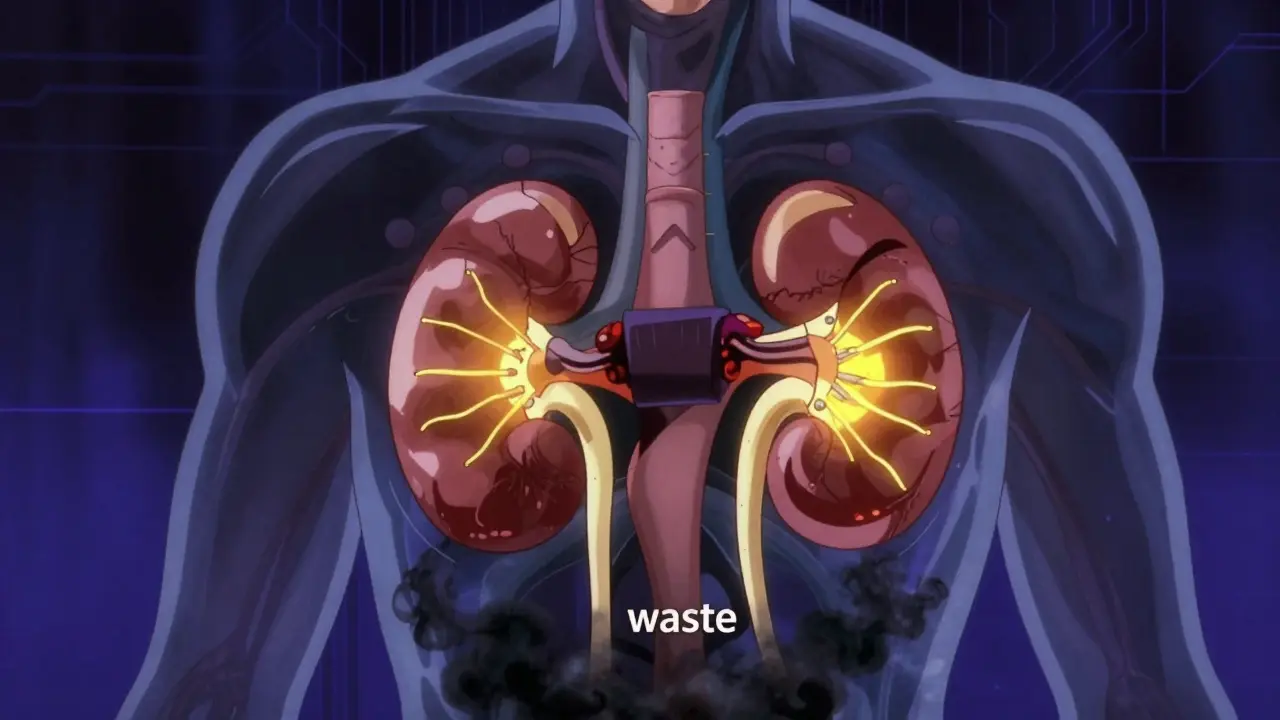
Your kidneys are hard workers. Every day, they filter about 150 to 180 quarts of blood to produce 1 to 2 quarts of urine, removing waste, extra water, and balancing electrolytes. When this system breaks down completely, you reach end-stage renal disease, or ESRD. This is the final stage of chronic kidney disease (CKD), where your kidneys lose 85-90% of their function. At this point, survival depends on dialysis or a transplant. But how do we get here? It rarely happens overnight. For most people, it’s the slow, silent result of three major culprits: diabetes, high blood pressure, and glomerulonephritis.
You might think kidney pain is the first sign, but that’s usually not the case. The early stages are often quiet. By the time you feel sick, significant damage has already occurred. Understanding exactly how these three conditions attack your kidneys helps you spot the warning signs before they become irreversible. Let’s break down the biology behind each cause so you know what’s actually happening inside your body.
Diabetes: The Leading Cause of Kidney Failure
If you look at the statistics, diabetes is the heavyweight champion of kidney failure. According to data from the United States Renal Data System (USRDS), diabetes accounts for roughly 44% of new cases of ESRD in the United States. It has held this top spot since the early 1990s. Why is sugar so destructive to such vital organs?
The problem starts with hyperglycemia-too much glucose in your blood. Your kidneys have tiny filtering units called glomeruli. These structures act like sieves. When blood sugar levels stay high for years, the excess glucose forces these filters to work overtime. This creates a state called hyperfiltration, where the glomerular filtration rate (GFR) spikes by 20-40%. Think of it like forcing a car engine to redline constantly; eventually, parts wear out prematurely.
This overwork leads to structural changes. The walls of the glomeruli thicken, and the supporting cells (podocytes) get damaged. Over time, protein leaks into your urine-a condition known as albuminuria. If you see foamy urine, that’s often protein escaping. Research shows that 30% of people with type 1 diabetes and up to 40% of those with type 2 diabetes will develop diabetic kidney disease (DKD). The damage isn't just mechanical; it's metabolic. High sugar reduces energy production in kidney cells by up to 50%, leaving them vulnerable to injury. Without intervention, this progresses from microalbuminuria (small amounts of protein) to macroalbuminuria (large amounts), drastically increasing the risk of reaching ESRD.
Hypertension: The Silent Pressure Cooker
High blood pressure, or hypertension, is the second leading cause of kidney failure, responsible for about 28% of ESRD cases. While diabetes damages the filters through chemical stress, hypertension attacks them through physical force. Imagine a garden hose connected to a faucet turned up full blast. The pressure inside the hose rises until the joints burst or the material weakens. Your kidney arteries are similar.
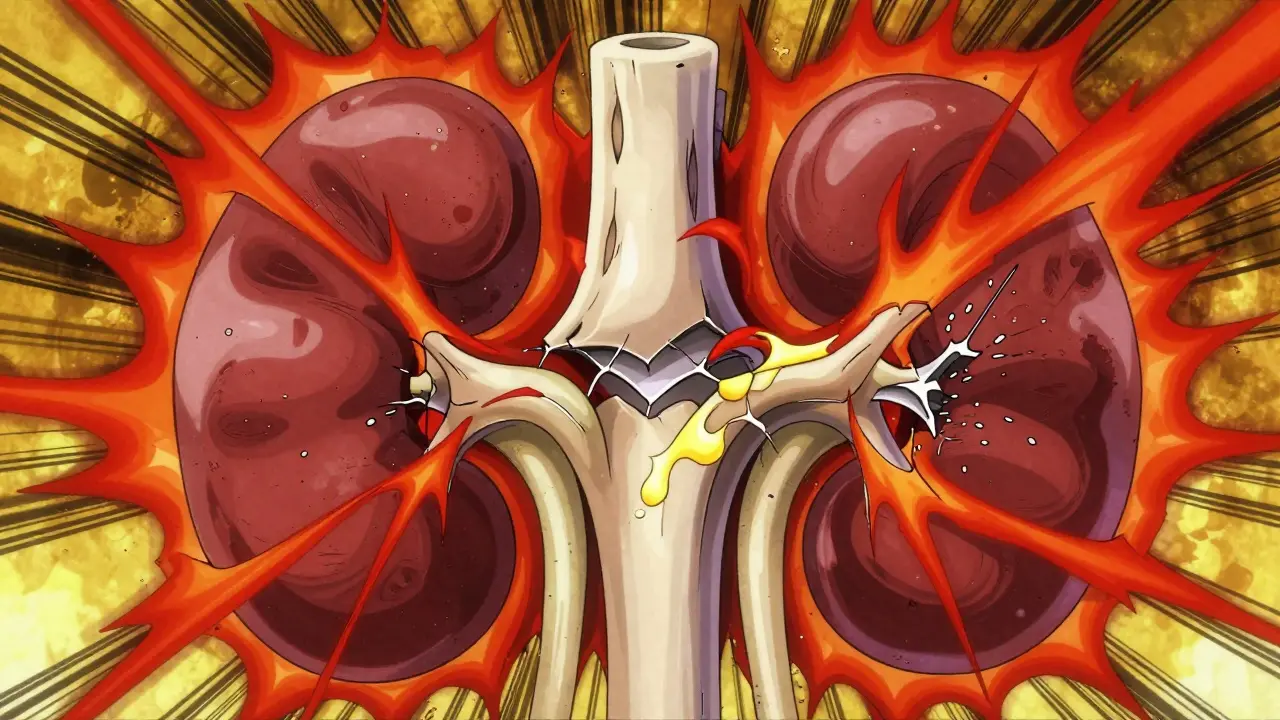
When your blood pressure stays above 140/90 mmHg for extended periods, the small arteries in your kidneys undergo hyalinization. This means the vessel walls become thick, stiff, and scarred. As these vessels narrow, less blood reaches the filtering units. The kidneys starve for oxygen and nutrients, leading to a process called nephrosclerosis. Histopathological studies show that in hypertensive kidney disease, 60-70% of cases exhibit global glomerulosclerosis, meaning large portions of the filtering tissue turn into useless scar tissue.
Here’s the tricky part: hypertension and diabetes often travel together. About 75% of people with diabetes also have high blood pressure. This combination is devastating. The synergy between high sugar and high pressure accelerates kidney decline by more than double compared to having just one condition. You might lose kidney function at a rate of 3.2 mL/min per year when both are present, compared to 1.8 mL/min with diabetes alone. Because high blood pressure rarely causes symptoms until late stages, many people don’t realize they’re damaging their kidneys until it’s too late.
Glomerulonephritis: The Immune System’s Mistake
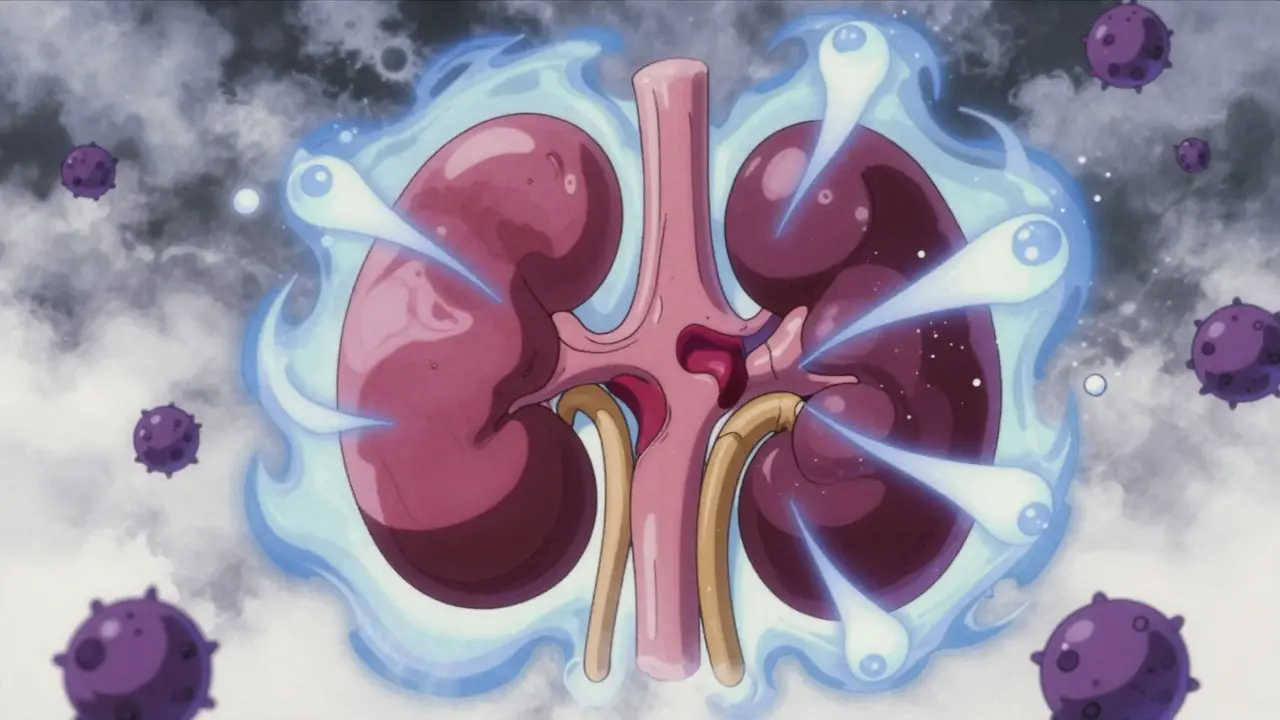
While diabetes and hypertension are metabolic issues, glomerulonephritis is an immune-mediated disorder. It accounts for about 8% of ESRD cases but represents a complex group of diseases where your own immune system attacks your kidney filters. Instead of fighting bacteria or viruses, antibodies and inflammatory cells target the glomeruli, causing swelling and inflammation.
There are several types, but two stand out. First, there’s IgA nephropathy, the most common form globally. In this condition, an antibody called IgA builds up in the glomeruli. It affects about 2.5 to 4.5 people per 100,000 annually, depending on your ethnicity. Second, there’s lupus nephritis, which occurs in 50-60% of people with systemic lupus erythematosus (SLE). Lupus nephritis can be aggressive, with Class IV disease carrying a nearly 30% risk of progressing to kidney failure within ten years if not treated aggressively.
The progression of glomerulonephritis is unpredictable. Some people live with it for decades without major issues, while others progress rapidly to ESRD. Diagnosis is often delayed because symptoms like fatigue, swelling in the legs, or blood in the urine are vague. Patients frequently report seeing multiple doctors before getting a biopsy, which is the only way to confirm the specific type of glomerulonephritis. Early detection is crucial because treatments involve immunosuppressants that can alter the course of the disease significantly.
Comparing the Progression and Risks
Not all roads to kidney failure look the same. Understanding the differences in how these diseases progress can help you and your doctor tailor a management plan. Here is how they stack up against each other:
| Cause | Mechanism of Damage | Average Time to ESRD | Key Early Marker |
|---|---|---|---|
| Diabetes | Hyperfiltration & scarring | ~8.7 years | Albuminuria (protein in urine) |
| Hypertension | Vascular narrowing & ischemia | ~12.3 years | Elevated BP & reduced eGFR |
| Glomerulonephritis | Immune inflammation | Variable (years to decades) | Hematuria (blood in urine) & casts |
Notice that diabetic kidney disease tends to progress faster than hypertensive disease. However, the presence of protein in the urine (albuminuria) is a critical warning sign for both. If your urine albumin-to-creatinine ratio (UACR) exceeds 30 mg/g, you are at higher risk. For glomerulonephritis, the marker is often blood in the urine (hematuria) rather than just protein. Recognizing these distinct markers allows for earlier, more targeted intervention.
Modern Treatments and Prevention Strategies
The good news? We have better tools now than ever before to slow or even halt the progression of kidney disease. The medical consensus, guided by organizations like KDIGO (Kidney Disease: Improving Global Outcomes), emphasizes early and aggressive management.
For diabetic patients, the game-changer has been the introduction of SGLT2 inhibitors. Drugs like empagliflozin and dapagliflozin were originally designed to lower blood sugar, but trials like EMPA-KIDNEY showed they reduce the risk of kidney failure by up to 32%. They work by reducing the pressure inside the glomeruli, effectively taking the foot off the gas pedal of hyperfiltration. Additionally, finerenone, a newer medication approved recently, has shown an 18% reduction in kidney failure risk by targeting inflammation and fibrosis directly.
For everyone, blood pressure control remains non-negotiable. ACE inhibitors and ARBs are the gold standard because they protect the kidneys beyond just lowering blood pressure. They reduce the strain on the glomeruli. Target pressures are generally below 130/80 mmHg for diabetics and even lower (below 120/80) for those with significant protein leakage. Lifestyle changes matter too. Reducing sodium intake helps manage blood pressure, while maintaining a moderate protein diet (around 0.8 g/kg/day) prevents overloading the kidneys.
In glomerulonephritis, treatment is highly specific to the subtype. Immunosuppressive therapies, such as rituximab or steroids, are used to calm the immune system. Recent studies suggest that targeted therapy can prevent years of dialysis. However, balancing the benefits of suppressing the immune system against the risk of infection is a delicate dance that requires close monitoring by a nephrologist.
Living with Kidney Disease: Real-World Challenges
Statistics tell one story, but patient experiences tell another. A survey by the National Kidney Foundation highlighted that 68% of people with diabetes-related ESRD suffer from extreme fatigue. There’s also the mental toll. Anxiety about scheduling dialysis sessions or worrying about transplant eligibility is constant. Adherence to medication is another hurdle; only about 58% of patients consistently take their prescribed ACE inhibitors or ARBs. Why? Side effects, complexity, or simply forgetting. Education plays a huge role here. Patients often need months to fully understand their regimen. Don’t hesitate to ask your care team for simplified guides or reminders.
Dietary restrictions can also feel isolating. Limiting potassium, phosphorus, and protein can make social dining difficult. Yet, sticking to these limits is vital to preventing dangerous electrolyte imbalances. Support groups, both online and offline, provide valuable coping strategies. Hearing from others who have stabilized their kidney function after starting SGLT2 inhibitors or managing their IgA nephropathy offers hope and practical tips.
Future Outlook and Global Impact
Kidney disease is a growing global crisis. The World Health Organization estimates that 850 million people worldwide have some form of kidney disease. The economic burden is staggering, costing the US healthcare system over $124 billion annually. Projections suggest a 52% increase in ESRD prevalence by 2030, driven largely by rising diabetes rates. However, experts believe that 30-50% of these future cases could be prevented with widespread early detection and precision medicine. Novel biomarkers, like urinary TNF receptor-1, are being developed to predict kidney failure risk with high accuracy long before traditional tests show decline. The goal is shifting from treating failure to preserving health.
What are the first signs of kidney failure?
Early signs are often subtle and include fatigue, swelling in your ankles or feet, foamy urine (indicating protein), and changes in urination frequency. Many people have no symptoms until the disease is advanced, which is why regular blood and urine tests are crucial for at-risk individuals.
Can kidney damage from diabetes be reversed?
Once scar tissue forms, it cannot be reversed. However, early-stage diabetic kidney disease can often be stabilized or slowed significantly. Strict blood sugar control, blood pressure management, and medications like SGLT2 inhibitors can prevent further loss of function and potentially delay or avoid dialysis.
How does high blood pressure damage the kidneys?
High blood pressure damages the delicate blood vessels in the kidneys. Over time, these vessels narrow and harden (nephrosclerosis), reducing blood flow and oxygen to the filtering units. This causes the filters to scar and lose their ability to remove waste from the blood efficiently.
What is glomerulonephritis and who gets it?
Glomerulonephritis is inflammation of the kidney's filtering units caused by the immune system attacking them. It can happen at any age and may follow an infection or be associated with autoimmune diseases like lupus. IgA nephropathy is the most common form worldwide.
Should I get tested for kidney disease?
If you have diabetes, high blood pressure, or a family history of kidney disease, yes. Simple tests include a blood test for eGFR (estimated glomerular filtration rate) and a urine test for albumin. These should be done annually to catch any decline in function early.