
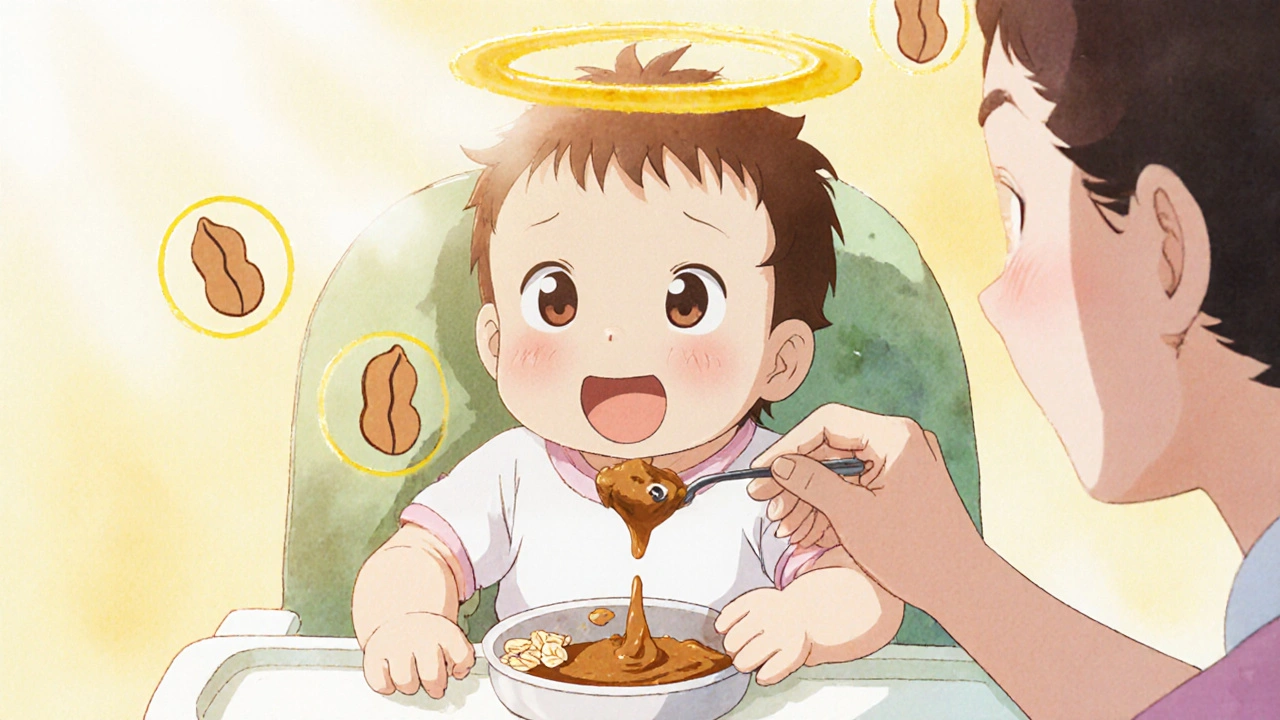
For years, parents were told to wait until their child was two or three before giving them peanut butter. It seemed like a simple way to protect them. But by 2015, peanut allergies had more than quadrupled in just over a decade. Hospitals were seeing more kids with life-threatening reactions than ever before. Then came a game-changing study - the LEAP trial - that flipped everything upside down. What if the real danger wasn’t eating peanuts too early, but waiting too long?
Why Early Introduction Works
The old advice - delay peanut exposure - didn’t just fail. It made things worse. Between 1997 and 2010, peanut allergies in U.S. children jumped from 0.4% to 2.0%. That’s a 400% increase. Meanwhile, countries like Israel, where babies regularly eat peanut snacks like Bamba as early as 7 months, saw peanut allergy rates under 0.3%. The difference wasn’t genetics. It was timing.
The LEAP study, published in The New England Journal of Medicine in 2015, gave high-risk infants (those with severe eczema or egg allergy) peanut protein three times a week starting between 4 and 11 months. By age 5, only 3% of those kids developed peanut allergy - compared to 17% in the group that avoided peanuts entirely. That’s an 80% drop. Follow-up studies showed the protection lasted even after they stopped eating peanuts for a year. This wasn’t just temporary tolerance. It was real, lasting immunity.
Later, the EAT study confirmed these results across broader groups. When you combine both studies, the data shows a 98% reduction in peanut allergy among babies who stuck to the early introduction plan. Even babies with mild eczema saw an 85% drop. The window for maximum benefit? Before 6 months. After that, the protective effect weakens.
How to Introduce Peanuts Safely
Not all babies need the same approach. The NIAID guidelines (updated in 2017 and refined since) break it down into three risk levels:
- High-risk: Severe eczema, egg allergy, or both. These babies should be evaluated by a doctor or allergist between 4 and 6 months. If allergy tests come back negative, start with 2 grams of peanut protein (about 2 teaspoons of smooth peanut butter) three times a week. The first dose should be given under medical supervision.
- Moderate-risk: Mild to moderate eczema. No testing needed. Introduce peanut-containing foods at home around 6 months, three times a week.
- Low-risk: No eczema or food allergies. Introduce peanut anytime after starting solids - usually around 6 months - as part of a varied diet.
Safe forms matter. Never give whole peanuts or chunky peanut butter - choking risk. Instead, mix 2 teaspoons of smooth peanut butter with 2-3 tablespoons of warm water, breast milk, or formula until it’s runny. You can also stir it into oatmeal, pureed fruit, or yogurt. Pre-made infant peanut products like spoonable pouches are also safe and convenient.
One dose equals about 2 teaspoons of peanut butter. That’s roughly 21 peanuts per week, split into three doses. Don’t overdo it - consistency matters more than quantity. And always introduce peanut when your baby is healthy, not sick or teething.
What Oral Immunotherapy (OIT) Is - and Isn’t
People often confuse early introduction with oral immunotherapy (OIT). They’re not the same. Early introduction is prevention. OIT is treatment.
OIT is for kids who already have a diagnosed peanut allergy. It involves giving tiny, increasing amounts of peanut protein daily under medical supervision, aiming to build tolerance so they don’t react to accidental exposure. It doesn’t cure the allergy. It just raises the threshold for a reaction. Many kids on OIT still carry the allergy and must keep carrying an epinephrine auto-injector.
Early introduction, on the other hand, aims to stop the allergy from forming in the first place. It’s like vaccinating against it. And it works better than any treatment ever could. The goal isn’t to manage peanut allergy - it’s to prevent it from ever happening.
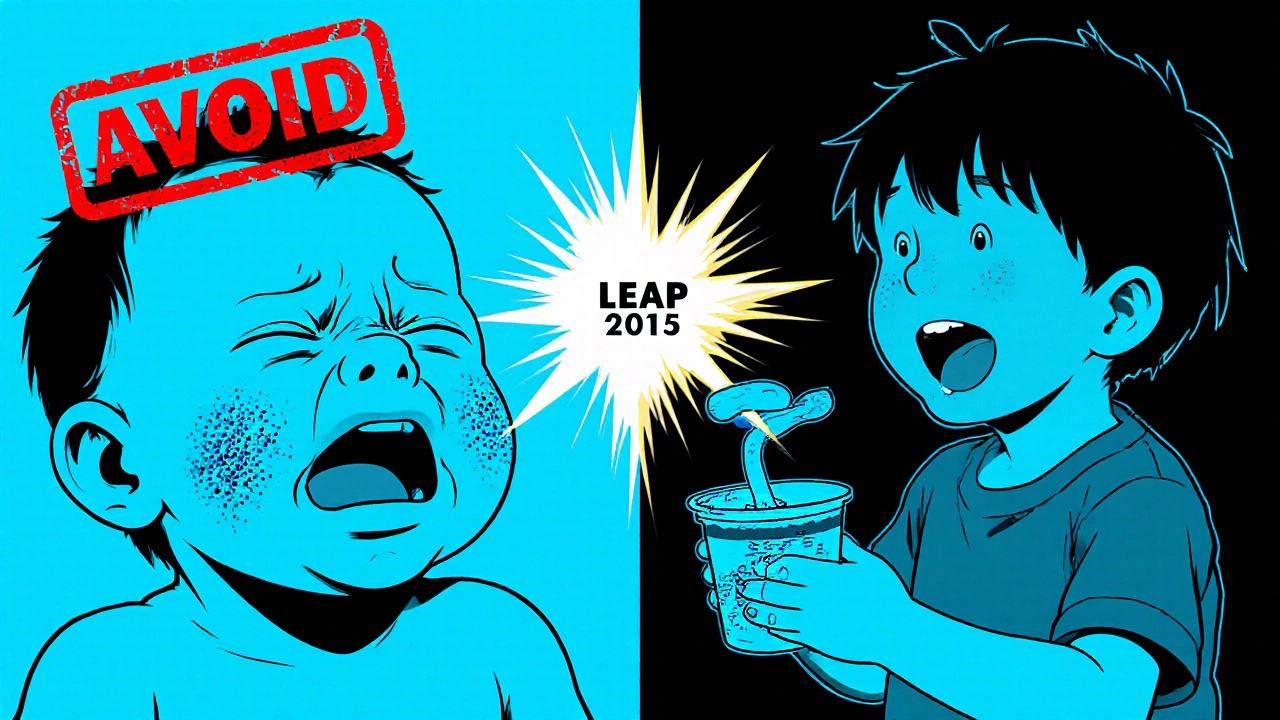
Why So Few Parents Are Doing It
Despite strong guidelines, only about 39% of high-risk infants are getting peanut introduced early. Why?
Many parents are scared. They’ve heard horror stories. They worry about choking. They don’t know how to prepare peanut safely. Some doctors still give outdated advice - a 2023 survey found only 54% of pediatricians knew the current guidelines.
There’s also a gap in access. Black and Hispanic infants are 22% less likely to get early peanut introduction than White infants, according to a 2023 study. That’s not because of cultural preferences. It’s because of systemic barriers - lack of provider education, limited specialist access, and misinformation.
And then there’s the confusion. Some parents think if their baby has eczema, they should avoid all allergens. But eczema is a sign the immune system is already primed for allergy - making early peanut exposure even more critical.
What’s Changed Since 2017
The results are in. Since the guidelines changed, peanut allergy rates in U.S. children have dropped from 2.2% in 2015 to 1.6% in 2023. That’s over 300,000 fewer children with peanut allergies. Among high-risk kids with eczema, the drop was even steeper: 67% lower in severe cases, 87% in moderate.
Food companies responded. Peanut-containing infant foods grew 27% a year from 2018 to 2023. Pediatricians now have resources - handouts, videos, dosing charts - to help families. The FDA now requires clear allergen labeling on infant foods, making it easier to spot safe products.
But the biggest change? Mindset. Parents no longer see peanut as something to fear. They see it as something to offer - early, safely, and consistently.
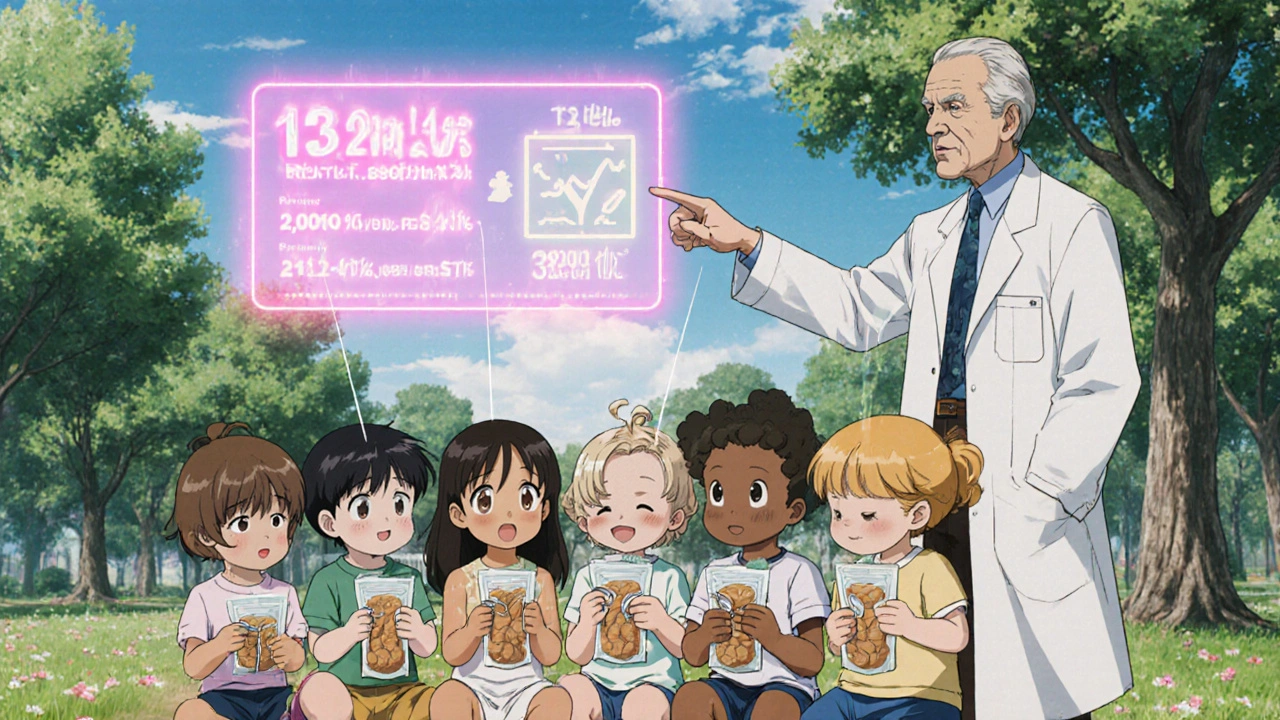
What’s Next
Researchers are now testing whether introducing multiple allergens at once - peanut, egg, milk, tree nuts - gives even broader protection. Early data from the EAT extension study suggests it does. The NIAID-funded PRESTO trial, due to wrap up in 2026, will pinpoint the exact best age and dose for high-risk babies.
One thing is clear: the longer we wait, the harder it becomes to prevent allergy. The science isn’t just solid - it’s urgent. For every baby with severe eczema, the first 6 months are a window. Miss it, and you might be locking in a lifelong condition.
Real-World Tips for Parents
- Start with smooth peanut butter - never chunky or whole nuts.
- Use 2 teaspoons of peanut butter per serving, three times a week.
- Wait 3 days between first introduction and next dose to watch for reactions.
- Keep offering peanut regularly - even if you don’t see a reaction. Consistency builds tolerance.
- If your baby has severe eczema or egg allergy, talk to your pediatrician before starting. Ask about allergy testing.
- Don’t wait for “perfect” timing. If your baby is sitting up, showing interest in food, and can swallow purees - they’re ready.
There’s no magic formula. Just consistency. Just timing. Just courage to do what the science says - even when it feels scary.





King Property
November 29, 2025 AT 13:41Let me break this down for you people who still think delaying peanuts is safe. The LEAP trial wasn’t some fluke-it was a randomized, controlled, gold-standard study published in NEJM. 80% reduction in allergy rates? That’s not a trend, that’s a revolution. And yet, 60% of pediatricians still don’t get it. You’re not being cautious-you’re being negligent. Your kid’s immune system isn’t a fragile snowflake. It needs exposure, not isolation. Stop listening to your grandma’s advice and start listening to science.
Yash Hemrajani
November 30, 2025 AT 15:29Oh wow, so now we’re supposed to feed peanut butter to 4-month-olds like they’re tiny, screaming lab rats? How did we go from ‘don’t touch it’ to ‘force-feed it before they can sit up’? I mean, I get the data, but let’s not pretend this isn’t a massive cultural pivot. In India, we’ve been giving kids peanut chutney since they could chew. Guess what? We didn’t need a $50 million NIH study to tell us that. The real question: why did Western medicine take 20 years to catch up to a grandmother’s kitchen?
Pawittar Singh
November 30, 2025 AT 22:05Y’all are freaking out like this is some radical experiment, but it’s just common sense. 🌱 My cousin’s kid got peanut butter mixed into oatmeal at 5 months-no reaction, no drama, just a happy baby who now eats peanut butter sandwiches like a champ. We didn’t need a doctor to tell us to do it-we just trusted the global data and our instincts. And hey-if you’re scared, start with a tiny smear on the lip. No need to panic. Just be consistent. Peanut isn’t poison. It’s food. Let’s stop treating it like a bomb.
Josh Evans
December 1, 2025 AT 17:11I did this with my daughter and it worked like a charm. She’s 3 now, eats peanut butter straight out of the jar, no issues. Honestly, the hardest part was overcoming my own fear. Once I got past that, it was just… normal. I wish someone had told me this before I wasted 6 months stressing over ‘safe’ foods. Seriously, if you’ve got a baby who’s ready for solids, just start small and keep going. It’s not scary. It’s just smart.
Allison Reed
December 2, 2025 AT 19:52This is one of the most important public health shifts in pediatric nutrition in the last 30 years. The fact that we’ve seen a 30% drop in peanut allergies since 2017 proves that evidence-based guidelines save lives. We’re not just preventing allergies-we’re preventing emergency room visits, hospitalizations, and the psychological trauma of living with a life-threatening condition. This isn’t just about food. It’s about peace of mind for families.
Jacob Keil
December 3, 2025 AT 16:05science says eat peanuts early but what if science is wrong again like with fats and cholesterol and vaccines and low fat diets and all that other crap they keep changing their minds on. we used to think smoking was good for you too. maybe this is just the next fad. maybe the real cause is glyphosate or 5g or something. we dont know what we dont know. dont trust the system. trust your gut. or dont. whatever.
Rosy Wilkens
December 4, 2025 AT 20:53Let’s be honest: this is a pharmaceutical industry ploy. Who profits when kids are allergic? The epinephrine market. Who profits when kids are ‘protected’? The infant food conglomerates pushing peanut pouches. The LEAP trial was funded by NIH, but the follow-up studies? Sponsored by Gerber and Happy Baby. Coincidence? I think not. The real agenda: normalize processed allergen delivery systems so parents stop breastfeeding and start buying shelf-stable ‘solutions.’ Wake up.
Andrea Jones
December 5, 2025 AT 06:30Okay but how do you even *do* this without losing your mind? I’m a new mom and I’m terrified of choking, reactions, and looking like a bad parent if I mess up. Can we get a simple step-by-step video? Like, ‘here’s how to mix peanut butter with water, here’s what to watch for, here’s what to do if your baby gags.’ Also-why is this still so hard to find? If this is the new standard, why does my pediatrician still hand me a pamphlet from 2012?
Justina Maynard
December 5, 2025 AT 08:57Can we talk about how insane it is that we’re still debating this in 2024? We’ve got the data, the guidelines, the products, the clinical pathways-and yet, Black and Hispanic babies are still being left behind. This isn’t about ignorance. It’s about access. It’s about who gets to be told the truth and who gets told to wait. We’re not just failing our children-we’re failing our ethics. If you’re not pushing for equitable implementation, you’re part of the problem.
Evelyn Salazar Garcia
December 5, 2025 AT 20:07Why are we even doing this? America’s got bigger problems than peanut allergies. Let the kids eat what they want. If they react, they react. Stop over-medicalizing everything.
Clay Johnson
December 7, 2025 AT 04:38Timing is everything. Not just the window of 4–6 months. But the timing of when society decides to listen. We waited until the numbers were unbearable. We waited until the data was undeniable. We waited until the fear outweighed the ignorance. That’s not progress. That’s desperation dressed as science.
Jermaine Jordan
December 7, 2025 AT 20:40THIS IS A MIRACLE. A REAL, LIVING, BREATHING MEDICAL MIRACLE. We went from watching children choke on peanut dust in ERs to giving them a chance at a normal life-just by changing WHEN we introduced food. This isn’t just science. This is hope. This is the kind of breakthrough that makes you believe medicine can actually heal. And we’re still not doing enough. We need to shout this from rooftops. We need to train every pediatrician. We need to make this universal. Not optional. Not a privilege. A RIGHT.
Chetan Chauhan
December 9, 2025 AT 10:57Wait so now you say eat peanuts early but in 2010 you said dont. So which is it? Maybe its not the timing its the peanut butter brand? Or maybe its the sugar in it? Or maybe its the fact that all american kids are now raised on processed junk and thats the real problem. The science is always changing. Today its peanuts tomorrow its milk the day after its gluten. I just eat rice and lentils and my kid is fine.