
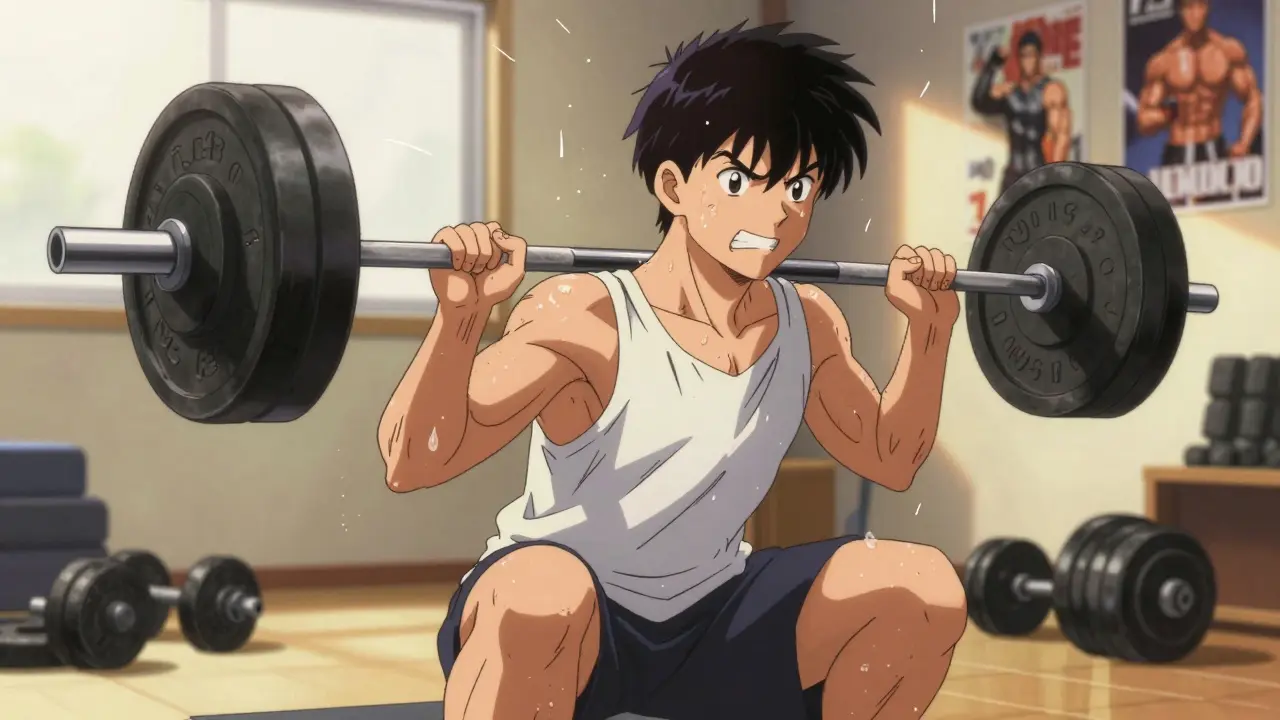
Most people think fat loss means hours on the treadmill or endless spin classes. But if you’ve been doing that for months and still don’t see changes in your mirror, you’re not alone. The truth is, strength training is the most effective tool for losing fat and keeping it off - not because it burns the most calories during the workout, but because it changes your body in ways cardio never can.
Why Strength Training Beats Cardio for Fat Loss
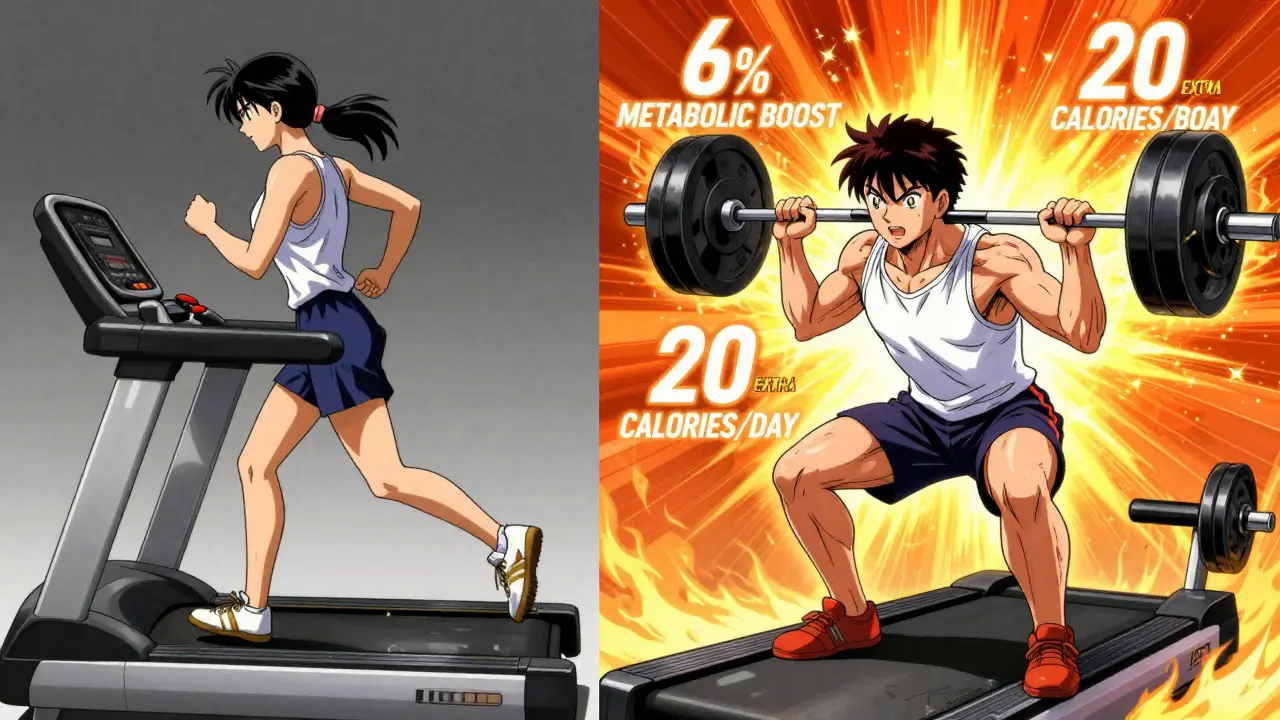
Cardio burns calories while you’re doing it. That’s it. Strength training? It burns calories during the workout, and then keeps burning them for up to 72 hours after. This is called the afterburn effect, or EPOC (excess post-exercise oxygen consumption). A 2018 study in the Journal of Sports Science & Medicine found strength workouts can boost your metabolism by 6-15% beyond the calories you just burned. That’s like getting free calorie burn while you sleep, cook dinner, or scroll on your phone. But the real game-changer is muscle. Every pound of muscle you build burns 6-10 calories a day at rest. Fat? Only 2-3. So if you lose 5 pounds of fat but gain 3 pounds of muscle, your body is suddenly burning 15-20 extra calories every single day - without lifting a finger. Over a year, that’s over 7,000 extra calories burned. That’s nearly 2 pounds of fat gone just from having more muscle. A 2022 meta-analysis in Obesity Reviews looked at 28 studies and found people who lifted weights kept 95% of their muscle during weight loss. Those who only did cardio? They lost over 12% of their muscle. That’s not just about looking toned - it’s about keeping your metabolism high so you don’t regain every pound you lose.How to Structure Your Strength Program for Fat Loss
You don’t need to lift heavy like a powerlifter. You don’t need to do 100 reps. You need consistency, progressive overload, and smart programming. Start with compound movements - exercises that work multiple muscle groups at once. These are your foundation:- Squats
- Deadlifts
- Bench press
- Overhead press
- Rows
Progressive Overload: The Secret Sauce
If you’re doing the same weights and reps every week, you’re not getting stronger. And if you’re not getting stronger, you’re not building muscle. And if you’re not building muscle, your metabolism won’t change. The rule is simple: when you can do the top end of your rep range (e.g., 12 reps) for all your sets with good form, increase the weight. For women, add 5-10 lbs. For men, add 10-15 lbs. Do this every 1-2 weeks. Most people who fail at fat loss with strength training don’t fail because they’re not working hard - they fail because they don’t increase the challenge. A review of 500 Amazon reviews for the Women’s Health 4-Week Strength Training Plan found that 87% of people who got great results specifically said they tracked and increased weights weekly. That’s not luck. That’s science.Weekly Structure: 3 Strength Days, 2 Cardio Days
Here’s what a real, effective week looks like:- Monday: Full-body strength (squats, bench, rows, overhead press)
- Tuesday: Steady-state cardio (brisk walk, bike, elliptical - 30-45 minutes at 65-75% max heart rate)
- Wednesday: Full-body strength (deadlifts, pull-ups, lunges, core)
- Thursday: HIIT cardio (30 seconds sprint, 90 seconds walk - repeat 6-8 rounds)
- Friday: Full-body strength (compound supersets - e.g., squat followed immediately by push-up)
- Saturday: Active recovery (light walk, foam rolling, yoga)
- Sunday: Rest
Nutrition: You Can’t Out-Train a Bad Diet
Strength training doesn’t give you permission to eat junk. But you also don’t need to starve yourself. Aim for:- 1.6-2.2 grams of protein per kilogram of body weight
- 40% protein, 30% carbs, 30% fats
Why the Scale Lies - And What to Track Instead
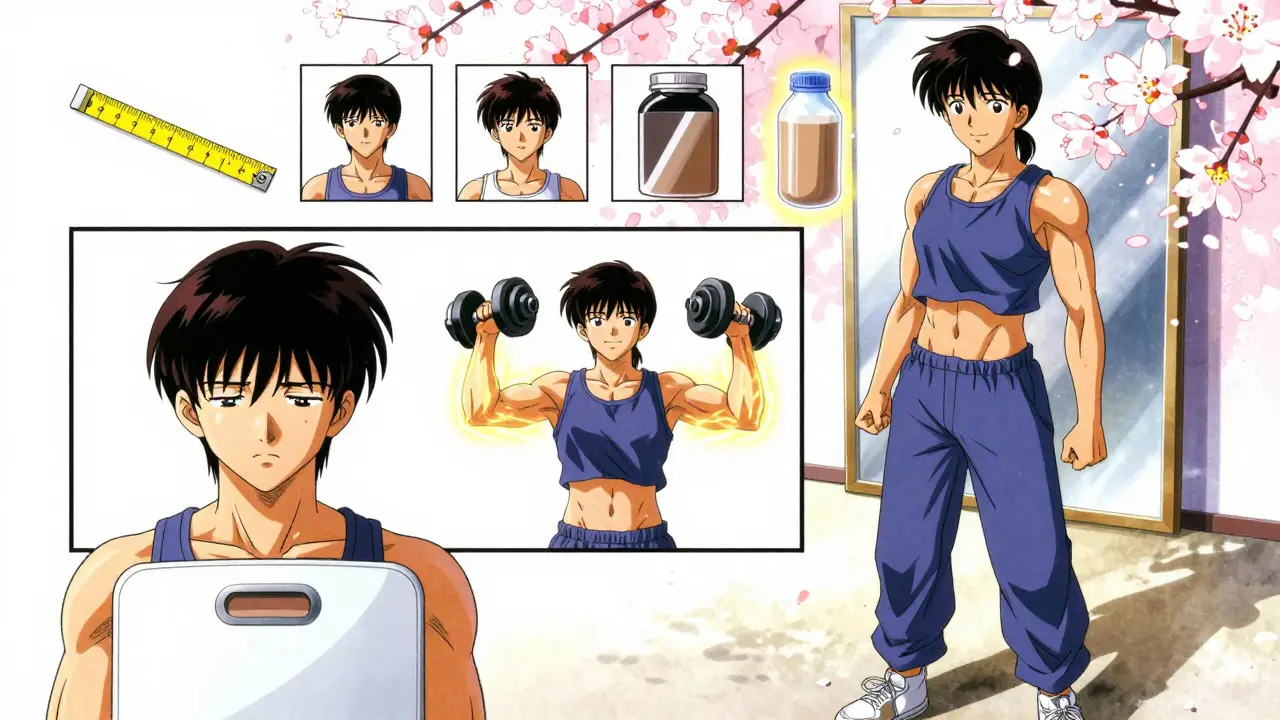
You might step on the scale and see no change. Or worse - you gain a pound. That doesn’t mean you’re failing. It means you’re building muscle while losing fat. Muscle is denser than fat. So you can lose 4 pounds of fat and gain 2 pounds of muscle, and the scale stays the same. But your clothes will fit better. Your waist will shrink. Your arms will look tighter. Track these instead:- Waist, hip, and chest measurements (take them every 2 weeks)
- Progress photos (same lighting, same time of day, same outfit)
- How your clothes fit
- Strength gains (are you lifting heavier? Doing more reps?)
Common Mistakes and How to Avoid Them
Most people quit strength training for fat loss because they make these mistakes:- Skipping progressive overload - doing the same weights forever. Fix: Increase weight when reps get easy.
- Doing too many reps with too little weight - think 20 reps with 5lb dumbbells. That’s cardio with weights, not strength training. Fix: Use heavier weights and stay in the 8-15 rep range.
- Not resting enough - running back-to-back strength days. Fix: Space sessions 48 hours apart. Muscles grow when you rest, not when you lift.
- Ignoring form - rounding your back on deadlifts, partial squats. Fix: Watch videos, record yourself, or hire a trainer for one session. Poor form = injury risk = quitting.
- Expecting quick results - you won’t see changes in 2 weeks. Most people see real shifts by week 4-6. Stick with it.
Real People, Real Results
On Reddit, user ‘FitJourney2023’ lost 48 pounds over 6 months with 3 strength sessions a week and intermittent fasting. The scale showed 32 pounds lost - but his body fat dropped from 32% to 19%. The other 16 pounds? Muscle he gained. Another user, ‘CardioQueen99’, did only cardio for 8 months and lost 25 pounds. She looked ‘skinny fat’ - thin but soft. She added strength training. In 3 months, she lost another 8 pounds of fat and gained visible muscle. Her confidence shot up. She didn’t just lose weight. She transformed her body. These aren’t outliers. They’re the norm for people who stick with strength training.What the Experts Say
Dr. Brad Schoenfeld, a leading muscle researcher, says: “Preserving lean mass during weight loss is the single most important factor for long-term success. And resistance training is the most potent stimulus for achieving this.” His studies show people who lift 3 times a week during a calorie deficit keep 97% of their muscle. The American College of Sports Medicine now says strength training isn’t optional for fat loss - it’s essential. In 2023, 83% of certified trainers prioritized strength over cardio for fat loss programs - up from 57% in 2018. Even the tech world is catching on. Apple Fitness+ launched ‘Strength for Fat Loss’ workouts in 2023. WHOOP now tracks a ‘muscle preservation score’ during weight loss. Tonal’s new AI-powered system adjusts weights in real-time based on your fatigue and form.Final Thoughts: This Isn’t a Diet. It’s a Lifestyle.
Strength training for fat loss isn’t about quick fixes. It’s about building a body that burns fat effortlessly, even when you’re not working out. It’s about getting stronger, feeling more confident, and staying lean for life. You don’t need a gym membership. You don’t need expensive equipment. Just a pair of dumbbells, some space, and the willingness to get a little uncomfortable every few days. Start with three 30-minute sessions a week. Focus on form. Increase the weight when you can. Eat enough protein. Track your measurements, not just the scale. The results won’t come overnight. But if you stick with it for 12 weeks, you won’t recognize the person in the mirror - and you’ll never go back to endless cardio again.Can I lose fat with strength training alone, without cardio?
Yes. Strength training alone can lead to significant fat loss, especially when paired with proper nutrition. The key is progressive overload - consistently lifting heavier weights over time. This builds muscle, which increases your resting metabolic rate. While cardio burns more calories during the workout, strength training keeps your metabolism elevated for up to 72 hours after. Many people lose fat effectively with 3-4 strength sessions per week and no cardio. But adding 1-2 cardio days can help create a larger calorie deficit and improve heart health.
How long until I see results from strength training for fat loss?
Most people start seeing changes in how their clothes fit and in their strength levels by week 4. Visible fat loss and muscle definition typically appear between weeks 6 and 8. The scale might not move much at first - especially if you’re gaining muscle - so focus on measurements, progress photos, and how you feel. People who track weight increases weekly see results faster because they’re consistently challenging their bodies.
Do I need to lift heavy to lose fat with strength training?
You don’t need to lift max weights, but you do need to lift with enough resistance to challenge your muscles. For fat loss, aim for weights that make the last 2-3 reps of each set difficult but still doable with good form. This usually means 8-15 reps per set. Lifting too light (like 20 reps with 5lb dumbbells) won’t stimulate muscle growth. The goal isn’t to go max weight - it’s to go heavy enough to force your body to adapt and grow stronger.
Should I do cardio on my rest days?
Rest days should be truly restful - no intense activity. But light movement like walking, stretching, or foam rolling is fine and even helpful. If you want to do cardio, schedule it on non-strength days, not rest days. For example, do cardio on Tuesday and Thursday, and reserve Saturday for active recovery. This gives your muscles time to repair and grow. Overtraining on rest days can lead to burnout, injury, and stalled progress.
Why is my weight not going down even though I’m doing strength training?
Your weight might not drop because you’re losing fat and gaining muscle at the same time. Muscle is denser than fat, so you can lose inches and still stay the same weight - or even gain a pound. This is normal and a good sign. Focus on waist measurements, how your clothes fit, and your strength gains. If your waist shrinks and your lifts get heavier, you’re making progress. Don’t let the scale trick you into quitting.
What’s the best way to avoid muscle soreness after strength training?
Delayed onset muscle soreness (DOMS) is normal, especially when you start or change your routine. It peaks around 48 hours after a workout. To reduce it, do 10-15 minutes of light walking after your session. Foam rolling helps too - a 2022 study found it cuts DOMS duration by 35%. Stay hydrated, get enough sleep, and don’t skip protein after workouts. Don’t try to ‘work through’ severe soreness - rest is part of the process.
Next steps: Start with a simple 3-day full-body routine using dumbbells. Pick weights that challenge you by the last rep. Track your progress in a notebook or app. Increase weight every 1-2 weeks. Eat protein with every meal. In 8 weeks, you’ll be stronger, leaner, and more confident than you were before.




Husain Atther
January 24, 2026 AT 21:34Interesting take. I've been lifting for a year now and the scale barely budged, but my jeans fit looser and I can do pull-ups now. That’s the real win.
Not sure why people still think cardio is king. Your body adapts. Muscle doesn’t.
Izzy Hadala
January 26, 2026 AT 15:31While the metabolic advantages of resistance training are well-documented, one must consider the heterogeneity of study populations in the referenced meta-analyses. Variability in baseline fitness, dietary adherence, and hormonal profiles may significantly influence outcomes. A more granular analysis is warranted before generalizing these findings.
Marlon Mentolaroc
January 26, 2026 AT 19:43Lol okay so you’re telling me I don’t need to run 5 miles a day to burn fat? Shocking. I’ve been doing cardio for 3 years and still look like a bag of wet noodles. Guess I’m just bad at life.
But seriously, this is the first time I’ve seen someone say muscle > cardio without sounding like a bro in a gym shirt.
Gina Beard
January 27, 2026 AT 04:42It’s not about burning calories. It’s about becoming a different kind of organism.
Strength isn’t a tool. It’s a language your body learns.
Don Foster
January 27, 2026 AT 07:45Anyone who thinks cardio is better for fat loss hasn’t read the actual EPOC papers. The 6-15% thing is real but only if you’re lifting above 75% 1RM. Most people are just waving dumbbells around like they’re doing yoga. You need heavy compound lifts or you’re wasting time. And protein? 2.2g/kg is the bare minimum. If you’re under that you’re just dieting wrong.
Also stop doing HIIT on rest days. That’s not rest. That’s self sabotage
siva lingam
January 27, 2026 AT 17:31So you wrote a 2000 word essay to say 'lift heavy and eat protein'... cool. I knew that in 2012. Thanks for the novel
Shelby Marcel
January 29, 2026 AT 14:05i was doin cardio for 2 yrs and felt so tired all the time like why am i running if i still feel flabby?? then i started lifting and my arms actually look like arms now?? like wow. also i dont care if the scale says i gained weight im just happy i can pick up my dog without wheezing
blackbelt security
January 30, 2026 AT 19:02This is the kind of post that changes lives. Not because it’s flashy. But because it’s real.
You don’t need to be a gym rat. Just consistent. Just progressive. Just patient.
One rep at a time.
Josh McEvoy
February 1, 2026 AT 14:07MY LIFE HAS CHANGED. I WAS A 200LB SAD MAN WHO COULDN’T DO 5 PUSH UPS. NOW I’M 175 AND MY GIRLFRIEND SAID I LOOK LIKE I COULD KNOCK OUT A BEAR. I DIDN’T EVEN KNOW I HAD ABS UNTIL I SAW THEM IN THE MIRROR. THANK YOU. 🥹💪😭
Heather McCubbin
February 2, 2026 AT 11:17People still think cardio is the answer? I mean... really? You’re letting your metabolism die while you jog on a treadmill like a zombie chasing a donut. You’re not losing fat. You’re just running away from yourself.
Strength is the only thing that doesn’t lie. It doesn’t care how you feel. It just demands you show up.
And if you don’t? It takes everything anyway
Tiffany Wagner
February 4, 2026 AT 03:33I tried this for 8 weeks and honestly didn’t think I’d stick with it. But I did. My back doesn’t hurt anymore. My sleep improved. And I’m not scared to wear tank tops.
Just... thank you for making it feel possible.
Chloe Hadland
February 5, 2026 AT 14:43I used to think strength training was for guys who want to look like action heroes. Turns out it’s just for people who want to feel strong.
And that’s enough.