
Alcohol-Opioid Risk Calculator
How much do you consume?
This tool uses data from medical studies showing how alcohol and opioids synergistically reduce breathing. There is no safe threshold for this combination.
Select options to see your risk level
Important Warning: This is a medical calculation tool only. It does NOT replace professional medical advice. Never mix alcohol with opioids. FDA and medical experts state there is no safe amount of alcohol when taking opioids.
When you mix alcohol and opioids, you're not just adding two substances together-you're creating a chemical storm in your body that can shut down your breathing and kill you. This isn't a guess. It's a proven, deadly reality backed by decades of medical research and real-world data.
Why This Combination Is So Dangerous
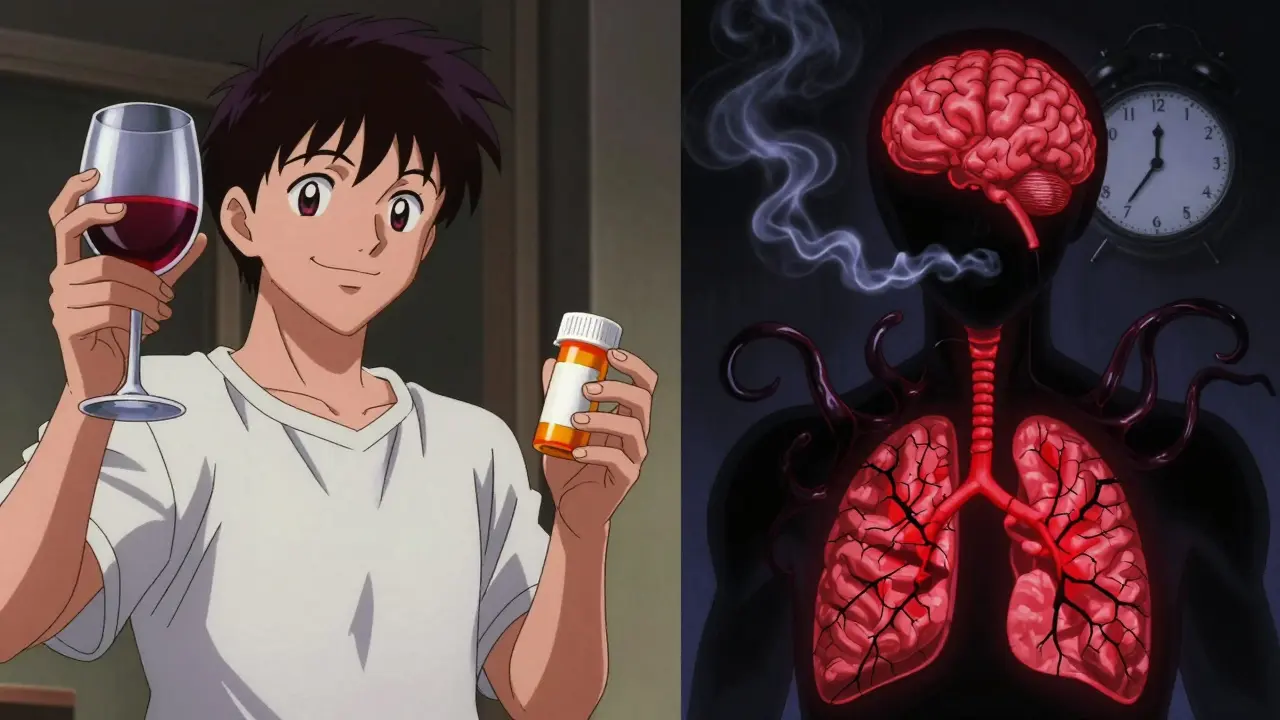
Both alcohol and opioids are central nervous system depressants. That means they slow down your brain's control over vital functions-especially breathing. When taken alone, even high doses can be risky. But together? The effect isn't just doubled. It's multiplied. This is called synergistic respiratory depression.
A 2017 study in the Journal of Clinical Psychopharmacology showed that 20mg of oxycodone alone reduced breathing by 28%. Add alcohol to reach a blood alcohol concentration (BAC) of just 0.1%-the legal limit for driving in most U.S. states-and breathing dropped another 19%. That’s a total reduction of nearly half. For older adults or people with existing lung or heart conditions, this can mean long pauses in breathing-or none at all.
Who’s at Risk? The Numbers Don’t Lie
In 2022, over 107,941 drug overdose deaths happened in the United States. Of those, 81.2% involved more than one substance. Alcohol was present in nearly one out of every five opioid-related deaths. That’s not a coincidence. It’s a pattern.
Prescription opioids like hydrocodone (Vicodin), oxycodone (OxyContin), and fentanyl carry the highest risk. The FDA required all opioid labels to include a black-box warning in 2016-its strongest alert-specifically because of alcohol interactions. Even over-the-counter cough syrups with codeine are now flagged for this danger.
Real-world data from Texas between 2010 and 2019 showed 1,683 deaths from mixing alcohol and opioids. Over 75% of those were men. But women aren’t safe either. Their bodies process alcohol differently, and even small amounts can tip the balance toward overdose.
The Hidden Danger: It Doesn’t Take Much
Many people think they’re safe if they only have “one drink” or “just a little” painkiller. That’s a deadly myth. The risk starts at low doses. Someone taking a standard dose of oxycodone for back pain might have one glass of wine after dinner. They don’t feel drunk. They don’t feel overly sleepy. But their breathing is already slowing. Their brain is losing its ability to react when oxygen levels drop.
Post-mortem studies from the University of Florida found that in 30% of buprenorphine-related deaths, alcohol was also present. Buprenorphine is often used for opioid addiction treatment. Even that safer medication becomes lethal when mixed with alcohol.
Methadone patients are especially vulnerable. A 2012 study in the journal Addiction found that those who drank alcohol while on methadone had over four times the risk of fatal overdose. Why? Methadone stays in the body for days. Alcohol keeps hitting the brakes on breathing. The combination is like holding down the gas pedal while also slamming the brake.
It’s Not Just Prescription Opioids
Heroin users aren’t the only ones at risk. Synthetic opioids like fentanyl-often mixed with other drugs without the user’s knowledge-are now the biggest driver of overdose deaths. And alcohol is increasingly part of the mix. In Texas, alcohol involvement in fentanyl deaths jumped from 9% in 2010 to 17% in 2019.
Even more alarming? When alcohol, opioids, and benzodiazepines (like Xanax or Valium) are all taken together, the risk skyrockets. In 2021, nearly 14% of opioid deaths also involved benzodiazepines. Add alcohol to that triple threat, and survival becomes unlikely without immediate medical intervention.
What Happens in Your Body
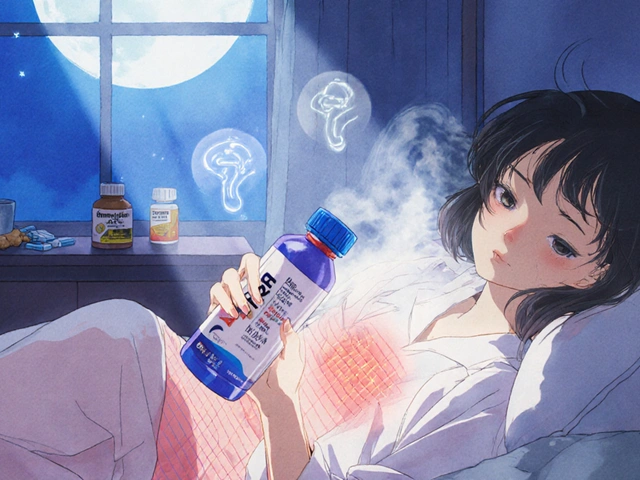
Your brain has sensors that tell you when you need to breathe. When you’re asleep, those sensors keep your breathing steady. Alcohol and opioids both mute those sensors. Together, they silence them completely. Your body doesn’t wake up. It doesn’t gasp. It just stops.
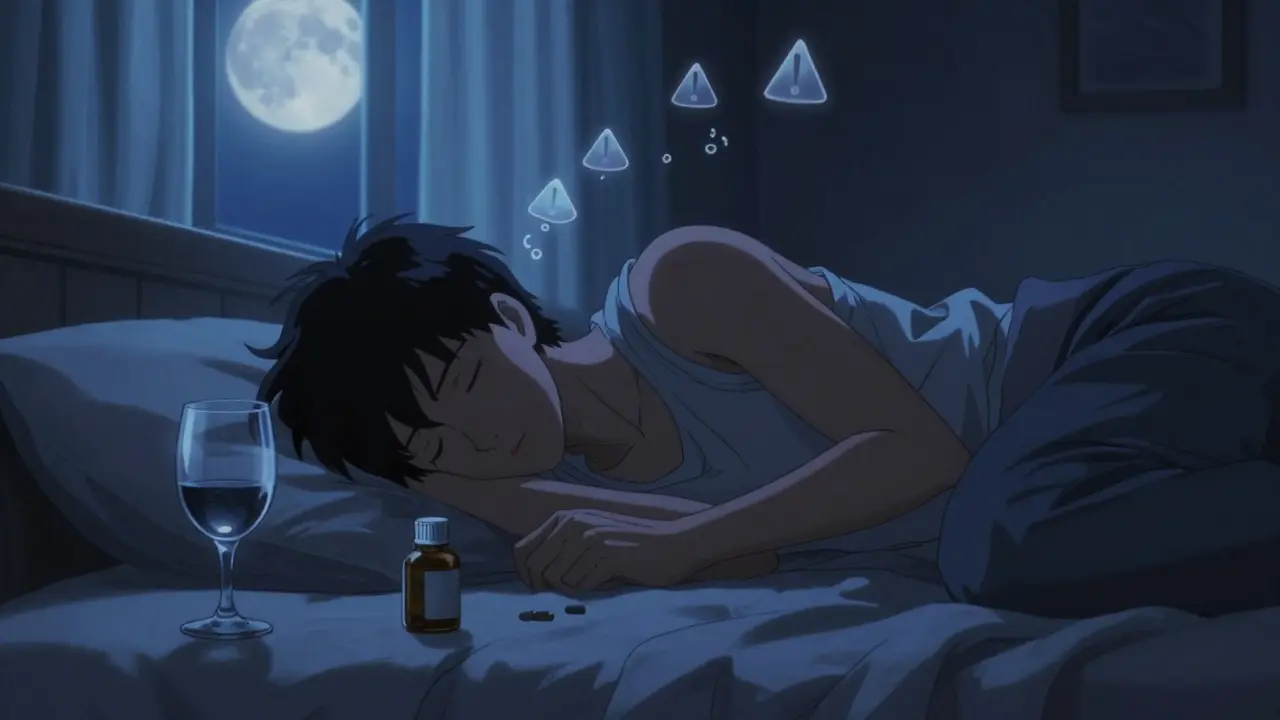
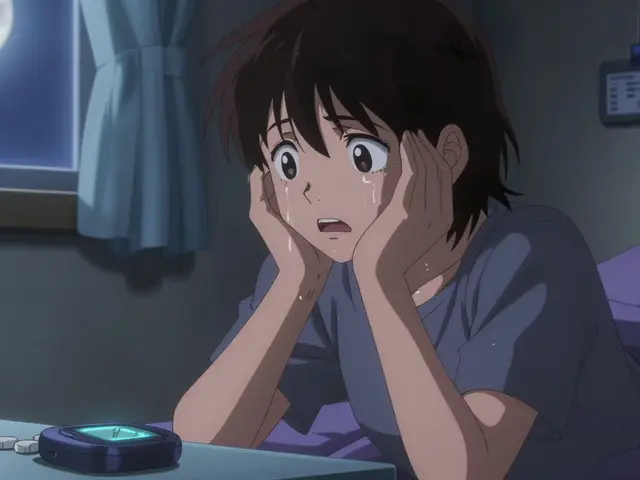
That’s why overdoses from this combination often happen at night. Someone takes their pill, has a drink, falls asleep-and never wakes up. No struggle. No warning. Just silence.
Heart rate variability-a measure of how your heart responds to stress-has been identified as a possible early warning sign. A 2023 study from the University of Pittsburgh found that reduced heart rate variability predicted 83% of alcohol-opioid overdose cases 30 minutes before respiratory arrest. This could lead to future monitoring devices, but right now, there’s no safe way to guess when it’s too late.
Doctors Are Trying to Stop It
The American Society of Addiction Medicine now requires doctors to screen for alcohol use disorder before prescribing opioids. Why? Because people with alcohol use disorder are 3.2 times more likely to overdose on opioids.
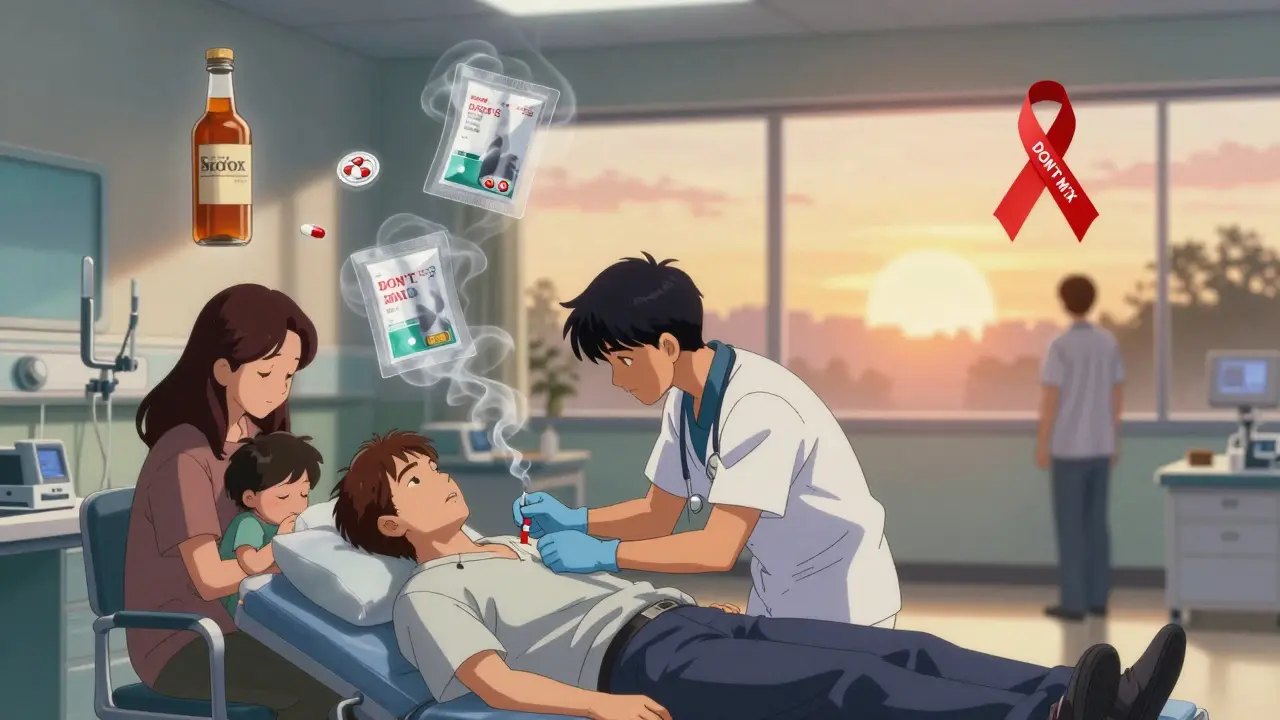
The FDA now mandates that opioid manufacturers include alcohol interaction warnings in all patient education materials. The Substance Abuse and Mental Health Services Administration (SAMHSA) launched the “Don’t Mix” campaign in January 2023 with $15 million in funding to raise awareness.
Naloxone-the drug that reverses opioid overdoses-is now being distributed more widely. In Massachusetts, 23% of naloxone reversals in 2022 involved alcohol. That means first responders and family members are seeing this exact scenario again and again.
What You Need to Do
- If you take opioids for pain, do not drink alcohol at all. Not even one drink. Not even occasionally.
- If you’re on methadone or buprenorphine for addiction treatment, alcohol is not safe. It defeats the purpose of treatment.
- If you use heroin or street opioids, alcohol increases your risk of dying without warning.
- If you live with someone who uses opioids, keep naloxone on hand. Learn how to use it. It can save a life.
- Never assume someone is “just sleepy” after mixing these substances. Respiratory arrest can happen in minutes.
It’s Not Just About Willpower
People don’t mix alcohol and opioids because they’re reckless. Many are in chronic pain. Others are struggling with addiction. Some are simply unaware of how little it takes to cross the line into fatal danger.
The science is clear: there is no safe level of mixing. The risk begins at the first sip and the first pill. The outcome isn’t unpredictable-it’s inevitable if the combination continues.
Public health efforts are improving. But until everyone understands this danger, people will keep dying quietly in their homes, in their cars, alone.
The message isn’t complicated: Alcohol and opioids don’t mix. Ever.
Can you die from mixing alcohol and opioids even if you don’t take a lot?
Yes. Even small amounts of both substances can be deadly because they work together to slow your breathing more than either would alone. A blood alcohol level as low as 0.1%-the legal driving limit-combined with a standard dose of oxycodone can reduce breathing by nearly half. There is no safe threshold.
Is it safe to have one drink while taking prescribed opioids?
No. The FDA and medical experts warn against any alcohol use while taking prescription opioids. Even one drink can increase the risk of respiratory depression, especially in older adults or those with liver or lung conditions. Doctors are trained to assume this combination is dangerous, regardless of dosage.
Why are synthetic opioids like fentanyl more dangerous with alcohol?
Fentanyl is 50 to 100 times more potent than morphine. Even tiny amounts can stop breathing. When alcohol is added, it lowers the body’s ability to respond to low oxygen levels. This combination makes overdoses faster, harder to reverse, and more likely to be fatal. Alcohol co-involvement in fentanyl deaths rose from 9% in 2010 to 17% in 2019.
Can naloxone reverse an overdose from alcohol and opioids?
Yes, naloxone can reverse the opioid part of the overdose. But it does nothing for alcohol. The person may wake up temporarily, but alcohol continues to depress breathing. Emergency medical help is still required immediately after naloxone is given.
Are there any medications that are safe to take with alcohol if you’re on opioids?
No. All opioids-including codeine, tramadol, morphine, and oxycodone-interact dangerously with alcohol. Even non-opioid painkillers like acetaminophen or NSAIDs don’t solve the problem if opioids are still in your system. The only safe choice is to avoid alcohol entirely while taking any opioid medication.
How long should you wait after drinking alcohol before taking an opioid?
There is no safe waiting period. Alcohol and opioids can interact for hours, even after you feel sober. Your liver processes alcohol at a fixed rate-about one drink per hour-but the opioid stays in your system much longer. Waiting 12 hours doesn’t eliminate the risk. The only safe approach is to avoid alcohol completely while using opioids.

Tatiana Barbosa
February 8, 2026 AT 10:37Just read this and had to pause. I work in ER. Seen too many cases where someone "just had one glass of wine" with their pain meds. No warning. No struggle. Just gone. This isn't about willpower-it's about chemistry. And chemistry doesn't care if you're "good people."
Ken Cooper
February 8, 2026 AT 15:36bro seriously tho like i had a friend who did this like every weekend-oxycodone for his back and a sixer after work. thought he was just chillin. then one night he never woke up. no overdosing drama. no vomit. just… quiet. like he fell asleep. that’s the scariest part. no one saw it coming. not even him.
Joseph Charles Colin
February 9, 2026 AT 14:27From a pharmacokinetic standpoint, the synergistic CNS depression is mediated by GABA-A potentiation and mu-opioid receptor agonism, both of which suppress the medullary respiratory centers. Alcohol increases hepatic CYP3A4 metabolism of opioids, prolonging their half-life while simultaneously enhancing their central effects. The result is a non-linear, dose-independent risk profile where even subtherapeutic doses become lethal. The 2023 Pittsburgh HRV study confirms this predictive pattern with >80% sensitivity.
John Sonnenberg
February 10, 2026 AT 08:11THIS IS A MASSIVE PUBLIC HEALTH CRISIS AND NO ONE IS TALKING ABOUT IT. PEOPLE ARE DYING IN SILENCE. IN THEIR BEDS. ALONE. WHILE THEIR KIDS SLEEP NEXT DOOR. THIS ISN’T A MISTAKE. THIS IS A MASS MURDERER IN DISGUISE. AND WE’RE LETTING IT HAPPEN BECAUSE WE’RE TOO COMFORTABLE TO SAY NO.
Joshua Smith
February 11, 2026 AT 03:09Interesting how the data shows such a clear pattern. I’ve been on buprenorphine for a few years now, and I used to think one beer was fine. After reading this, I stopped completely. Didn’t even realize how much I was risking. Small changes matter.
John Watts
February 11, 2026 AT 04:38As someone who’s worked in harm reduction for over a decade, I’ve seen this pattern repeat in every community. Rural towns. Urban centers. College campuses. It’s always the same story: "I didn’t think it’d be that bad." But the science doesn’t lie. It’s not about being reckless. It’s about being unaware. And that’s what we need to fix-not shame, not stigma, but education. Real, accessible, non-judgmental education.
Randy Harkins
February 12, 2026 AT 01:26❤️ This is so important. I lost my brother to this. He wasn’t a drug user. He was a mechanic with chronic pain. Took his meds. Had a glass of wine after dinner. Never woke up. Please, if you’re reading this-don’t wait until it’s too late. Talk to your family. Keep naloxone. Educate yourself. Love isn’t enough. Knowledge is.
Chelsea Deflyss
February 12, 2026 AT 08:59So basically the government wants us to stop drinking wine with our painkillers… but we’re still allowed to smoke weed with them? Huh. Real consistent policy there.
Marie Fontaine
February 14, 2026 AT 02:11My mom’s on methadone. I didn’t know alcohol was this dangerous. We’ve been having wine with dinner for years. I’m cutting it out tonight. No debate. No "maybe." This is life or death.
Lyle Whyatt
February 15, 2026 AT 04:32I’m from Australia, and we’ve got the same problem here. Prescription opioids are everywhere. Alcohol? Even more so. The stats here mirror the U.S. exactly. We’ve got a cultural blind spot: drinking is part of the ritual, pain meds are part of survival. But when you combine them? It’s not a ritual anymore. It’s a funeral waiting to happen. We need public service announcements that don’t feel like a lecture. We need stories. Real ones. Like the guy in Texas who left a note: "I didn’t mean to. I just wanted to relax."
Tasha Lake
February 17, 2026 AT 01:09Heart rate variability as a predictor? That’s huge. If we can develop wearable tech that monitors HRV and alerts users when they’re at risk, we could prevent thousands of deaths. Imagine a smartwatch that buzzes: "Your breathing is at risk. Do not consume alcohol." Simple. Immediate. Life-saving.
Simon Critchley
February 18, 2026 AT 22:13Let’s be real-the system’s broken. Pharma companies knew this was a powder keg. They pushed opioids like candy. Then they slapped on a black-box warning like it was an afterthought. Meanwhile, people with chronic pain are left with no options. So they mix. Not because they’re dumb. Because they’re desperate. And now we’re blaming them? Pathetic.
Jacob den Hollander
February 20, 2026 AT 01:32i had a cousin who died this way. he was on vicodin after surgery. had a couple beers. went to bed. never woke up. his wife found him. she’s been in therapy since. we all thought he was being careful. turns out… no one knows how dangerous this is. please. share this. tell your friends. your parents. your siblings. it could save a life.
Andrew Jackson
February 20, 2026 AT 23:00It is an undeniable fact that the erosion of personal responsibility, coupled with the over-medicalization of pain, has led to this epidemic. The state, in its paternalistic wisdom, has replaced discipline with dependency. And now, when the inevitable consequence arises, we cry for more regulation. We must return to moral clarity: self-control is not optional. It is the foundation of civilization.
Kathryn Lenn
February 21, 2026 AT 22:28Oh wow, so alcohol and opioids are dangerous together? Shocking. Next you’ll tell me water and electricity don’t mix. Maybe if we stopped treating people like children and started treating them like adults, they’d stop doing dumb things. Or maybe not. Maybe we’re just too soft to tell the truth: people are going to die. Let them.