
You stand at the pharmacy counter, prescription in hand, only to be told there are three different generic versions of your blood pressure pill available. One is £2 cheaper than the other, but they all contain the same active ingredient. So, why do they look different? Do they work exactly the same? And more importantly, does it matter which one you take home?
This isn't just a question of saving a few pounds. For most medications, picking any generic drug is fine. But for certain conditions, switching between manufacturers can actually change how well the medicine works for you. Understanding the hidden differences between these look-alike pills helps you make a choice that keeps your health stable and your wallet happy.
The Myth of "Exactly the Same"
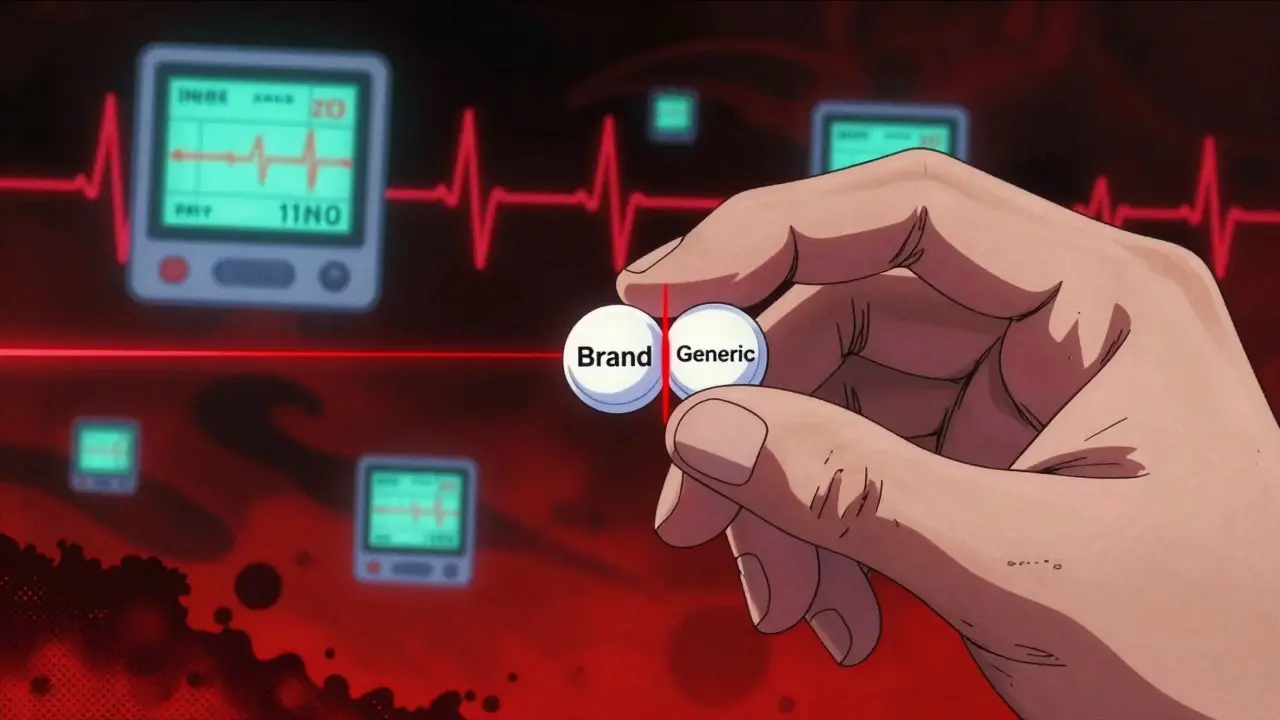
We often hear that generics are identical copies of brand-name drugs. That’s mostly true, but not entirely. The U.S. Food and Drug Administration (FDA), along with regulators like the Medicines and Healthcare products Regulatory Agency (MHRA) in the UK, requires generics to prove they are bioequivalent to the original. This means the generic must deliver the active ingredient into your bloodstream at roughly the same speed and amount as the brand name.
Here’s where it gets tricky. Bioequivalence doesn’t mean identical. It means the generic falls within an accepted statistical range-typically 80% to 125% of the reference product’s performance. Think of it like baking bread. If the brand-name loaf weighs 1kg, a generic loaf weighing between 800g and 1.25kg is considered acceptable. Most generics are much closer to 1kg than that wide range suggests. In fact, studies show the average difference between a generic and its brand counterpart is less than 4%. However, if you have two different generics, Manufacturer A might sit at the 95% mark while Manufacturer B sits at 105%. While both are safe and effective according to regulations, that 10% gap could matter if your body is sensitive to small changes in drug levels.
Decoding the FDA Orange Book Ratings
If you’re buying from US sources or looking up data globally, the Orange Book is your best friend. It lists approved drug products with their therapeutic equivalence codes. You don’t need to memorize the whole book, but knowing what "AB" means is crucial.
- AB Rating: This is the gold standard. It means the generic has been found to be therapeutically equivalent to the reference listed drug. Pharmacists can generally substitute AB-rated generics without calling your doctor first.
- B Rating: These drugs meet safety standards but have shown some differences in bioequivalence. They might not be interchangeable with the brand name or other generics without medical oversight.
When multiple generics exist, they usually all carry an AB rating. But remember, an AB rating confirms equivalence to the brand, not necessarily perfect interchangeability with other generics. If you switch from Generic X to Generic Y, you’re moving from one AB-rated product to another. For most people, this is no problem. But consistency matters.
Narrow Therapeutic Index Drugs: Where It Really Matters
For common drugs like ibuprofen or amoxicillin, a slight variation in absorption rarely impacts your day. But for drugs with a Narrow Therapeutic Index (NTI), the margin for error is tiny. An NTI drug is one where a small change in blood concentration can lead to either toxicity or treatment failure.
Key examples include:
- Warfarin: Used for blood thinning. Too little leads to clots; too much causes bleeding.
- Levothyroxine: For thyroid hormone replacement. Small shifts can cause fatigue or heart palpitations.
- Digoxin: For heart failure. Toxicity risks are high.
- Phenytoin: For seizure control. Levels must be precise.
A 2017 study in Circulation highlighted that adverse event rates were higher when patients switched to generics for certain cardiovascular drugs during the first month. While long-term outcomes stabilized, the initial adjustment period caused issues. If you are on an NTI drug, your pharmacist should ideally keep you on the same manufacturer’s version once your dosage is stable. Frequent switching between different generic brands can destabilize your levels.

How to Choose Your Generic
So, how do you pick? Here is a practical decision tree for your next pharmacy visit.
Step 1: Check Your Medication Type
Is your drug an NTI drug? If yes, prioritize consistency. Ask your pharmacist: "Can I stick with the same manufacturer every time?" If your current supply is running out and the pharmacy has changed suppliers, ask them to order your usual brand or provide a sample to check for differences.
Step 2: Consider Cost vs. Stability
Generics are typically 80-85% cheaper than brand names. If cost is a major barrier, choosing the cheapest AB-rated generic is smart. However, if you notice side effects changing after a switch, don’t ignore it. Report it. Sometimes, inactive ingredients (excipients) like fillers or dyes differ between manufacturers. If you have allergies to lactose or gluten, check the excipient list on the specific generic’s package insert.
Step 3: Talk to Your Pharmacist
Pharmacists are trained to spot these nuances. Ask them:
- "Are these generics AB-rated?"
- "Has my usual supplier changed?"
- "Are there any known issues with this specific batch or manufacturer?"
In the UK, the MHRA monitors adverse reactions through the Yellow Card scheme. If you feel worse after switching generics, report it. This data helps regulators track if specific manufacturers have quality issues.
Table: Comparing Generic Selection Factors
| Factor | Standard Medications | Narrow Therapeutic Index (NTI) Drugs |
|---|---|---|
| Interchangeability | High. Switching between manufacturers is rarely problematic. | Low. Consistency with one manufacturer is preferred. |
| Bioequivalence Tolerance | Wide range (80-125%) is clinically insignificant. | Tight range required. Small variations impact efficacy/safety. |
| Action Required | Choose based on price or availability. | Maintain same brand/manufacturer; monitor levels closely if switching. |
| Example Drugs | Ibuprofen, Metformin, Amoxicillin. | Warfarin, Levothyroxine, Digoxin, Phenytoin. |

Why Manufacturers Differ
You might wonder why so many companies make the same drug. It’s competition. After a patent expires, multiple companies file Abbreviated New Drug Applications (ANDAs). More competition drives prices down. In the US alone, 96% of generic drugs have three or more manufacturers. This is great for healthcare budgets, saving billions annually. But it creates complexity for patients.
Each manufacturer uses slightly different inactive ingredients. One might use cornstarch as a filler; another might use lactose. Another might use a different coating agent. These don’t affect the active ingredient’s strength, but they can affect how fast the pill dissolves or how it feels in your stomach. If you have a sensitive gut or specific dietary restrictions, these details matter.
What If I Feel Different After Switching?
It happens. You’ve been taking Brand X for years, then switch to Generic Y because it’s cheaper. Suddenly, you feel tired, jittery, or your symptoms return. What do you do?
- Don’t Panic: It might be coincidence, stress, or a natural fluctuation in your condition.
- Track Symptoms: Write down when you started the new generic and any changes you feel.
- Contact Your Doctor: Don’t just stop taking the medication. Call your GP or specialist. Explain that you switched manufacturers and describe the changes.
- Request Blood Tests: For NTI drugs, doctors can measure drug levels in your blood to see if the new generic is absorbing differently.
Remember, the goal is therapeutic stability. If a specific generic works perfectly for you, stick with it. Price savings are valuable, but not worth compromising your health stability.
Are generic drugs really as effective as brand-name drugs?
Yes, for the vast majority of medications. Regulatory agencies require generics to prove they are bioequivalent to the brand name. Studies show the average difference in effectiveness is negligible (often less than 4%). However, for drugs with a narrow therapeutic index, small variations can matter, so monitoring is recommended.
Why do generic pills look different from each other?
Different manufacturers use different inactive ingredients (excipients) such as fillers, binders, colors, and coatings. These do not affect the active ingredient's potency but can change the pill's size, shape, color, and taste. This is why two generics of the same drug may look completely distinct.
Should I always choose the cheapest generic?
Not necessarily. If you are on a standard medication, the cheapest option is usually fine. However, if you are on a narrow therapeutic index drug (like warfarin or levothyroxine), consistency with one manufacturer is more important than minor price differences. Switching frequently can destabilize your treatment.
What does 'AB rating' mean in the Orange Book?
An AB rating indicates that the generic drug has been found to be therapeutically equivalent to the reference listed drug (usually the brand name). It means the generic meets strict bioequivalence standards and can generally be substituted for the brand name without prescriber approval.
Can I request a specific generic manufacturer?
Yes, you can ask your pharmacist. While pharmacies stock various suppliers, they can often order a specific manufacturer if you explain why (e.g., better tolerance or allergy concerns). For critical drugs, asking them to maintain your usual supplier is a reasonable request.




Pearl Richardson
August 30, 2026 AT 18:42The regulatory agencies are not your friends. 🧐 They allow a 20% variance in bioavailability which is frankly absurd for someone on narrow therapeutic index drugs like Warfarin. 📉 The 'AB rating' is a marketing term designed to make you feel safe while they swap out manufacturers based on who pays the lowest bid. 💸 You are essentially gambling with your blood clotting levels every time you refill that prescription. 🎰 Do not trust the system blindly; demand consistency or suffer the consequences of their profit-driven chaos. 🏥
larry williams
August 31, 2026 AT 10:47I appreciate the detailed breakdown here because navigating pharmacy options can be genuinely overwhelming for many people and it helps to have a clear guide. It is wonderful that you highlighted the importance of talking to pharmacists since they are often the most accessible healthcare professionals we have access to in our communities. I always encourage patients to view these interactions as opportunities to learn rather than just transactions. If you find yourself feeling anxious about switching brands remember that open communication with your provider can alleviate much of that stress. We should all strive to support each other in managing health effectively without letting fear dictate our choices. Keep up the great work educating others on these nuanced topics.
Stephen Horn
September 1, 2026 AT 05:25While the article attempts to simplify a complex pharmacokinetic issue, it fails to address the fundamental disparity in manufacturing quality control between top-tier European producers and budget-focused Indian generics. The FDA's acceptance criteria are merely statistical hurdles, not guarantees of clinical equivalence in sensitive populations. One must possess a discerning eye to recognize that an AB rating does not equate to identical excipient profiles which can drastically alter dissolution rates in the gastrointestinal tract. Relying solely on price is a strategy employed by those who lack the intellectual capacity to understand drug delivery mechanisms. True medical literacy requires demanding specific manufacturers regardless of cost implications.
Gurjit Singh
September 2, 2026 AT 15:42It is morally wrong to prioritize cost over health stability. People complain about saving a few pounds but ignore the risk of destabilizing their treatment. Consistency is key. Switching manufacturers frequently shows a lack of discipline in one's own healthcare management. Pharmacies should enforce stricter controls on generic substitutions. Patients need to take responsibility for their bodies. Stop blaming the system when you choose the cheapest option without understanding the risks. Health is not a commodity to be bargained away.
hareesh kumar
September 3, 2026 AT 18:29omg wait hold on everyone needs to wake up rn!!! 😱😱 The fact that they allow a 10-15% swing in absorption rates is INSANE if you ask me!! I bet big pharma loves this confusion because then they keep us guessing!! 🕵️♂️🕵️♀️ My uncle switched levothyroxine brands last year and felt like he was dying for two months straight!! 😫 Two months!!! Just because the pill looked slightly different??!! That is not science that is negligence!! 🚫🧪 And don't even get me started on the inactive ingredients... who knows what kind of fillers they are using now?? 🤢 Cornstarch? Lactose? Who cares right?? WRONG!! Wrong wrong wrong!! 🛑🛑 We need to stick to one brand or else we are just lab rats for their experiments!! 🐁🔬 The system is rigged against the little guy and nobody wants to admit it!! 📉💸 I am so angry reading this actually... why do we accept this mediocrity??!! 🤬🤬🤬
Venkatesan V.K.
September 5, 2026 AT 14:21The author misses the point entirely. Generic substitution is a necessary evil driven by economic reality, not a conspiracy. Complaining about minor variations while ignoring the massive savings that allow millions to afford medication is hypocritical. Most people cannot afford the brand name anyway. The data supports safety. End of story.
Eryn Manchego
September 5, 2026 AT 20:14love this deep dive into the nitty gritty of bioequivalence ranges and excipient variances ✨✨ its wild how much nuance sits behind a simple prescription swap 🌈✨ definitely gonna check my orange book ratings next time i hit the pharmacy counter 💊✨ stay healthy fam 🌿✨
Crystal Torres
September 7, 2026 AT 19:16This is an excellent resource for patients seeking clarity on medication choices. The distinction between standard medications and Narrow Therapeutic Index drugs is particularly vital for public understanding. I would add that maintaining a personal log of manufacturer names and batch numbers can significantly assist doctors during adverse event investigations. Proactive patient engagement leads to better outcomes. Thank you for highlighting the role of pharmacists as gatekeepers of quality.
Patrick van der Velde
September 7, 2026 AT 19:53It is somewhat amusing to see Americans discuss £ prices while referencing US FDA standards. Regardless, the premise holds water. However, the suggestion that one can simply 'ask' a pharmacist to maintain a supplier ignores the rigid inventory systems of major chains. In New Zealand, we face similar issues where wholesalers dictate stock. The moral imperative here is for governments to subsidize high-quality generics rather than forcing patients to navigate this minefield alone. Competence in healthcare policy is lacking globally.
Vivek Chaturvedi
September 9, 2026 AT 16:21consistency matters more than cost for critical meds stop switching if it works
Lolo Del
September 11, 2026 AT 07:32Hey folks, good read! Just wanted to share that I've been on the same generic metformin for 5 years now. No issues at all. But yeah, if you're on warfarin, definitely talk to your doc. Don't let the pharmacy auto-substitute without asking. Stay safe out there!
Tobi Oyewole
September 12, 2026 AT 01:45We must consider the broader philosophical implications of commodifying health. When we reduce medicine to a transactional exchange based on price tags, we strip it of its intrinsic value to human well-being. The anxiety surrounding generic substitution reflects a deeper societal distrust in institutional integrity. Perhaps the solution lies not in choosing the right manufacturer, but in rebuilding trust through transparent regulation and community-centered care models. Let us approach this with empathy for those who cannot afford choice.
Sarah Kinch
September 13, 2026 AT 14:36ugh another article telling us what to do. honestly its exhausting trying to figure out which pill is 'better'. i just take whatever they give me and hope for the best. if i feel bad i guess its my fault for not researching enough. whatever.