
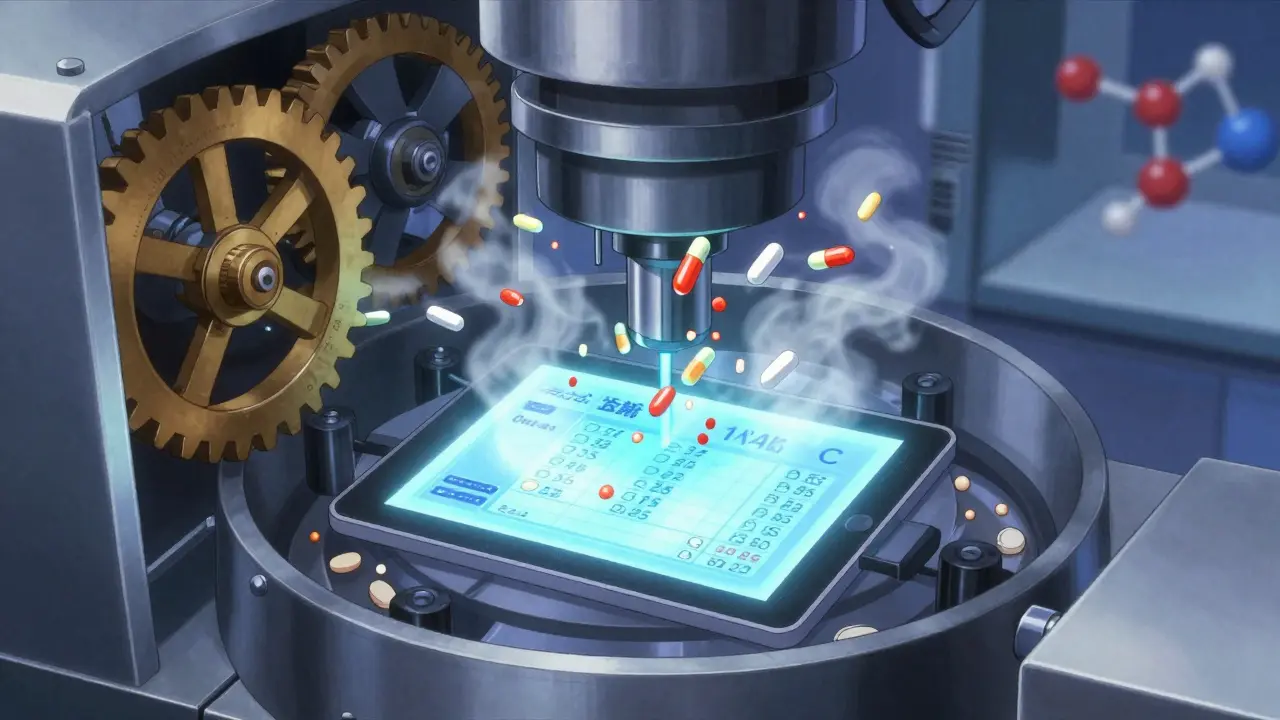
When you pick up a prescription at the pharmacy and see a different name on the bottle than what your doctor wrote, chances are you’re holding a generic drug. These medications work just like the brand-name versions you’ve heard of - same active ingredient, same strength, same way of taking them - but they cost far less. In fact, about 90% of all prescriptions in the U.S. are filled with generics. But how exactly are they made? And how do manufacturers guarantee they’re just as safe and effective as the original? The answer lies in a tightly controlled, science-driven process that’s been refined over decades.
What Makes a Generic Drug “Generic”?
A generic drug isn’t a copy. It’s a bioequivalent version. That means it delivers the same active ingredient in the same amount, at the same rate, into your bloodstream as the brand-name drug. The FDA requires that the generic’s absorption - measured by two key numbers, Cmax (peak concentration) and AUC (total exposure) - falls within 80% to 125% of the brand-name drug’s values. This isn’t a guess. It’s proven through clinical studies with 24 to 36 healthy volunteers. If the numbers don’t match within that narrow range, the drug doesn’t get approved.
What’s different? The inactive ingredients. Colors, flavors, fillers, and binders can vary. That’s why a generic pill might look different - different shape, different color, different markings. But the active ingredient? Identical. And that’s what matters for how the drug works in your body.
The Legal Pathway: The ANDA Process
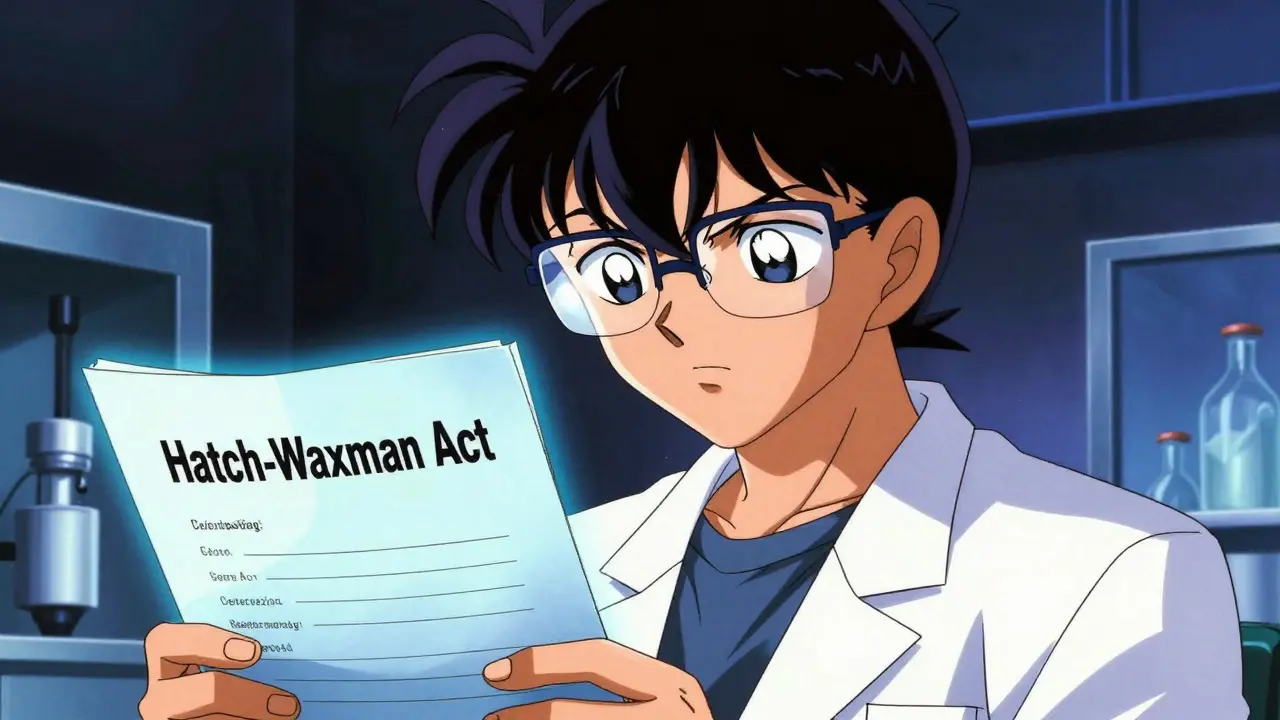
Brand-name drugs go through years of clinical trials to prove safety and effectiveness. Generics don’t. Why? Because they don’t need to. Thanks to the 1984 Hatch-Waxman Act, generic manufacturers can use the brand-name drug’s data to prove equivalence. This shortcut is called the Abbreviated New Drug Application, or ANDA.
The ANDA process has five clear steps:
- Submission: The manufacturer files a detailed application with the FDA, including every step of their manufacturing process.
- Bioequivalence testing: A small study is done with volunteers to prove the generic absorbs into the body at the same rate and amount as the brand.
- Facility inspection: The FDA sends inspectors to the manufacturing plant to check compliance with quality rules.
- Labeling approval: The drug’s label must match the brand’s in all key details - dosage, warnings, instructions.
- Post-approval monitoring: Even after approval, the FDA keeps watching for reports of side effects or quality issues.
While a brand-name drug can take 10 to 15 years and over $2 billion to develop, a generic typically takes 3 to 4 years and costs between $5 million and $10 million. That’s why generics are so much cheaper - not because they’re lower quality, but because they avoid the massive upfront research costs.
Step-by-Step: How a Generic Drug Is Made
Once the ANDA is approved, manufacturing begins. It’s not simple. It’s a precise, multi-stage operation that follows strict global standards called Current Good Manufacturing Practices (CGMP). Here’s how it works:
1. Formulation Design
The first step is reverse-engineering the brand-name drug. Manufacturers analyze its composition - what active ingredient it uses, what fillers, binders, and coatings are included. They don’t just guess. They use advanced lab techniques to break down the original product and understand how each component behaves.
Then they design their own version using the same active ingredient but possibly different excipients. This isn’t random. They follow the Quality by Design (QbD) framework, which means they identify exactly which factors affect the drug’s performance - like tablet hardness, dissolution rate, or stability. These are called Critical Quality Attributes (CQAs). Then they test different raw materials and processing conditions to find the exact combination that meets those attributes.
2. Mixing and Granulation
The active ingredient is blended with other powders - fillers like lactose or cellulose, binders like starch, lubricants like magnesium stearate. This mixture isn’t just stirred together. It’s turned into granules. Why? To ensure every tablet has the exact same amount of medicine. If you just pressed powder, you’d get uneven doses. Granulation creates consistent, flowable particles.
Granulation can be wet (using a liquid binder) or dry (using pressure). The choice depends on how sensitive the drug is to heat or moisture. A slight change in particle size of the filler - say, from one supplier to another - can throw off the whole batch. That’s why manufacturers test every incoming raw material.
3. Drying
If wet granulation was used, the granules must be dried. Too much moisture? The tablets can degrade or stick together. Too little? They become too brittle and break during handling. Drying is done in controlled environments - temperature, airflow, and time are all precisely monitored. Even a 1% change in humidity can affect the final product.
4. Compression and Encapsulation
Dry granules are pressed into tablets using high-speed machines. Each tablet is weighed and checked. The FDA requires tablet weight variation to be within ±5% for tablets under 130mg, and ±7.5% for those between 130mg and 324mg. Capsules are filled with powder or pellets using automated systems that count each dose.
Every machine has sensors that stop production if a tablet is too light, too heavy, or misshapen. Thousands of tablets are made per minute - and every one is checked.
5. Coating
Many tablets get a thin coating. Why? To mask a bitter taste, protect the drug from stomach acid, or control how fast it releases in the body. Coatings can be immediate-release (dissolves right away) or extended-release (slowly releases over hours). The coating process is done in rotating drums with precise spray nozzles. Temperature and humidity are controlled to prevent the coating from cracking or sticking.
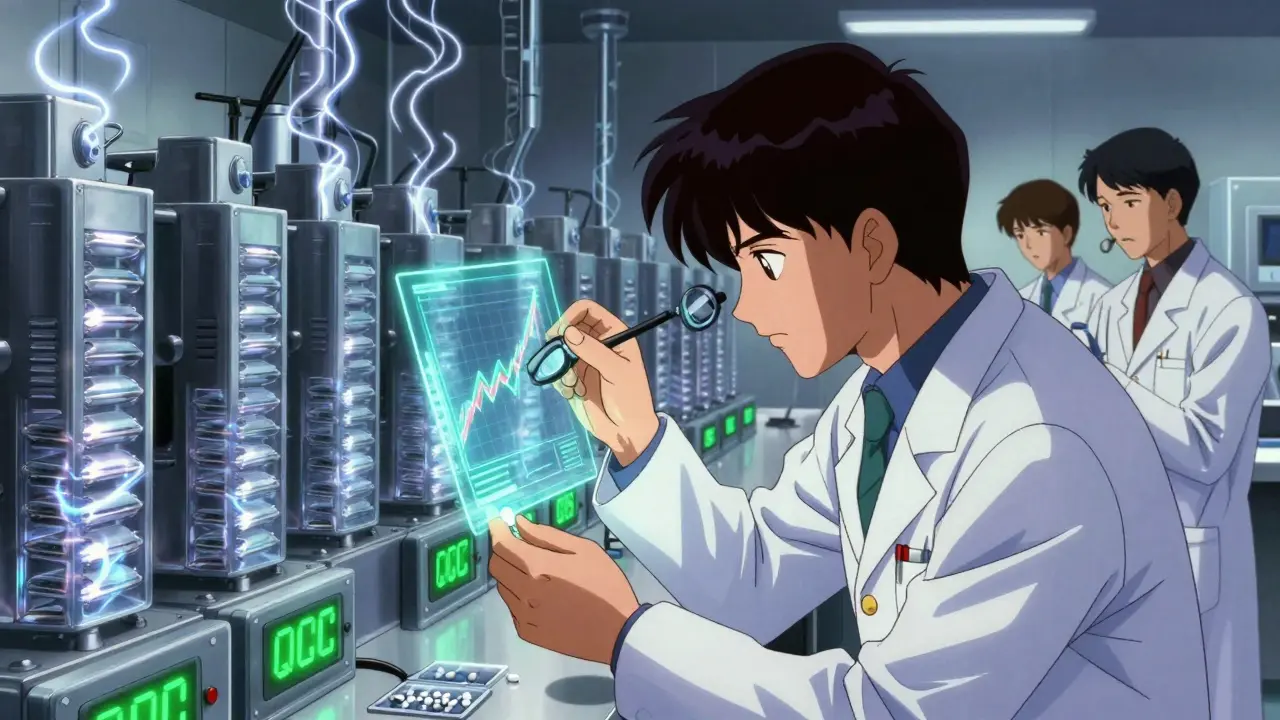
6. Quality Control
This isn’t a final check. It’s built into every stage. At each step, samples are pulled and tested:
- Identity: Does the active ingredient match what it should be?
- Strength: Is the exact amount of medicine in each tablet?
- Purity: Are there any harmful contaminants?
- Dissolution: Does the tablet release the drug at the right rate? (This is critical - a tablet that releases too fast or too slow won’t work right.)
Each batch must pass all tests before it moves to packaging. If one sample fails, the entire batch is rejected. The FDA’s 2023 inspection data shows that 37% of warning letters issued to generic manufacturers were for failing to properly investigate out-of-specification results. That’s why quality control isn’t a box to check - it’s a constant, documented process.
7. Packaging and Labeling
Tablets or capsules are sealed in blister packs or bottles with child-resistant caps. Labels must include the drug name, strength, manufacturer, lot number, and expiration date. The lot number is key - if a problem arises, the FDA can trace the batch back to the exact day and machine that made it.
Why Manufacturing Standards Matter
Manufacturing happens in cleanrooms - rooms with filtered air, controlled temperature (20-25°C), and humidity (45-65% RH). Depending on the step, the air must meet ISO Class 5 to 8 standards. That means fewer than 3,500 particles per cubic meter of air for the cleanest areas. Why? Because even tiny contaminants can ruin a batch or cause health risks.
Every step is documented. If a machine stops for 10 minutes, why? Was it cleaned? Was it recalibrated? Who did it? All of this is recorded. If the FDA shows up for an inspection, they don’t just ask questions - they pull files. Thousands of pages of records, from batch logs to training certificates.
Training is intense. Leading manufacturers require 160 hours of initial GMP training and 40 hours every year after. Why? Because a single mistake - a wrong label, a dirty machine, an untested batch - can lead to a recall. The 2021 recall of 14 generic drugs from Teva’s Puerto Rico facility happened because of CGMP violations. That’s why quality isn’t optional. It’s built into the DNA of the process.
Challenges and Real-World Issues
Not all generics are created equal - not because of intent, but because of complexity. Simple pills like metformin or atorvastatin are easy to copy. But what about inhalers, eye drops, or topical creams? These are called complex generics. Their effectiveness depends not just on the drug, but on how it’s delivered. Matching the exact particle size, viscosity, or spray pattern is incredibly hard.
A 2022 case study showed one manufacturer spent seven years and $47 million just to match a generic version of a topical steroid. Even then, they had to run hundreds of tests to prove it worked the same way on skin.
Another issue? Supply chains. About 78% of the active ingredients in U.S. generic drugs come from China and India. That creates vulnerability. A factory shutdown, a shipping delay, or a quality issue overseas can ripple through the U.S. market. That’s why the FDA is pushing for more domestic production and better oversight.
And pricing pressure? It’s real. When a generic hits the market, dozens of companies rush in. Prices can drop 80% within two years. Some manufacturers can’t stay profitable and leave. That’s why you might suddenly see a shortage - not because no one can make it, but because no one wants to make it at the price they’re being paid.
The Future of Generic Manufacturing
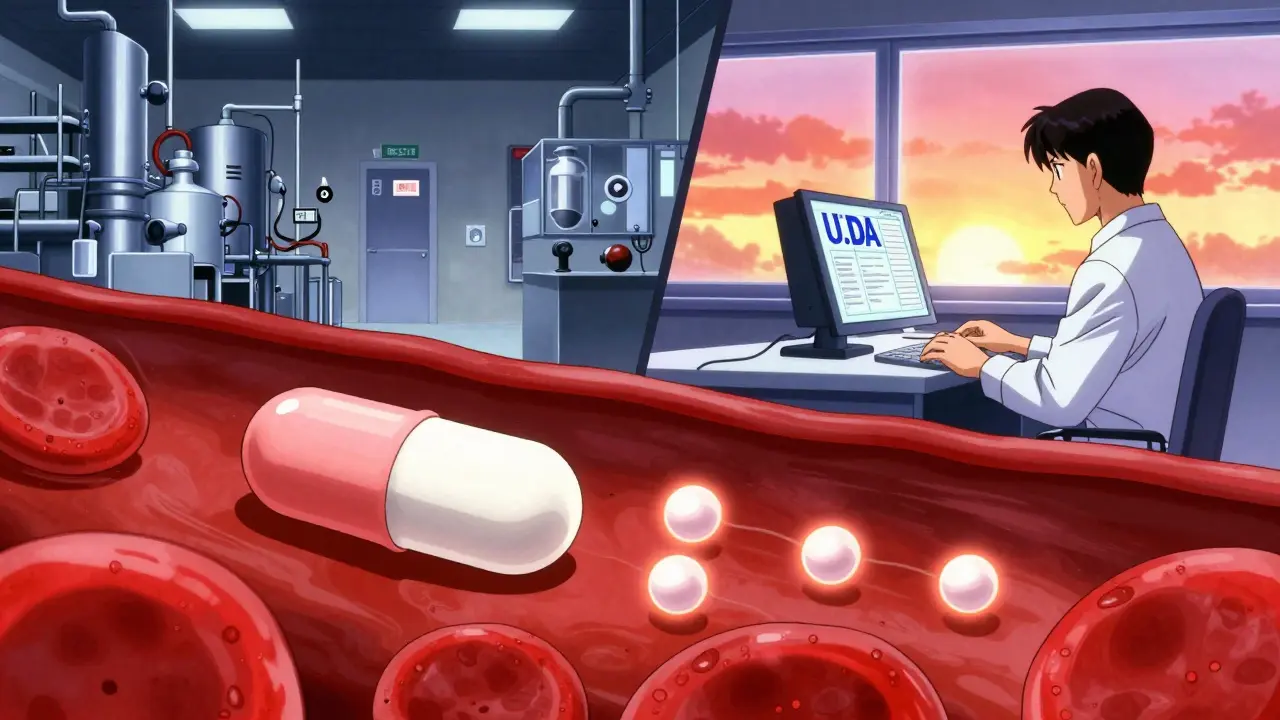
Technology is changing how generics are made. The FDA’s Emerging Technology Program has approved 17 facilities that use continuous manufacturing - a process that runs 24/7 instead of in batches. This reduces production time from weeks to hours and improves consistency. One company using this method saw batch acceptance rates jump from 95% to 99.98%.
AI is also being tested. Pfizer’s pilot program used machine vision to inspect pills for defects. It cut visual inspection errors by 40%. Digital twins - virtual models of manufacturing lines - are being used to predict problems before they happen.
And the FDA is updating its rules. New guidance for complex generics - like nasal sprays and ophthalmic suspensions - is being released. These aren’t just technical updates. They’re about making sure patients get the same quality, no matter how complicated the drug.
Final Thoughts
Generic drugs are not second-rate. They’re the result of decades of science, regulation, and precision manufacturing. Every pill you take - whether it’s branded or generic - went through the same rigorous testing for safety and effectiveness. The only difference? The price. And that’s why generics save the U.S. healthcare system over $1.7 trillion every decade.
If you’re worried about switching to a generic, talk to your pharmacist. They see the data. They know the manufacturers. And they’ll tell you - 89% of pharmacists have complete confidence in generic quality. The science, the rules, and the oversight are there. You’re not taking a gamble. You’re getting the same medicine, at a fraction of the cost.
Are generic drugs as effective as brand-name drugs?
Yes. The FDA requires that generic drugs deliver the same amount of active ingredient into the bloodstream at the same rate as the brand-name drug. This is proven through bioequivalence studies with human volunteers. The FDA considers generics therapeutically equivalent - meaning they work the same way in the body.
Why do generic drugs look different from brand-name drugs?
Generic drugs can differ in color, shape, size, and flavor because those are inactive ingredients. The active ingredient - the part that treats your condition - is identical. U.S. trademark laws prevent generics from looking exactly like brand-name drugs to avoid confusion. But the medicine inside works the same.
Can generic drugs have different side effects?
The active ingredient is the same, so side effects should be identical. However, some people may react to different inactive ingredients - like dyes or fillers - in a generic version. These reactions are rare and usually mild, like a slight stomach upset. If you notice a change after switching, talk to your doctor or pharmacist.
How long does it take to get a generic drug approved?
For a standard generic, the FDA typically takes about 10 months to review the application under the latest GDUFA IV standards. Complex generics - like inhalers or topical creams - can take up to 36 months because they require more testing and analysis. The timeline depends on the drug’s complexity and whether there are patent disputes.
Are all generic drugs made in the U.S.?
No. About 78% of the active ingredients used in U.S. generic drugs come from China and India. The final manufacturing - filling, packaging, labeling - may happen in the U.S., Europe, or elsewhere. The FDA inspects all facilities, regardless of location, to ensure they meet U.S. quality standards before approving the drug.
Raphael Schwartz
March 23, 2026 AT 19:34winnipeg whitegloves
March 24, 2026 AT 04:57Rachele Tycksen
March 25, 2026 AT 05:37Grace Kusta Nasralla
March 25, 2026 AT 09:34Aaron Sims
March 26, 2026 AT 07:51Stephen Alabi
March 26, 2026 AT 21:38Kevin Siewe
March 28, 2026 AT 07:32Chris Farley
March 30, 2026 AT 00:56Darlene Gomez
March 31, 2026 AT 06:52Katie Putbrese
March 31, 2026 AT 12:27Jacob Hessler
April 1, 2026 AT 12:19Amber Gray
April 2, 2026 AT 17:14Danielle Arnold
April 4, 2026 AT 09:55