
Imagine this: you just got your first prescription. You’re excited to feel better, but the pill bottle looks like it’s written in a foreign language. The pharmacist rushed through the instructions because there was a line out the door. You head home, pour yourself a glass of water, and pop the pill. But wait-did you take it with food? Is that supplement on the counter safe to mix with this new drug? What happens if you miss a dose?
If these questions make your stomach drop, you are not alone. Medication safety is not just a hospital problem; it is a daily reality for millions of people managing their health at home. According to the CDC, more than 1.3 million emergency department visits happen every year in the U.S. due to adverse drug events. That is a staggering number, and a significant portion involves people who simply did not know how to manage their medications correctly.
The good news? Most of these errors are preventable. By understanding the basics of medication safety, you can protect yourself from serious health risks. This guide breaks down exactly what you need to know as a first-time patient, from reading labels to avoiding dangerous interactions.
Why Medication Safety Matters More Than You Think
We often assume that if a doctor prescribes a drug, it will work perfectly. But medicine is complex. The Institute for Safe Medication Practices (ISMP) has been tracking these issues since 1994, and the data shows that human error plays a huge role in bad outcomes. A 2021 study by Johns Hopkins estimated that 7,000 deaths occur annually in U.S. hospitals due to medication errors.
For a first-time patient, the stakes feel even higher because you lack experience. You don’t yet have a routine. You might not know how your body reacts to certain chemicals. The Agency for Healthcare Research and Quality (AHRQ) notes that proper medication management can reduce adverse events by up to 50%. That means half of the problems could be avoided just by being smarter about how you handle your pills.
Think of medication safety as wearing a seatbelt. You hope you never need it, but when things go wrong, it is the difference between a minor scrape and a major injury. It is not about being paranoid; it is about being prepared.
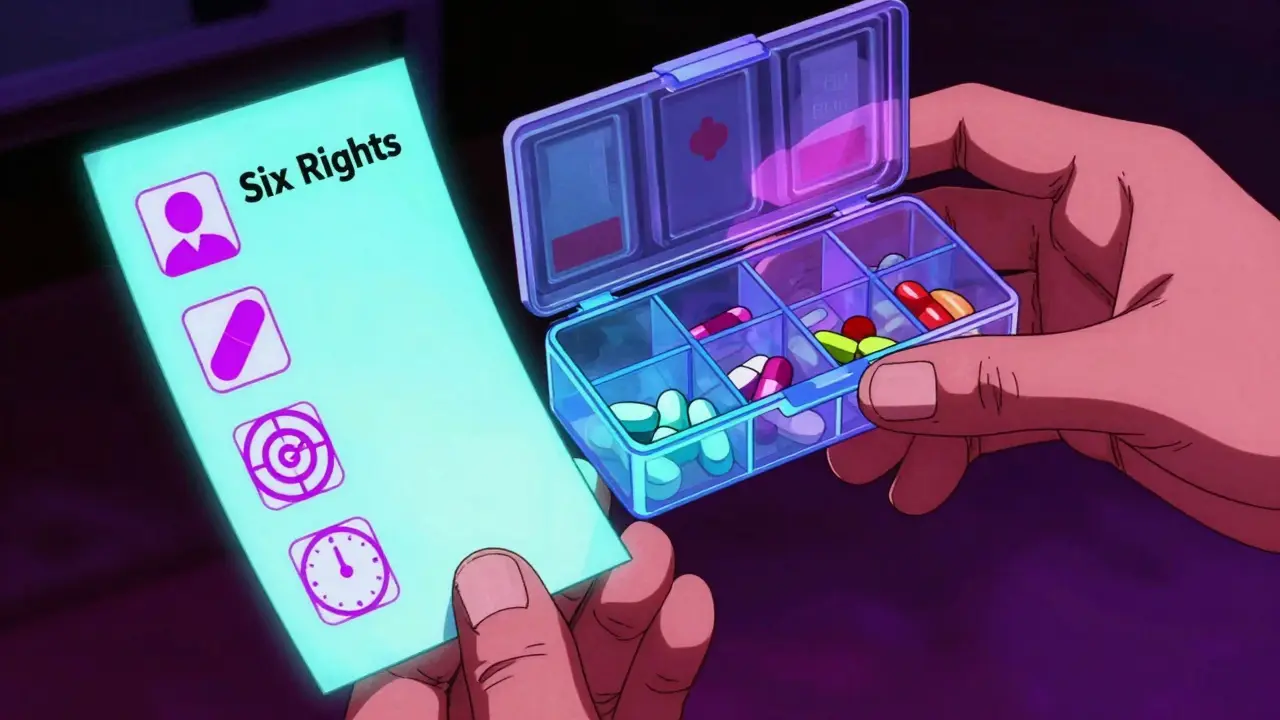
The Six Rights: Your Personal Safety Checklist
Hospitals use a strict protocol called the "Six Rights" to ensure nurses give the right drug to the right person. As a patient taking care of yourself, you should adopt a modified version of this checklist before you swallow any pill.
- Right Patient: Sounds obvious, but double-check the name on the bottle. If you share a bathroom or kitchen with others, keep your meds separate. Never take someone else’s medication, even if they have the same symptoms. Dr. Karen Mahoney from the FDA warns that sharing medications accounts for 8% of emergency visits for adverse drug events.
- Right Medication: Compare the pill in your hand to the label on the bottle. Did the pharmacy dispense the correct drug? Generic substitutions are common (occurring in 90% of prescriptions), so the pill might look different than expected. Call the pharmacist if the color or shape changes unexpectedly.
- Right Indication: Do you know why you are taking this? If you cannot explain the purpose of the drug to a friend, call your provider. Understanding the goal helps you stay motivated and alert to side effects.
- Right Dose: This is where many people slip up. Never use a household spoon to measure liquid medication. Kitchen spoons vary wildly in size, leading to doses that are 25-50% off target. Always use the dosing cup or syringe provided by the pharmacy.
- Right Route: Oral means by mouth. Sublingual means under the tongue. Topical means on the skin. Swallowing a pill meant for the eye or applying an oral syrup to a wound can cause severe harm.
- Right Time: Timing matters more than we think. Some drugs need food to avoid nausea; others lose effectiveness if taken with meals. Circadian rhythms also play a role-some blood pressure meds work better at night, while statins are often most effective when taken in the evening.
Building Your Master Medication List
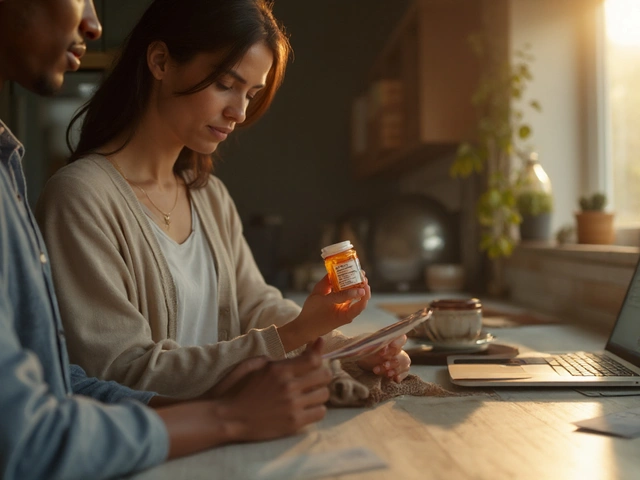
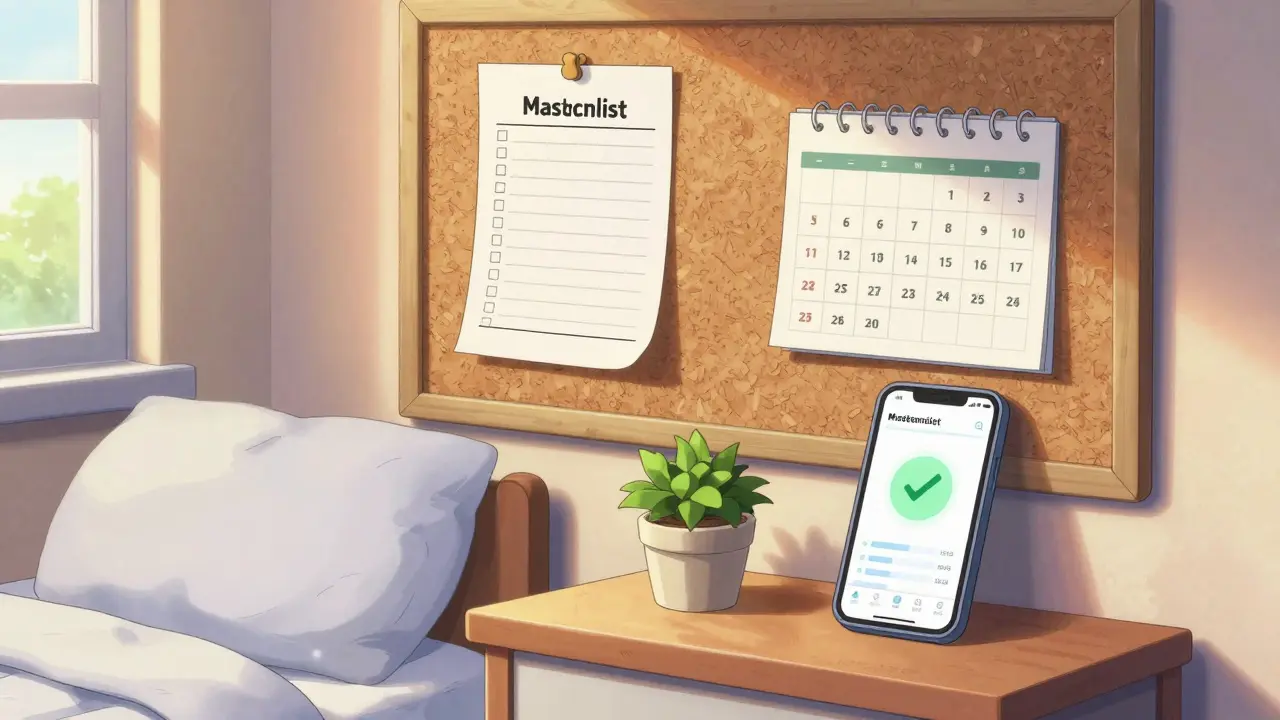
Here is a hard truth: doctors do not always know everything you are taking. If you see multiple specialists, each one sees only a slice of your health picture. The solution is a master medication list.
This list must include 100% of what goes into your body: prescription drugs, over-the-counter pain relievers, vitamins, herbal supplements, and even occasional allergy meds. A 2022 study in the Journal of the American Pharmacists Association found that patients who maintained complete lists experienced 27% fewer medication errors.
Keep this list updated. When you start a new drug, add it immediately. When you finish a course of antibiotics, cross it out. Carry a copy in your wallet or save a digital version on your phone. Bring it to every appointment. The CDC recommends this practice because 66% of Americans take at least one medication, and half take two or more. With that many moving parts, interaction risks skyrocket without a central record.
Avoiding Dangerous Drug Interactions
Drugs interact like ingredients in a recipe. Sometimes they complement each other; sometimes they explode. Drug-drug interactions are the most common concern flagged by the FDA, accounting for 32 alerts in their 2023 safety communications.
Consider grapefruit juice. It sounds harmless, but it interferes with enzymes that break down many medications, including some cholesterol drugs and blood thinners. Drinking it can cause toxic levels of the drug to build up in your blood. Similarly, St. John’s Wort, a popular herbal supplement for depression, can render birth control pills and antidepressants ineffective.
Always ask your pharmacist: "Does this interact with anything I am currently taking?" Be honest about alcohol consumption and recreational substances. These are part of your chemical intake and can trigger severe reactions. For example, mixing sedatives with alcohol can depress your breathing to dangerous levels.
Storage and Expiration: The Hidden Risks
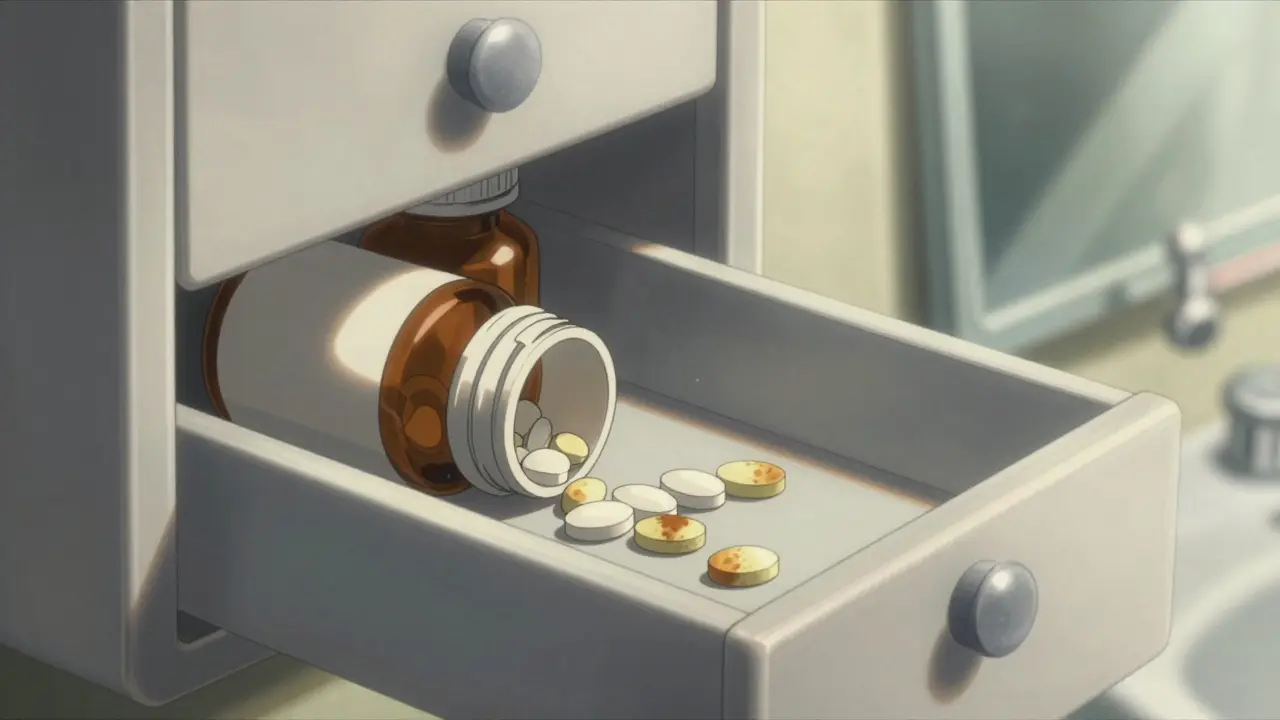
Your medicine cabinet is not a vault. Heat, humidity, and light degrade medications faster than you might think. Most oral medications require storage below 86°F (30°C) in dry conditions. Bathrooms are terrible places for meds because showers create steam and heat fluctuations.
Insulin is a special case. It requires refrigeration between 36-46°F (2-8°C) until first use. Once opened, it may need to stay at room temperature depending on the type. Check the label carefully.
Don’t ignore expiration dates. Merck’s 2023 patient safety report indicated that 18% of medication errors come from using expired drugs. Antibiotics and liquid formulations degrade fastest. Taking expired penicillin might mean taking nothing at all, leaving an infection untreated. Set a reminder to clean out your cabinet every six months.
Tech Tools and Daily Habits
You don’t need a degree in pharmacology to stay safe. Technology can bridge the gap. Medication reminder apps like Medisafe and MyMeds improved adherence rates by 28% among first-time users in a 2022 study. Look for apps with barcode scanning features, which offer 87% accuracy in identifying drugs.
Simple habits help too:
- Lighting: Read labels in bright light. The FDA notes that 15% of errors come from misreading labels in low-light conditions.
- Pill Organizers: Use a weekly pill box. Seeing an empty slot tells you instantly if you missed a dose.
- Questions: Ask three specific questions at the pharmacy: "What should I do if I miss a dose?", "How should I store this?", and "What side effects should I watch for?" Patients who ask these questions experience 34% fewer adverse events in the first month.
When to Call for Help
Knowing when to seek help is part of safety. Mild side effects like slight drowsiness might pass. But severe reactions require immediate attention. Watch for:
- Rash, hives, or swelling (signs of allergic reaction)
- Difficulty breathing or swallowing
- Chest pain or irregular heartbeat
- Severe vomiting or diarrhea
- Confusion or extreme dizziness
If you experience any of these, stop the medication and call your doctor or go to the ER. Keep the bottle with you so medical staff can identify the drug quickly.
What should I do if I miss a dose of my medication?
It depends on the drug. Generally, if you remember within an hour, take it. If it is close to the next dose, skip the missed one and resume your normal schedule. Never double up to make up for a missed dose unless explicitly told to by your doctor, as this can lead to toxicity. Check the patient information leaflet for specific instructions.
Can I crush or split my pills?
Not always. Extended-release or enteric-coated pills are designed to release medication slowly or protect it from stomach acid. Crushing them dumps the entire dose at once, which can be dangerous. Only split pills if they have a score line and your pharmacist confirms it is safe.
Is it safe to take supplements with prescription drugs?
Supplements are not regulated as strictly as drugs and can still cause interactions. Always tell your doctor and pharmacist about every vitamin and herb you take. For example, calcium supplements can interfere with the absorption of thyroid medication and certain antibiotics.
How long does it take to get used to a new medication?
The University of Michigan found that establishing proper medication safety practices takes 2-3 weeks. Side effects often subside during this period. However, if severe side effects persist beyond a week, contact your healthcare provider. Do not stop taking essential medications abruptly without medical advice.
Where is the best place to store medications at home?
A cool, dry, dark place is ideal. A bedroom drawer or closet shelf works well. Avoid bathrooms due to humidity and kitchens near stoves due to heat. Keep all medications locked away from children and pets, even if they are in child-resistant containers.